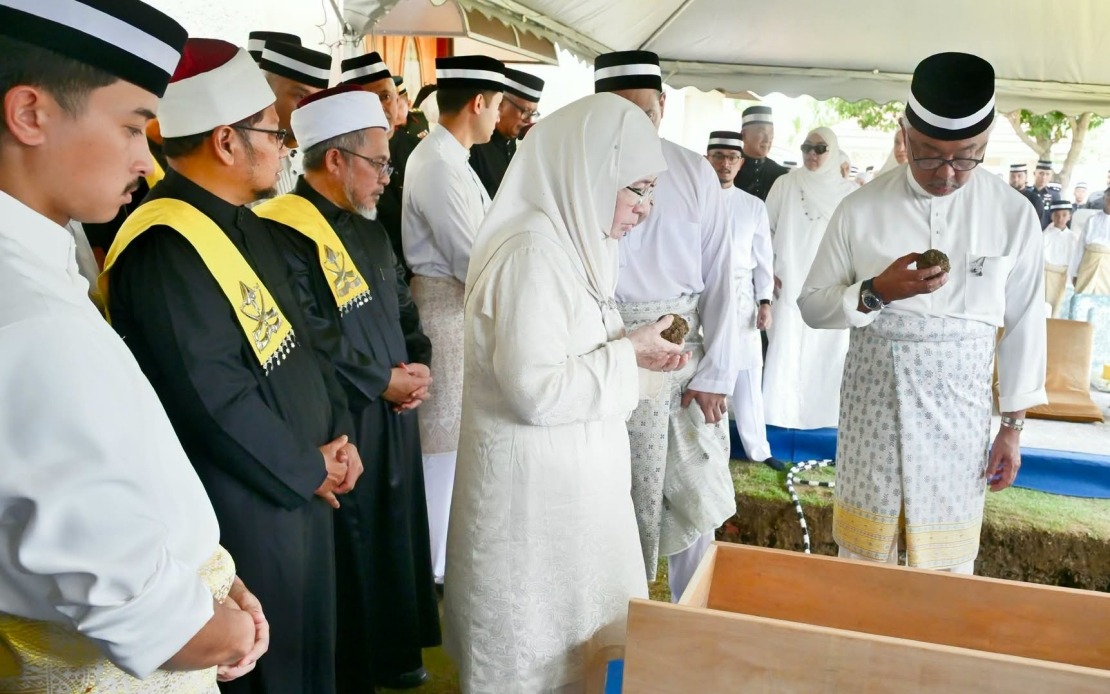
The royal household of Pahang has entered a period of official mourning following the death of Tengku Puteri Seri Kemala Tengku Datuk Seri Aishah, sister to Sultan Al-Sultan Abdullah Ri'ayatuddin Al-Mustafa Billah Shah. The Sultan has directed members of the Pahang royal family to observe three days of formal mourning, beginning Wednesday and extending through Saturday, in acknowledgement of the loss within the state's reigning house.
Major General Datuk Mohamed Zahari Yahya, who serves as Comptroller of the Royal Household of the Sultan of Pahang, announced the mourning directive through an official statement issued from Kuantan. The prescribed period represents a significant occasion within palace protocol, marking the formal respect and grief observed by the state's leading institution following the passing of a senior member of the royal circle.
During the three-day observance, all members of the Pahang royal family are required to wear white clothing as a visible expression of their mourning. Male members of the family have been additionally instructed to wear specific formal attire befitting the solemnity of the occasion, according to the Comptroller's announcement. These dress codes reflect established royal customs governing how members of Malaysia's state houses publicly demonstrate their grief during periods of loss.
The Comptroller's statement acknowledged the profound impact of Tengku Puteri Seri Kemala's death on both the royal household and the wider state. He noted that her passing represents a considerable loss to the Pahang royal family, with particular recognition given to the personal grief experienced by Sultan Al-Sultan Abdullah and Tengku Ampuan of Pahang Tunku Azizah Aminah Maimunah Iskandariah, who held close familial bonds with the deceased.
Tengku Puteri Seri Kemala passed away at a Kuala Lumpur hospital on Wednesday evening at 9:15 pm, following what officials have indicated was a period of health decline. The circumstances surrounding her final illness have not been detailed in official announcements, though her death marks the conclusion of an extended chapter in Pahang's contemporary royal history. She has since been laid to rest at the Royal Mausoleum in Pekan, the state capital, in a ceremony conducted on the afternoon of her passing.
The Comptroller extended an appeal to the broader Pahang community and beyond, inviting the public to participate in the spiritual dimension of the mourning period. Citizens have been encouraged to recite Al-Fatihah, the opening chapter of the Quran traditionally recited to honour the deceased in Islamic tradition, and to offer prayers on behalf of Tengku Puteri Seri Kemala. The invitation seeks divine forgiveness and mercy for her soul, reflecting the Islamic framework within which Malaysia's royal institutions conduct matters of death and remembrance.
Such mourning protocols within Malaysia's constitutional monarchy system demonstrate the ceremonial significance attached to the passing of senior royal figures. The state-level directives, while formal in nature, also serve to underscore the connection between the reigning institutions and the populace they serve. Pahang, as one of Malaysia's older sultanates with a continuous monarchical tradition spanning centuries, maintains particular solemnity in its royal observances.
The three-day mourning period represents a relatively compact but significant timeframe in royal protocol. Unlike extended periods of state mourning that occasionally accompany the deaths of reigning sultans or consorts, the three-day observance reflects the family's balance between honouring the deceased and maintaining the continuity of state functions. Throughout this interval, the royal household would typically restrict ceremonial engagements and public appearances to those deemed essential.
For those within the state seeking to demonstrate solidarity with the royal family during this period, the invitation to engage in spiritual observance provides a meaningful avenue of participation. The public nature of the mourning announcement ensures that citizens of Pahang and beyond are formally informed of the loss and the appropriate manner in which to acknowledge it, maintaining the transparent relationship between state institutions and the communities they represent.

