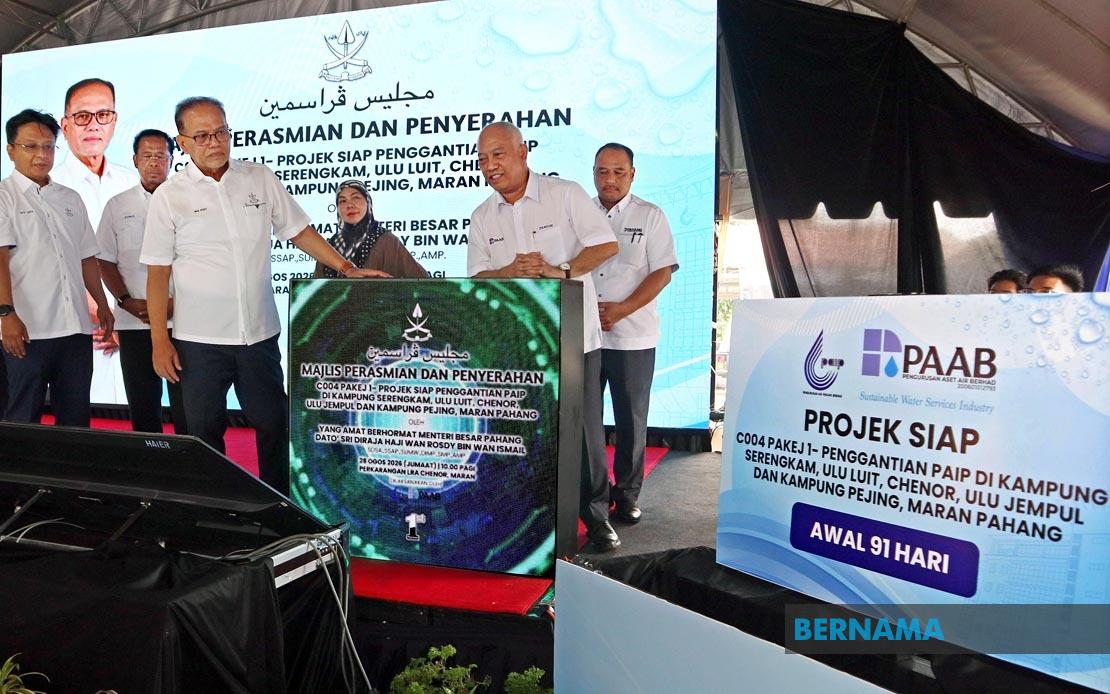
The Pahang government has committed to developing sustainable long-term strategies to resolve the persistent shallowing of Sungai Pahang, which threatens livelihoods and economic activities in affected riverside communities. Menteri Besar Datuk Seri Wan Rosdy Wan Ismail made the announcement in Maran on August 28, emphasising that any intervention must be grounded in thorough investigation and professional analysis before implementation. The river's deteriorating navigability has emerged as a critical concern for residents in Kampung Pesagi and surrounding areas, prompting state authorities to treat the issue with heightened priority.
The Menteri Besar revealed that the Pahang government is currently collating detailed reports from relevant agencies examining the river's current state and underlying causes of the shallowing phenomenon. This investigative phase represents a deliberate approach to problem-solving, recognising that hasty or ill-conceived solutions could prove ineffective or counterproductive. Wan Rosdy indicated that once the comprehensive data has been gathered and analysed, it will be submitted to the state executive council for detailed review and refinement before any decisions on concrete measures are finalised.
According to Wan Rosdy, the planned response will likely encompass a tiered framework encompassing immediate, medium-range, and extended interventions tailored to address different aspects of the problem. This multi-layered approach suggests the state recognises that the shallowing issue may stem from multiple causes—whether sedimentation, altered water flow patterns, environmental degradation, or infrastructure complications—each potentially requiring distinct solutions. The emphasis on structured planning underscores the complexities involved in managing a major river system and the need to balance various stakeholder interests.
The economic ramifications of Sungai Pahang's deteriorating navigability extend beyond inconvenience for local residents. Communities dependent on the river for transportation, fishing, commerce, and agricultural activities face genuine hardship as waterborne commerce becomes increasingly difficult. The state government's acknowledgement that the issue "affects the economy and activities of residents near the Sungai Pahang" reflects growing awareness of how environmental degradation translates into material consequences for ordinary people. For a state like Pahang, where rural populations often depend heavily on traditional resource-based livelihoods, such challenges demand urgent yet carefully considered intervention.
Wan Rosdy's emphasis on basing decisions on comprehensive study rather than reactive quick fixes demonstrates a shift towards evidence-based governance in addressing infrastructure challenges. This approach contrasts with purely political decision-making and suggests that technical expertise and environmental science will inform the eventual solutions. The consultation process involving district authorities indicates awareness that local knowledge and ground-level observations are essential complements to technical analysis when formulating effective policies.
Beyond the river shallowing issue, Wan Rosdy highlighted Pahang's broader infrastructure development agenda, particularly the ongoing pipe replacement programme targeting water supply deficiencies. Four districts have achieved resolution rates exceeding ninety percent, with Maran anticipated to reach similar performance levels imminently. The state government's focus on simultaneously addressing water supply reliability and the shallowing problem reflects recognition that infrastructure challenges are interconnected and demand coordinated attention across multiple systems.
Significant momentum is building around energy infrastructure expansion in Pahang, exemplified by the Tenaga Nasional Berhad project in Kampung Awah. The proposed 500kV Transmission Main Intake Substation represents a RM350 million investment designed for completion by 2030, positioning the state as a crucial node in the East Coast's energy network. Such infrastructure development carries implications extending well beyond Pahang, potentially strengthening regional energy resilience and grid capacity across Malaysia's eastern seaboard.
The anticipated benefits of enhanced energy infrastructure extend to economic diversification and investor attraction, dimensions that align with broader state development objectives. By establishing more robust transmission capacity, Pahang positions itself to accommodate industrial expansion, manufacturing operations, and technology-intensive enterprises that demand reliable power supply. This strategic infrastructure investment represents a deliberate effort to transform the state's economic profile beyond traditional resource extraction toward value-added activities.
The interconnected nature of these infrastructure initiatives—water supply improvements, river management, and energy network expansion—suggests the Pahang government is pursuing a holistic development strategy rather than addressing challenges in isolation. Each project contributes to foundational conditions necessary for sustainable economic growth and improved quality of life. Employment generation emerges as another significant benefit, as infrastructure projects typically require substantial labour inputs during construction and ongoing operational phases.
For Malaysian policymakers and development specialists, Pahang's experience with the Sungai Pahang shallowing problem offers instructive lessons in environmental governance and infrastructure management. The state's decision to undertake comprehensive investigation before implementing costly solutions reflects prudent resource stewardship, particularly relevant for Southeast Asian governments frequently confronting similar waterway deterioration issues driven by climate change, land use alteration, and competing development pressures.
The emphasis on structured, evidence-based problem-solving holds particular relevance for Malaysia's broader regional role. As the nation positions itself as a development model and source of governance expertise within Southeast Asia, successfully managing complex environmental and infrastructure challenges gains significance beyond immediate local contexts. Pahang's approach demonstrates how transparency, technical rigour, and stakeholder engagement can combine to address seemingly intractable problems affecting vulnerable communities.

