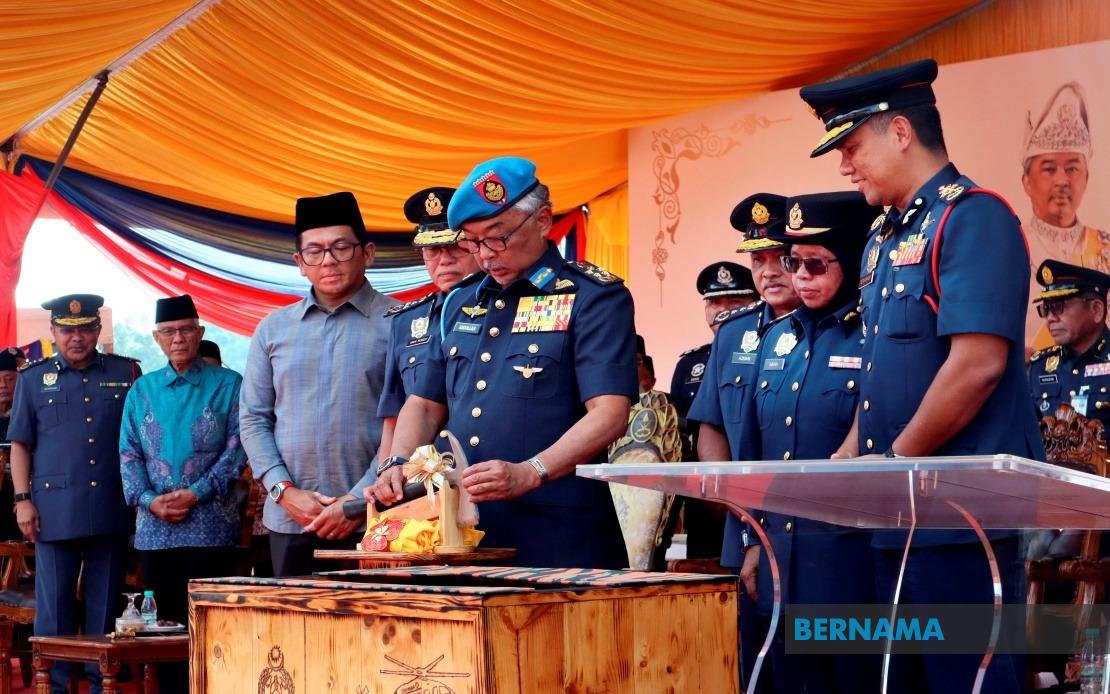
Al-Sultan Abdullah Ri'ayatuddin Al-Mustafa Billah Shah, the Sultan of Pahang, has acknowledged the substantial financial commitments made by both federal and state authorities towards infrastructure projects designed to enhance public welfare and safety. Speaking during the ceremonial opening of the Sungai Lembing Fire and Rescue Station in Kuantan on July 2, the monarch emphasized the critical importance of these initiatives in addressing the pressing challenges faced by communities across the state.
Flood management has emerged as a particularly pressing concern in Pahang, a state frequently battered by monsoon rains that trigger widespread inundation. Sungai Lembing, a township in Kuantan district, holds special significance as an indicator of broader flooding risks affecting the region. Its vulnerability to seasonal deluges makes it often the first settlement to experience water overflow during the northeast monsoon, effectively serving as an early warning system for surrounding areas. The Sultan's specific mention of this locality underscores the regional concentration of flooding challenges and the disproportionate impact on certain communities.
The fiscal demands of comprehensive flood mitigation schemes represent a substantial burden on government budgets. Infrastructure projects aimed at preventing and managing flooding require sustained capital investment, specialized engineering expertise, and ongoing maintenance commitments. By publicly acknowledging these expenditures, the Sultan has indirectly validated the prioritization of disaster prevention within the state's development strategy. This recognition carries significance within Malaysia's federal structure, where coordination between Kuala Lumpur and state capitals remains essential for effective resource deployment.
Among those attending the station opening were Pahang Menteri Besar Datuk Seri Wan Rosdy Wan Ismail, Deputy Housing and Local Government Minister Datuk Aiman Athirah Sabu, and Deputy Economy Minister Datuk Mohd Shahar Abdullah, who also represents Paya Besar as a Member of Parliament. The presence of multiple officials from different government tiers reflected the cross-level cooperation required to advance major development agendas across Malaysian states.
Beyond acknowledging completed projects, the Sultan has issued directives regarding future flood prevention measures. He has ordered that waterways adjacent to populated residential zones undergo deepening and possibly widening to expand their capacity during extreme precipitation events. This engineering intervention targets the fundamental mechanism through which floods occur: the overflow of rivers and streams when water volume exceeds channel capacity. Such orders demonstrate the monarch's direct engagement with technical aspects of disaster mitigation strategy, moving beyond ceremonial endorsement into substantive policy direction.
The Sultan has also commended fire and rescue personnel for their sustained commitment to public protection across multiple emergency scenarios. These services extend considerably beyond firefighting to encompass vehicle accident response, disaster relief operations, and rescue missions in diverse environments. The frequency of emergencies requiring their intervention underscores the ongoing nature of threats to public safety, whether from natural phenomena or human-caused incidents. The Sultan's observation that daily reports chronicle their activities reflects the continuous operational tempo maintained by emergency services across Pahang.
Demonstrating his personal commitment to understanding ground-level realities, the Sultan has indicated his intention to continue visiting disaster scenes and engaging directly with emergency personnel whenever circumstances allow. Such site visits serve multiple purposes: they provide firsthand observation of operational conditions, offer public recognition of worker sacrifices, and facilitate direct communication between leadership and frontline responders. This pattern of engagement has become characteristic of his tenure, establishing a visible presence in communities affected by calamities.
The monarch has also identified a geographic gap in emergency service provision that warrants remedy. Kampung Bantal in Ulu Tembeling, located within the Jerantut district, represents a remote settlement where terrain and distance create substantial response delays during emergencies. The Sultan has proposed establishing a volunteer fire brigade to serve this locality, acknowledging that professional paid services cannot adequately cover all dispersed settlements. This suggestion reflects pragmatic recognition of resource limitations and the appropriateness of community-based emergency response mechanisms in areas where professional coverage remains logistically challenging.
Pahang's vulnerability to flooding reflects broader environmental and geographical challenges confronting Southeast Asia. Climate patterns, terrain characteristics, and seasonal precipitation variations create recurring hazard exposures for multiple Malaysian states. Investment in flood management infrastructure thus carries relevance extending beyond state boundaries, contributing to regional resilience against climate-related disasters. The Sultan's public endorsement of these initiatives may also encourage other state leaders to prioritize similar investments within their own jurisdictions.
The opening of a new fire and rescue facility represents visible infrastructure progress, yet the state's true development trajectory depends on complementary investments in prevention, response capacity, and recovery mechanisms. The Sultan's multifaceted engagement—from acknowledging financial commitments to directing engineering interventions to recognizing workforce contributions—demonstrates the comprehensive approach required for effective disaster management. As Malaysia confronts intensifying weather variability and urbanization pressures, such integrated strategies across all levels of government become increasingly essential for protecting vulnerable populations and maintaining economic stability.

