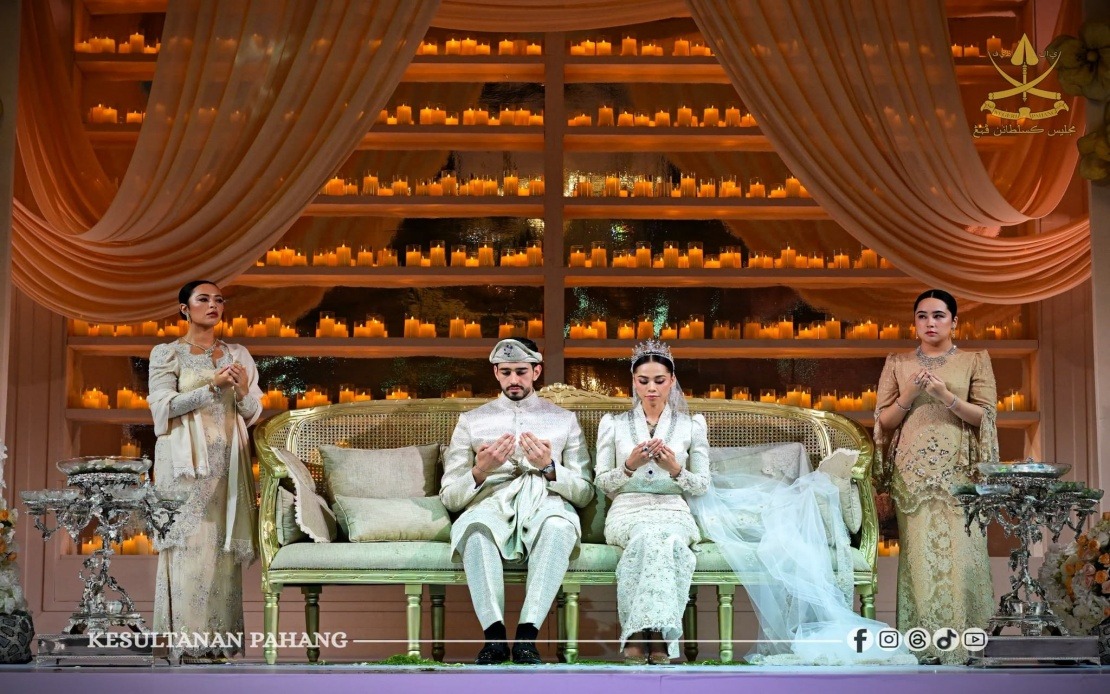
The royal household of Pahang marked a significant occasion yesterday when Sultan Al-Sultan Abdullah Ri'ayatuddin Al-Mustafa Billah Shah attended the wedding reception of his daughter, Tengku Puteri Raja Tengku Puteri Ilyana Alia, at a prestigious hotel in Kuala Lumpur. The union between Tengku Puteri Ilyana Alia and Christopher Lionel Froggatt brought together members of the extended royal family in a celebration that blended traditional Malay-Muslim customs with the contemporary nature of modern royal weddings in Malaysia.
The Sultan was accompanied by an entourage befitting the occasion, including Tengku Hassanal Ibrahim Alam Shah, the Regent of Pahang, alongside various siblings and other members of the royal household. The gathering underscored the importance placed by the Pahang royal family on this matrimonial union, with senior state officials and international dignitaries also gracing the event. Among the notable attendees was Pahang Menteri Besar Datuk Seri Wan Rosdy Wan Ismail, signifying both state and federal recognition of the occasion.
The diplomatic dimension of the reception was enhanced by the presence of Shaikh Mohammed Hamad Tahnoon Al Nahyan, representing the President of the United Arab Emirates. This participation highlights the growing ties between Malaysia and the UAE at both formal and familial levels, reflecting broader regional relationships and the international profile of Malaysia's royal families. The presence of a high-level UAE representative also suggests connections between the Pahang royal house and prominent Gulf families.
The celebration followed traditional Malay royal protocols, with the newlyweds taking centre stage on a specially prepared dais. The ceremonial proceedings began with the 'Istiadat Menyuap Nasi Semangat', a customary blessing ritual involving the feeding of fragrant rice, which was conducted by Tengku Puteri Seri Lela Wangsa Tengku Tan Sri Meriam Sultan Ahmad Shah. This ritual, deeply rooted in Malay cultural tradition, signifies the transition of the bride into married life and carries blessings from senior female members of the royal family.
Following this initial ceremony, the couple participated in the 'Istiadat Bersanding dan Merenjis', a particularly significant moment in traditional Malay wedding celebrations. During this phase, the Sultan himself performed the ceremonial blessing, sprinkling fragrant water or perfumed rice over the newlyweds in a gesture of paternal benediction. This personal involvement by the Sultan emphasizes the importance he places on his daughter's marriage and serves as a formal endorsement of the union within the royal and state context.
The Sultan subsequently performed the 'Istiadat Meletakkan Panca Bicara', a ceremonial act that represents both blessing and honour bestowed upon the newlyweds. The 'Panca Bicara' traditionally symbolizes wisdom and good governance, and its placement in this context carries layers of meaning beyond the immediate celebration. It serves as a symbolic transfer of paternal guidance and royal approval, marking the occasion with solemnity and spiritual significance. Following these ceremonies, Pahang Mufti Datuk Dr Asmadi Mohamed Naim led a prayer, invoking religious blessings upon the marriage.
The wedding reception exemplifies how Malaysia's royal families continue to balance tradition with contemporary practices. While the ceremonies observed established protocols and ancient customs, the international guest list and hotel venue reflect modern wedding sensibilities. This fusion is increasingly common among Malaysia's royal households, where maintaining cultural continuity remains paramount even as external circumstances evolve.
For Malaysian readers, such royal occasions serve multiple purposes beyond family celebration. They reinforce cultural values and religious observance within the broader society, provide a public narrative around family institution, and demonstrate continuity of Malaysian traditions. The involvement of state officials and international representatives also underscores how personal family events acquire diplomatic and state significance when they concern members of the royal family.
The wedding of Tengku Puteri Ilyana Alia to a foreign national also reflects changing demographics and globalization within Malaysia's elite circles. Cross-cultural marriages among royal families have become increasingly common in Southeast Asia, reflecting the region's integration into international networks while maintaining distinct cultural identities. The presence of the UAE representative suggests that such marriages can strengthen international relations and create lasting diplomatic connections between nations.
The detailed ceremonial proceedings, documented and shared through official royal channels, demonstrate how Malaysian royalty carefully curates public perception of significant family events. The participation of the Sultan in multiple ceremonial roles sends a clear message about family values, religious observance, and cultural pride. These events become touchstones for broader national conversations about tradition, modernity, and Malaysian identity.
As Pahang continues its development and modernization, occasions like this wedding reception remind the state and nation of the enduring importance of cultural ceremonies and royal institutions. The Sultan's personal participation in each blessing ritual, from the initial rice-feeding ceremony through to the final religious invocation, demonstrates that royal authority in Malaysia remains rooted in ceremonial tradition and spiritual leadership rather than political power alone.

