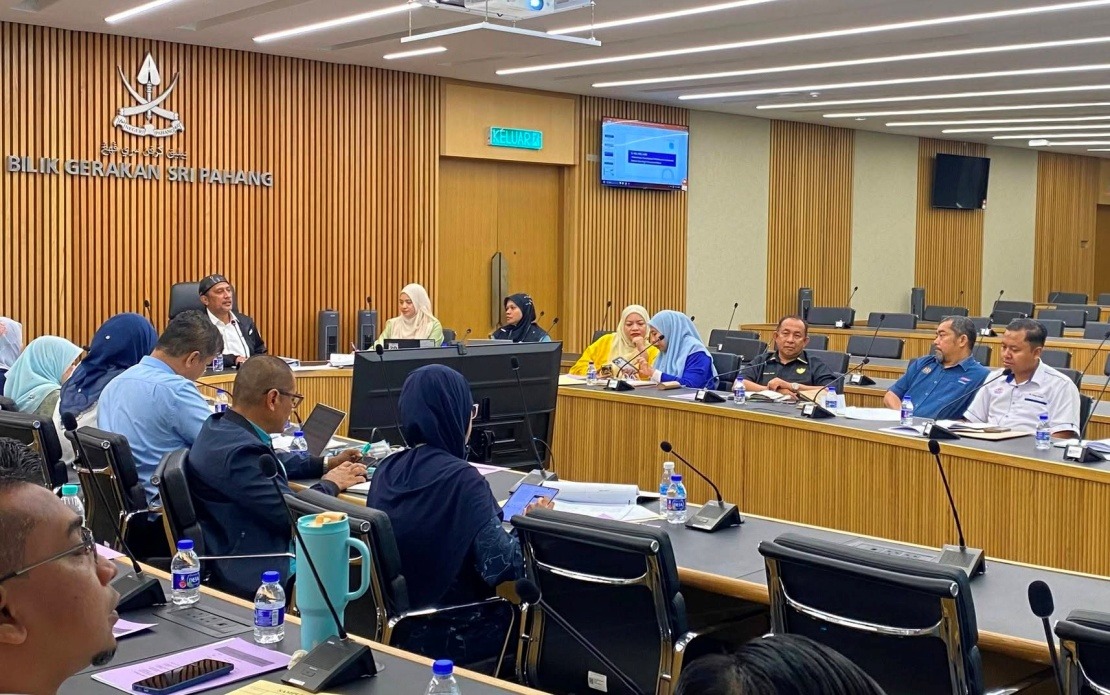
The Pahang state government has moved to address a contentious land dispute in Kampung Sungai Cot, Maran, by coordinating a comprehensive review involving multiple government agencies. The initiative, announced through the office of the State Islamic Religious Affairs, Rural Development and Orang Asli Affairs Committee, will task the Department of Orang Asli Development (JAKOA), the Pahang Land and Mines Office (PTG), and relevant land district authorities with studying potential remedies for the indigenous community members whose claims have become entangled with corporate land approvals.
The root of the dispute traces back to divergent administrative decisions made several years apart. Twelve Orang Asli individuals had submitted a written claim to JAKOA concerning cultivation rights over land in the area, establishing what they considered a legitimate basis for land stewardship within their settlement. However, the same parcel was subsequently approved for commercial use by a private company through a decision ratified at the 32nd State Executive Council meeting in November 2015, creating an irreconcilable conflict between the two claimant interests.
Datak Seri Syed Ibrahim Syed Ahmad, who chairs the relevant state committee, emphasised that the government intends to handle this matter with meticulous attention to legal requirements and through consultation with affected stakeholders. His statement pushed back against what he characterised as distorted portrayals of the situation by unnamed parties, suggesting that public discourse surrounding the dispute may have oversimplified or misrepresented the factual circumstances. This defensive posture hints at external pressure and community activism demanding governmental action.
Progress in informal negotiations has been mixed. JAKOA representatives have conducted multiple sessions with the Orang Asli claimants to seek middle ground, yet the process has encountered a critical obstacle: verification difficulties. Of the original twelve individuals who lodged claims, only six remain actively pursuing the matter through official channels. During these discussions, the remaining claimants argued that the land represents ancestral territory, yet state authorities have been unable to corroborate these historical assertions using existing administrative records and documented evidence. This evidentiary gap raises complex questions about how governments should weigh oral history and cultural memory against bureaucratic proof.
Pahang's broader landscape of indigenous land affairs provides important context for understanding this specific dispute. The state is home to 264 registered Orang Asli villages accommodating more than 90,000 residents. Of these settlements, thirty have achieved formal recognition under both the Orang Asli Act of 1954 and the National Land Code, representing the highest tier of legal protection. Additionally, the state government has approved formal land ownership transfers to the Orang Asli community across sixteen villages using Section 76 of the National Land Code, demonstrating a track record of resolving indigenous claims through statutory mechanisms.
The administrative pipeline reveals significant ongoing activity in land regularisation efforts. Currently, seventy-five separate applications for land gazettement affecting Orang Asli communities are progressing through the system at various stages. Of these, thirty-one applications have been processed to the point where they await consideration by the State Executive Council, while forty-four applications remain stalled due to overlapping claims that require resolution before advancement. A further one hundred forty-three applications are still in preliminary survey phases conducted by JAKOA personnel, suggesting that many more disputes of this nature may emerge as documentation and demarcation work continues.
The Kampung Sungai Cot case exemplifies the endemic tensions arising from Malaysia's colonial and post-colonial administrative history. Indigenous communities operated under customary tenure systems for centuries before the modern state imposed formal land classification regimes. When bureaucratic records fail to capture traditional occupation patterns, disputes become nearly impossible to resolve through documentary evidence alone. The inability of authorities to verify ancestral claims despite clear Orang Asli occupation creates a Catch-22 where indigenous rights depend on state-generated proof of rights that predate state institutions.
The involvement of a corporate entity approved through legitimate state council procedures complicates matters further. The company presumably invested resources and made business plans based on legal authorization, establishing its own stakeholder claims that cannot be easily dismissed. Resolving such disputes requires balancing corporate interests, indigenous welfare, and government credibility simultaneously. A purely legalistic approach favouring the earliest formal decision would dismiss Orang Asli interests; conversely, retrospective invalidation of corporate approvals invites legal challenges and deters investment.
The consultative approach outlined by state officials represents a pragmatic middle path, though its success depends on whether all parties genuinely accept compromise. For the Orang Asli claimants, any solution must preserve meaningful livelihood security and acknowledge historical connection to the land. For the company, legal clarity and certainty remain essential. For the state, the outcome must reinforce institutional legitimacy and demonstrate commitment to indigenous welfare without appearing arbitrary or retroactively punitive toward approved investors.
Malaysia's indigenous communities have increasingly mobilised around land rights over recent decades, reflecting broader regional movements among Southeast Asian first peoples. Disputes in Pahang generate attention beyond that state's borders, influencing how other authorities approach similar conflicts. A fair and transparent resolution to Kampung Sungai Cot could establish precedent for equitable handling of overlapping claims. Conversely, perceived mishandling risks emboldening opposition movements and undermining confidence in state institutions among Orang Asli populations.
The forthcoming investigation will test whether existing legal frameworks and administrative mechanisms can genuinely accommodate indigenous interests or whether new legislative approaches are needed. The fact that verification of ancestral claims poses such difficulty suggests that current evidentiary standards may require recalibration to reflect how Orang Asli communities actually maintain land relationships. Enhanced documentation protocols, greater weight for community oral histories, and more proactive state mapping of traditional territories could prevent similar disputes from arising as land gazettement work proceeds across the remaining one hundred forty-three pending applications and potentially hundreds more statewide.
Ultimately, the Pahang government's decision to commission this coordinated study acknowledges both the legitimacy of Orang Asli concerns and the complexity of balancing competing claims. Whether the resulting recommendations translate into genuine resolution or merely delay further grievance escalation will reveal whether Malaysia's administrative systems can genuinely protect indigenous land rights or whether deeper structural reforms remain necessary.

