Pakatan Harapan's momentum in the Johor state election campaign hinges on a methodical, constituency-by-constituency approach that segments the political battlefield into carefully prioritized zones, party leadership revealed this week. The coalition's secretary-general Datuk Seri Saifuddin Nasution Ismail disclosed that PH has graded all 56 contested seats according to support levels and local dynamics, allowing the alliance to concentrate resources where they matter most rather than spreading campaign energy uniformly across the state.
This granular strategy reflects a significant shift in how opposition coalitions contest Malaysian state elections. Rather than a one-size-fits-all messaging platform, PH recognizes that Puteri Wangsa faces entirely different electoral terrain than Johor Lama, just as Larkin presents distinct challenges from Endau. Saifuddin Nasution emphasized that such geographical and demographic variations demand tailored campaign approaches. The grouping system enables PH to deploy party machinery, candidate time, and messaging specifically calibrated to each cluster's particular profile and voter concerns, a lesson learned from previous electoral disappointments where opposition efforts diluted across non-competitive seats.
The three-party coalition is contesting every single seat with a transparent seat distribution that has drawn favourable contrast with rivals' fragmented approaches. PKR fields 20 candidates, Amanah contributes 19, and DAP provides the remaining 17 from the 56-seat slate. This unified front across all constituencies sends a clear signal to voters: PH is serious about governing Johor comprehensively rather than cherry-picking winnable areas. The manifesto accompanying this full-slate candidacy emphasizes deliverable promises rather than aspirational rhetoric, Saifuddin Nasution noted, a calculated attempt to build credibility among electorates fatigued by unfulfilled campaign pledges.
PH's gains are being amplified, paradoxically, by missteps from the political opposition. The Islamic party PAS has opted to contest only 11 of the 56 seats while explicitly directing supporters to back Barisan Nasional elsewhere. This fragmentation of the non-PH vote appears to be gifting electoral real estate to the coalition in constituencies where PAS supporters might otherwise have consolidated an anti-PH vote. Saifuddin Nasution characterized such tactical decisions as inadvertently advantageous to PH's expansion. The move throws into sharp relief PH's more coordinated strategy and underscores the coalition's attempt to present itself as the serious, organized alternative to the splintered opposition landscape.
Higher-profile defections are reinforcing this momentum narrative. The appearance of Datuk Dr Mohd Puad Zarkashi, a former UMNO Supreme Council member, alongside Prime Minister Datuk Seri Anwar Ibrahim at a series of talks in Felda Ulu Tiram has generated additional positive sentiment for the coalition. Such symbolic crossovers from UMNO, long the dominant force in Johor politics, carry outsized psychological weight. They suggest cracks in the traditional Barisan Nasional establishment and lend credibility to PH's claim that even entrenched party elites recognize the need for political renewal.
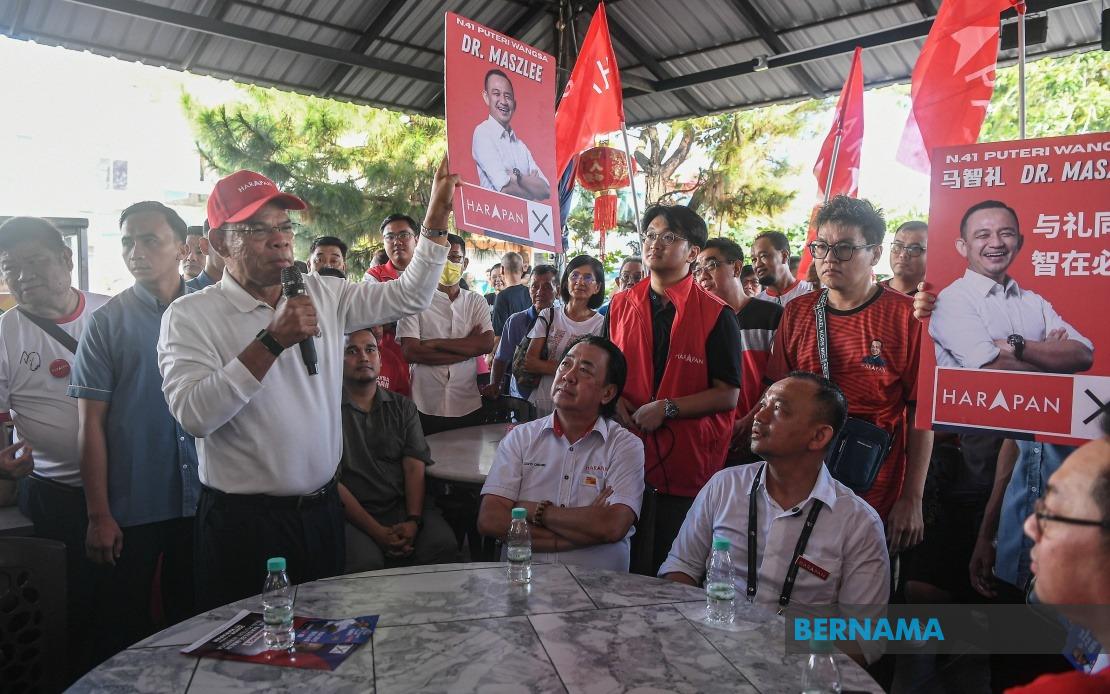
The candidate selection process itself reflects strategic thinking. Dr Maszlee Malik, contesting Puteri Wangsa, exemplifies PH's calculated positioning. Saifuddin Nasution described him as a qualified candidate and crucial asset should PH win the mandate to form government. This framing transforms individual candidacies from mere seat-fillers into integral components of a coherent governance plan. Voters in constituencies like Puteri Wangsa are implicitly being offered not just an opposition vote but membership in a functioning alternative administration with identifiable, credentialed leaders.
For Malaysian political observers and regional analysts watching Johor, this election represents a critical barometer of PH's electoral durability beyond its 2018 watershed victory. The coalition suffered significant setbacks in Sabah and previously in other state contests, prompting internal reorganization. The Johor campaign's emphasis on seat-by-seat tailoring rather than top-down uniformity suggests the coalition has internalized lessons about local voter heterogeneity and the dangers of generic national messaging.
The electoral mathematics appear competitive. With 172 candidates fielded across 56 seats and a polling day set for July 11, the contest will test whether PH's ground organization can translate strategic ambition into actual seat gains. Early voting commences July 7, providing an initial data point on turnout patterns. The outcome carries implications beyond Johor itself, potentially signalling whether opposition politics in Malaysia are consolidating around the PH banner or fragmenting further.
Geopolitically, a PH victory would represent a significant shift in one of Malaysia's most traditionally Barisan Nasional-dominated states, with ramifications for federal political calculations and the Anwar Ibrahim administration's claim to represent a renewal mandate. Conversely, a strong showing by incumbent forces would suggest limits to opposition momentum and the enduring appeal of established parties in state-level politics. The focus on targeted, evidence-based campaigning rather than broad-brush appeals may ultimately determine which coalition can better mobilize its base and persuade swing voters in an era where political volatility has become Malaysia's defining characteristic.

