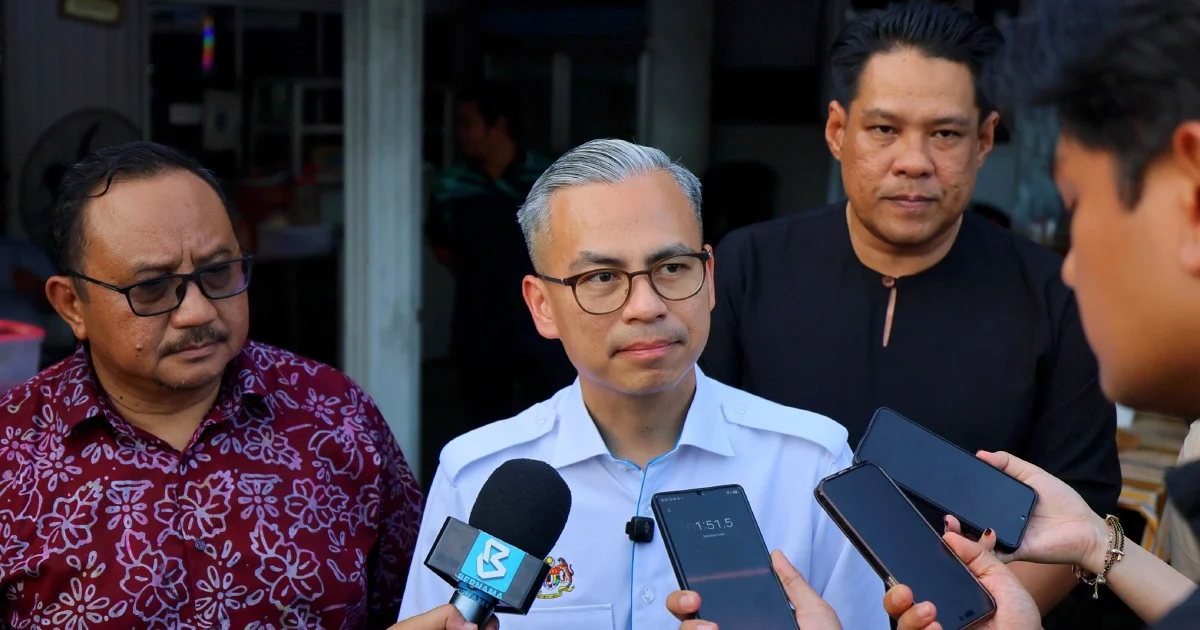
Pakatan Harapan is preparing a comprehensive two-pronged approach to contest the forthcoming Johor state election, weaving together digital engagement with conventional field campaigning to maximise its reach across the economically significant southern state. The coalition's strategy reflects evolving electoral dynamics in Malaysia, where online platforms have become integral to political messaging whilst the efficacy of direct voter contact remains paramount, particularly in a state where PH seeks to rebuild support after previous setbacks.
The dual-track methodology signals strategic recognition that Malaysian voters increasingly inhabit both digital and physical spaces simultaneously. Social media platforms enable rapid dissemination of policy positions and counter-narratives, whilst grassroots canvassing allows candidates to address local grievances and build personal connections with constituents. This hybrid model acknowledges that relying exclusively on either channel risks missing substantial voter segments—older demographics remain less active on digital platforms, whilst younger voters may screen out traditional campaign methods.
Johor represents particularly challenging terrain for Pakatan Harapan's aspirations. The state has served as a stronghold for Barisan Nasional, particularly UMNO, which maintains deep institutional networks and longstanding electoral machinery. PH's presence in Johor has weakened since 2018, making any electoral recovery contingent upon innovative campaign architecture that outpaces traditional opposition by Barisan Nasional. The coalition's pivot toward integrated digital-ground campaigning suggests tacit acknowledgement that conventional approaches alone may prove insufficient against entrenched state-level opposition.
Online campaigning offers PH distinct advantages in a state where opposition media ownership and reach are constrained. Digital platforms bypass traditional gatekeeping mechanisms, allowing the coalition to communicate directly with voters through targeted advertising, viral content strategies, and real-time engagement across Facebook, TikTok, Instagram, and WhatsApp. These channels prove particularly cost-effective compared to traditional broadcast media, enabling resource-constrained campaigns to achieve substantial reach with precision targeting of demographic and geographic constituencies.
However, ground operations remain irreplaceable for translating digital engagement into actual electoral support. Voter surveys consistently demonstrate that personal contact from candidates and party activists significantly influences electoral behaviour, particularly in constituencies where voters assess candidates' accessibility and commitment to local issues. Door-to-door canvassing, community gatherings, and local leadership forums enable PH representatives to diagnose community problems—inadequate public facilities, unemployment concerns, healthcare accessibility—that become foundation stones for substantive campaign messaging.
The integration of these two components creates multiplicative campaign effects. Ground operatives can identify trending local concerns, which digital teams then amplify through targeted online content, creating impression of responsiveness to grassroots sentiments. Conversely, online momentum around particular issues can be leveraged into ground-level organizing, where activists mobilize previously engaged digital audiences into voting blocs and volunteer networks. This cyclical reinforcement distinguishes sophisticated modern campaigning from siloed traditional approaches.
Johor's demographics particularly suit such integrated strategies. The state encompasses urban centres including Johor Bahru where digital penetration remains highest, industrial towns where manufacturing workers and their families inhabit semi-urban environments, and rural constituencies where traditional campaigning persists as dominant influence. A unified campaign unable to navigate these varied contexts risks fragmenting its message across regions, whereas coordinated digital-ground operations can tailor messaging whilst maintaining strategic coherence.
Resource allocation proves critical for implementation success. PH must simultaneously invest in digital infrastructure—hiring social media teams, producing content, securing paid advertising space—whilst maintaining adequate ground personnel for door-to-door canvassing and community engagement. This simultaneous resourcing challenge exceeds that faced by well-funded incumbents, potentially requiring PH to innovate through volunteer coordination and grassroots fundraising mechanisms that mobilize supporter networks for non-financial campaign contributions.
The timing of Johor's election remains uncertain, yet PH's strategic articulation now suggests sophisticated preparation underway. Coalition leaders recognize that Malaysian electoral dynamics have fundamentally transformed over recent election cycles, with digital engagement increasingly determining outcomes particularly amongst urban and younger voters. Simultaneously, incumbent advantages in state-level machinery demand that opposition campaigns achieve unusual organizational intensity simply to achieve competitive parity in voter contact and persuasion.
For Malaysian observers, PH's dual-track approach carries broader significance beyond Johor's boundaries. Successful implementation would establish precedent for nationwide campaign methodology that other opposition parties might subsequently adopt, potentially elevating overall campaign professionalism across Malaysia's political ecosystem. Conversely, campaign failure would suggest that integrated digital-ground strategies remain insufficient to overcome state-level institutional advantages enjoyed by long-incumbents, raising questions about viability of electoral competition in states where Barisan Nasional maintains entrenched advantages.
The coalition's strategic emphasis also reflects international campaign trends where progressive parties increasingly adopt integrated digital strategies to mobilize volunteer bases and micro-target voters with precision previously available only to well-funded corporate campaigns. PH's application of these methodologies to Malaysian context suggests organizational maturation, yet ultimate effectiveness remains contingent upon execution quality and whether ground and digital teams operate with genuine coordination rather than parallel but disconnected activities.

