Pakatan Harapan has presented a significantly more expansive platform for the forthcoming Negeri Sembilan state election, marking a strategic pivot in how the coalition is approaching voter support in Malaysia's most affluent state per capita. The ten-point manifesto, unveiled under the banner 'Negeri Sembilan Kekal Harapan' (Negeri Sembilan Stays with Harapan), explicitly targets middle-income households alongside traditional disadvantaged groups, signalling a broader political calculus ahead of the August 1 polling day.
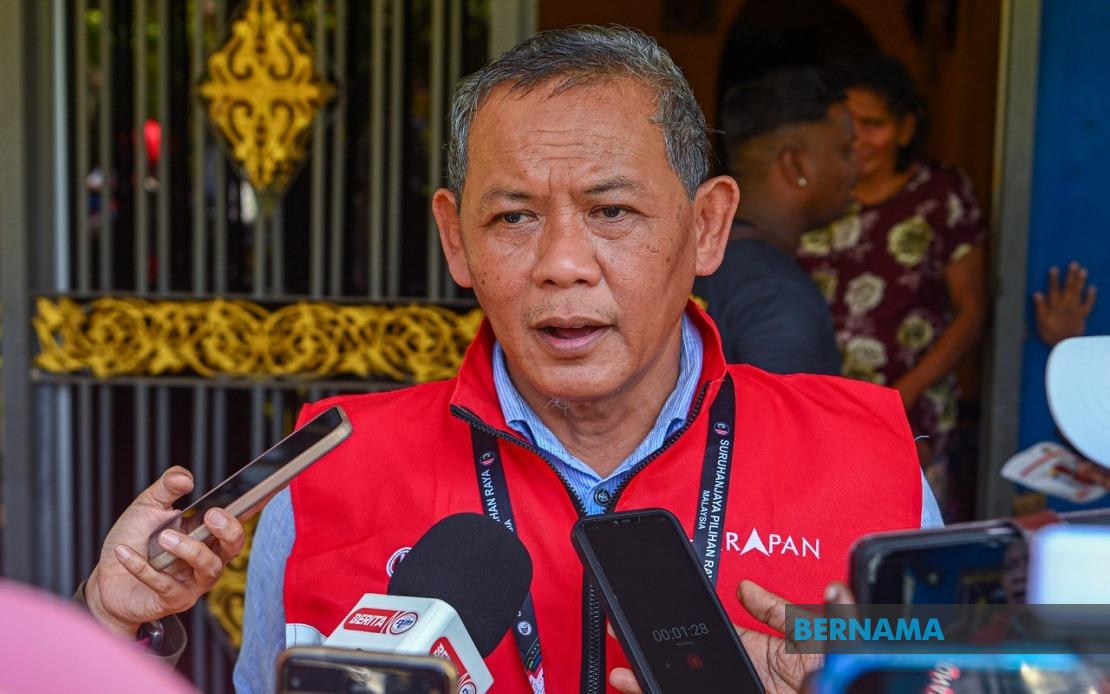
State PH chairman and Menteri Besar Datuk Seri Aminuddin Harun articulated this shift during a community engagement event in Linggi, emphasizing that the coalition's newly revised approach reflects lessons learned from its 2018 election victory and subsequent governance of the state. Rather than concentrating resources exclusively on the B40 segment—households earning below RM2,300 monthly—Aminuddin positioned the M40 category (RM2,301 to RM5,600 monthly income) as central to the manifesto's design and implementation strategy. This recalibration appears calculated to appeal to Negeri Sembilan's relatively prosperous electorate whilst maintaining PH's historical commitment to social safety nets.
The decision to broaden the income targeting reflects both demographic realities and political pragmatism. Negeri Sembilan has one of Malaysia's stronger per-capita income profiles, with a substantial proportion of voters falling into middle-income brackets. By explicitly extending educational access, welfare initiatives, and development benefits to M40 households, Aminuddin effectively repositioned PH's offer beyond a purely redistributive model toward one claiming comprehensive social coverage. He stressed that this expansion multiplied the manifesto's potential impact across a materially larger segment of Negeri Sembilan's population.
Aminuddin's framing of the manifesto shift carries particular weight given his dual roles as state PH chairman, PKR vice-president, and Menteri Besar since 2018. His assertion that previous iterations focused narrowly on B40 beneficiaries suggests internal party evaluation indicating that broader income targeting could strengthen electoral prospects. The expansion also implicitly acknowledges that middle-income groups increasingly feel economically squeezed in Malaysia's cost-of-living environment, positioning PH as responsive to these emerging pressures rather than rigid in ideological commitment to poverty-focused redistribution alone.
The timing of this manifesto refinement occurs against the backdrop of intensifying three-cornered contests across multiple Negeri Sembilan seats. Aminuddin himself faces a competitive challenge in Linggi, where he defends his seat against Barisan Nasional incumbent Datuk Mohd Faizal Ramli and Parti Pribumi Bersatu Malaysia's Zamri Md Said. The 54-year-old Zamri represents a particular threat, as Bersatu's presence fragments the opposition vote but also demonstrates that PH cannot assume automatic support among previously loyal constituencies. Such competitive pressures across multiple seats render a broader manifesto targeting increasingly valuable as a differentiation strategy.
Aminuddin's repeated invocation of PH's track record in delivering on 2018 election promises represents a calculated attempt to anchor the coalition's credibility. He argued that fulfilling such commitments demands far greater practical effort than merely formulating campaign pledges, and he positioned PH's governing experience since 2018 as empirical proof of delivery capability. This emphasis on implementation history rather than aspiration alone suggests internal party research indicating that Negeri Sembilan voters increasingly evaluate parties through a lens of demonstrated competence and follow-through, particularly among middle-income segments accustomed to demanding accountability from service providers and government.
The manifesto's expanded scope also carries implications for resource allocation and fiscal planning at the state level. If returned to power, PH would face pressure to operationalize benefits across a substantially larger eligible population—extending initiatives previously concentrated among B40 households to encompass the roughly 40 percent of Negeri Sembilan households classified as M40. This expansion necessarily complicates budget prioritization and could invite scrutiny regarding whether stretched resources adequately serve either income segment, a potential vulnerability that Barisan Nasional may exploit during the campaign.
Aminuddin's appeal for mature campaign conduct and respect for social harmony struck a notably conciliatory tone, particularly relevant given Malaysia's complex racial and religious sensitivities. By framing electoral competition within parameters respecting communal peace, he positioned PH as the responsible governing coalition, contrasting implicitly with perceived opposition recklessness. This rhetorical strategy carries particular significance in Negeri Sembilan, where Indian, Malay, and Chinese communities comprise substantial portions of the electorate and interethnic political tensions periodically surface during contested elections.
The 16th Negeri Sembilan state election emerges from the State Legislative Assembly's dissolution on June 5, initiated amid broader coalition dynamics and factional pressures within Selangor and other PH-governed jurisdictions. The Election Commission's scheduling of August 1 as polling day, with early voting on July 28, provides roughly six weeks for intensive campaigning. This relatively compressed timeframe elevates the importance of manifesto clarity and rapid messaging penetration, advantages potentially favoring the incumbent PH coalition's greater institutional resources and media visibility compared to opposition fragments.
For Malaysian political observers and Southeast Asian analysts tracking the evolution of Malaysian coalition politics, Negeri Sembilan's election carries symbolic weight beyond its eleven state seats. The ballot test whether PH's original 2018 reform mandate retains sufficient electoral appeal to sustain power even as the coalition adopts more conventional targeted-benefit strategies. The expansion to M40 beneficiaries suggests PH strategists believe that maintaining state control requires demonstrating responsive adjustment to voter preferences and emerging economic anxieties, even if such recalibration potentially dilutes the transformative redistributive ethos that originally energized the coalition's formation.
The manifesto's final concrete content will substantially influence electoral dynamics over the coming weeks. Beyond income-targeted benefits, specific commitments regarding infrastructure, education quality, healthcare access, and economic development opportunities will determine whether PH's expanded platform genuinely resonates across middle-income households or whether voters perceive the broadening as superficial rhetorical repositioning lacking substantive differentiation from opposition offerings. Aminuddin's confidence in PH's delivery record will face practical testing through voter evaluations of tangible improvements in living standards during the 2018-2023 period.

