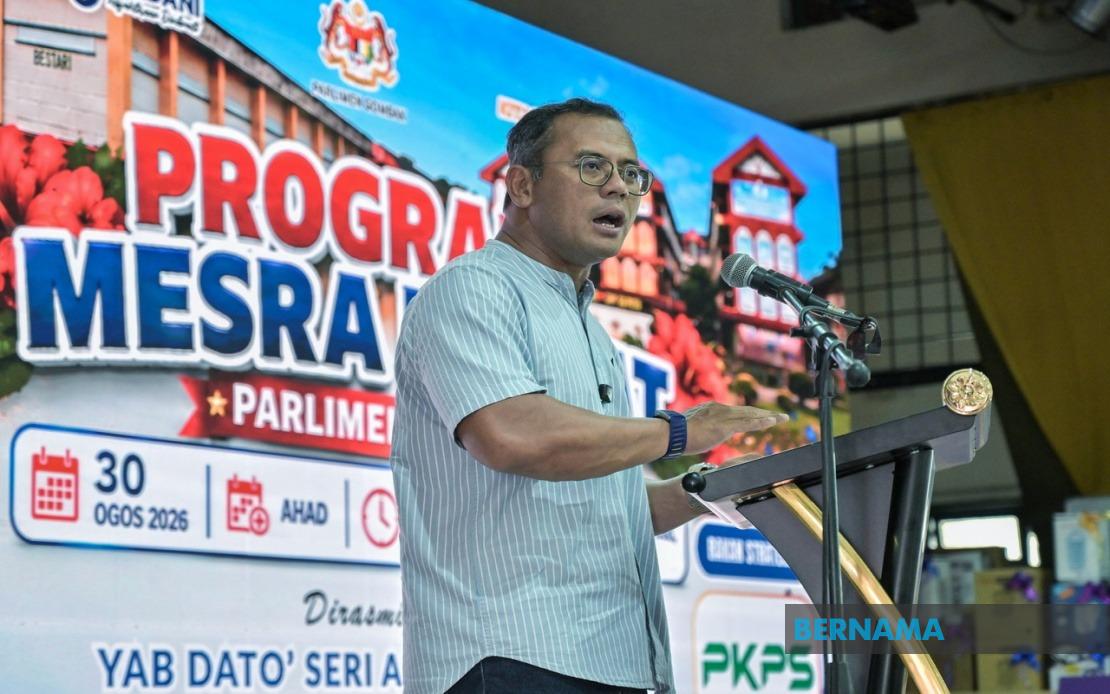
Pakatan Harapan is keeping all options on the table as it prepares for the Melaka state election, with the coalition's leadership indicating it would be willing to fight the contest alone if attempts to forge an electoral arrangement with Barisan Nasional come to nothing. Datuk Seri Amirudin Shari, who serves as PH's election director and also holds the post of Selangor Menteri Besar, underscored the coalition's determination to participate in the polls through whichever avenue proves most strategically advantageous, whether that involves collaboration or solo participation.
Amirudin's remarks, made during an engagement at the National Aspirations with Youth (NANBA) event for the Central Zone Series in Gombak, reflect PH's measured approach to coalition negotiations at a time when Malaysia's political landscape continues to shift in unpredictable ways. The coalition remains in active discussions with Barisan Nasional regarding potential cooperation, but the PH leadership has made clear that no final determination will be reached hastily. This stance represents a calculated positioning ahead of what promises to be a closely contested state-level competition.
The comments by Amirudin followed earlier signals from Melaka PKR's state leadership council acting chairman Adam Adli Abdul Halim, who had suggested that PH might pursue an independent electoral strategy should negotiations with Barisan Nasional fail to produce an acceptable framework for cooperation. Rather than dismiss this possibility, Amirudin acknowledged it as a legitimate option worthy of serious consideration, while simultaneously urging patience as discussions continue at higher levels within both coalitions.
What distinguishes PH's current posture is its recognition that Malaysia's political dynamics have become increasingly fluid and context-dependent. The coalition's leadership acknowledges that different state elections may warrant different strategic approaches, depending on local political circumstances, voter sentiment, and the receptiveness of potential partners to negotiated arrangements. This flexibility stands in contrast to earlier periods when coalition partnerships were more rigid and predetermined.
Amirudin stressed that the party organisation should not rush to conclusions while space for productive dialogue still exists. He noted that meaningful negotiations require willing participants on both sides and that PH remains open to exploring common ground with Barisan Nasional if such conversations can be sustained. However, the implicit message is also clear: if Barisan Nasional proves unwilling to engage seriously or if the terms on offer prove unacceptable, PH possesses the organisational capacity and electoral machinery to mount a credible independent campaign.
For voters in Melaka and observers across Southeast Asia monitoring Malaysian political trends, this flexibility carries both promise and uncertainty. On one hand, it suggests that electoral arrangements will be driven by genuine strategic calculation rather than pre-determined ideology or entrenched positions. On the other hand, the fluidity creates conditions where late-stage negotiations could alter the competitive landscape substantially, potentially complicating voter expectations and campaign messaging in the weeks preceding polling day.
The broader context for PH's strategic positioning involves the coalition's recent trajectory at federal and state levels. Having led the government following the 2018 general election before that arrangement fractured in 2020, PH has since rebuilt its political standing through state-level successes and demonstrated administrative competence. In Melaka specifically, the political situation has been volatile, with state governments changing hands multiple times in recent years, creating an environment where electoral outcomes remain genuinely uncertain and where the right coalition partnership could prove decisive.
Barisan Nasional's own political calculations are equally complex, given the coalition's internal divisions and the need to balance representation across its multiple component parties. That negotiations between PH and Barisan Nasional are ongoing at all represents a significant shift from earlier patterns of outright opposition, suggesting both coalitions recognise potential advantages in cooperation or at minimum in avoiding the electoral chaos that might result from three-way contests involving other political forces.
For Malaysian politics more broadly, PH's willingness to consider independent electoral participation reflects a maturation of the coalition's understanding that electoral success depends less on predetermined alliances and more on pragmatic assessment of which strategies maximise the likelihood of securing voter support and legislative seats. This represents a departure from traditional Malaysian political culture, where coalitions tended to be more stable and less subject to election-by-election renegotiation.
Amirudin's comments also implicitly address internal party management challenges, acknowledging that PH's membership and supporters require clear communication about the coalition's strategic thinking without premature closure of ongoing negotiations. By indicating that party leadership retains decision-making authority while simultaneously signalling openness to different possibilities, he attempts to navigate between demanding immediate certainty and preserving strategic flexibility.
The timeline for final decisions remains uncertain, but Amirudin's comments suggest that clarity will emerge as election preparations advance and as Barisan Nasional clarifies whether it intends to engage substantively with PH or pursue its own electoral strategy. The fluidity that characterises present circumstances will eventually give way to concrete political arrangements, either through successful negotiation or through PH's decision to proceed independently.
What remains evident is that PH approaches the Melaka election from a position of genuine choice rather than desperation or ideological rigidity. The coalition possesses organisational capacity, a credible track record of state-level administration, and sufficient internal cohesion to contest an election on its own terms if circumstances warrant that decision. Simultaneously, the coalition remains open to exploring cooperative arrangements that might strengthen its competitive position or serve broader political objectives. This combination of strength and flexibility represents perhaps the most significant shift in PH's political positioning since the coalition's formation more than a decade ago.

