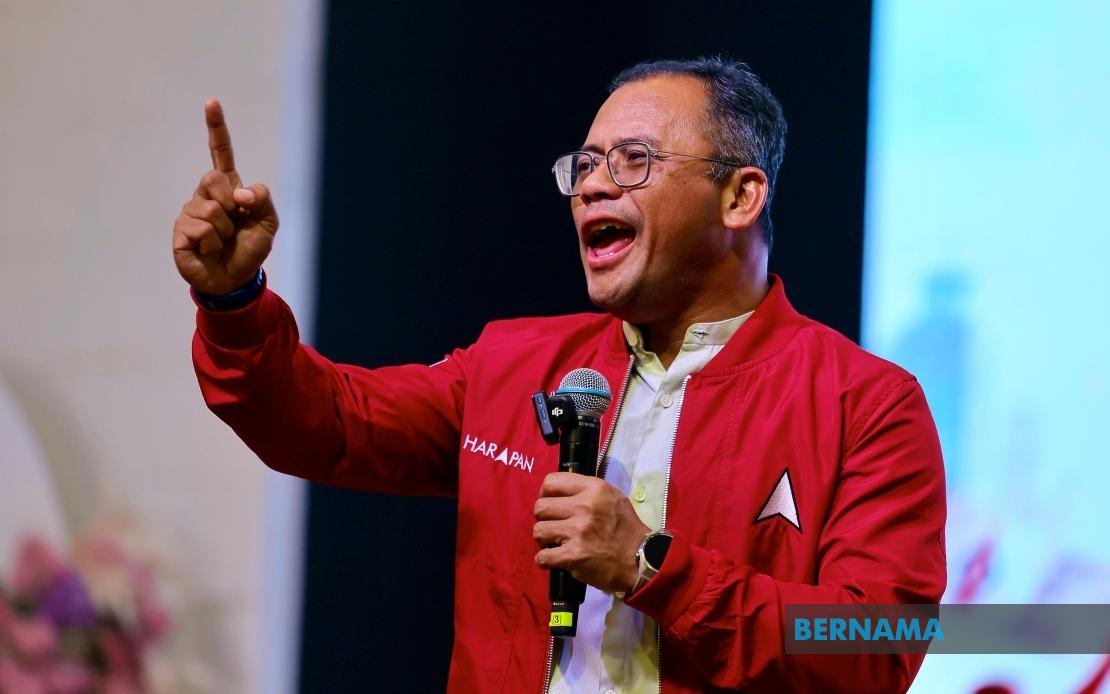
Pakatan Harapan formally presented its election blueprint for the 16th Johor state election on July 3, rolling out the "Johor for All" manifesto as the cornerstone of its campaign message to voters across Malaysia's southern state. The formal unveiling occurred in Johor Bahru, where the coalition sought to establish a comprehensive platform addressing voter concerns and outlining its vision for the state's future governance.
The ceremony was spearheaded by Datuk Seri Amirudin Shari, a senior figure within the PKR establishment who holds the position of co-election director for the coalition's nationwide electoral strategy. His prominent role in launching the manifesto underscores PKR's central position within the PH alliance and signals the party's commitment to driving the coalition's electoral push in Johor, one of Malaysia's most politically significant states with a substantial voter base and historical influence over national politics.
The manifesto launch brought together the coalition's key operational leaders in Johor, reflecting the coordinated nature of PH's state-level campaign machinery. Aminolhuda Hassan, who leads the PH contingent at the state level, joined the proceedings alongside representatives from the coalition's component parties. Teo Nie Ching, heading the Johor wing of the Democratic Action Party (DAP), and Datuk Seri Dr Zaliha Mustafa, steering PKR's state operations, both participated in the event, demonstrating the multi-party composition that defines the PH alliance.
The presence of the coalition's candidates contesting the state election at the manifesto launch served a crucial function in PH's electoral strategy. By assembling the party's slate of contenders at the formal presentation of the campaign platform, the coalition visibly connected its leadership hierarchy to the grassroots representatives who would carry the "Johor for All" message to individual constituencies. This staging reinforced the notion of unified party discipline and message consistency across the electoral campaign.
The "Johor for All" branding itself carries significant political messaging. The inclusive language suggests an attempt by PH to position itself as transcending narrow factional or communal divisions, projecting an image of broad-based governance that reaches across Johor's diverse demographic composition. For a state with substantial urban and rural populations, as well as significant Chinese and Indian minority communities alongside Bumiputera constituencies, the universalist framing may resonate with swing voters concerned about representation and equitable development.
Johor holds particular strategic importance within Malaysia's political landscape. As the second-most populous state and a perennial electoral battleground, outcomes in Johor elections frequently indicate broader trends in national sentiment. Previous contests in the state have shown swinging patterns between different coalitions, reflecting how local and national political currents intersect. The PH's emphasis on articulating a clear manifesto reflects the coalition's understanding that Johor voters demand substantive policy platforms rather than personality-driven campaigns alone.
The timing of the manifesto launch, occurring in early July, provided the coalition with several months to publicize its platform before actual polling day. This extended campaign period allowed PH candidates to engage voters systematically across all state constituencies, explaining specific policy positions and addressing local concerns. The staggered approach to campaign messaging, beginning with the formal manifesto presentation, follows established electoral best practices where broad national themes subsequently translate into targeted local messaging.
For Malaysian readers and the broader Southeast Asian political context, PH's Johor campaign demonstrates how established coalitions manage electoral competition in Malaysia's federal system. The involvement of multiple parties—PKR, DAP, and others—operating under unified messaging shows the operational complexity of maintaining multiparty alliances while projecting coherent governance visions. This coordination challenge becomes particularly acute in states where the coalition must appeal across diverse constituencies with varying priorities and demographic compositions.
The manifesto's unveiling also reflects how PH, having previously governed Malaysia between 2018 and 2022, approaches electoral competition from the perspective of an alternative government waiting to assume power rather than an insurgent movement challenging entrenched incumbency. The emphasis on clear policy platforms and systematic candidate presentations signals a coalition seeking to project governmental readiness and administrative competence to voters evaluating whether to return the coalition to office.
Looking at the broader regional perspective, Johor's election demonstrates Southeast Asia's continuing commitment to competitive electoral politics despite various democratic pressures facing the region. Malaysia's regular state elections provide a venue for political contestation, coalition-building, and voter choice that remains relatively robust compared to some neighboring societies. The PH's systematic campaign approach reflects confidence in electoral mechanisms as a legitimate pathway to political power within Malaysia's constitutional framework.

