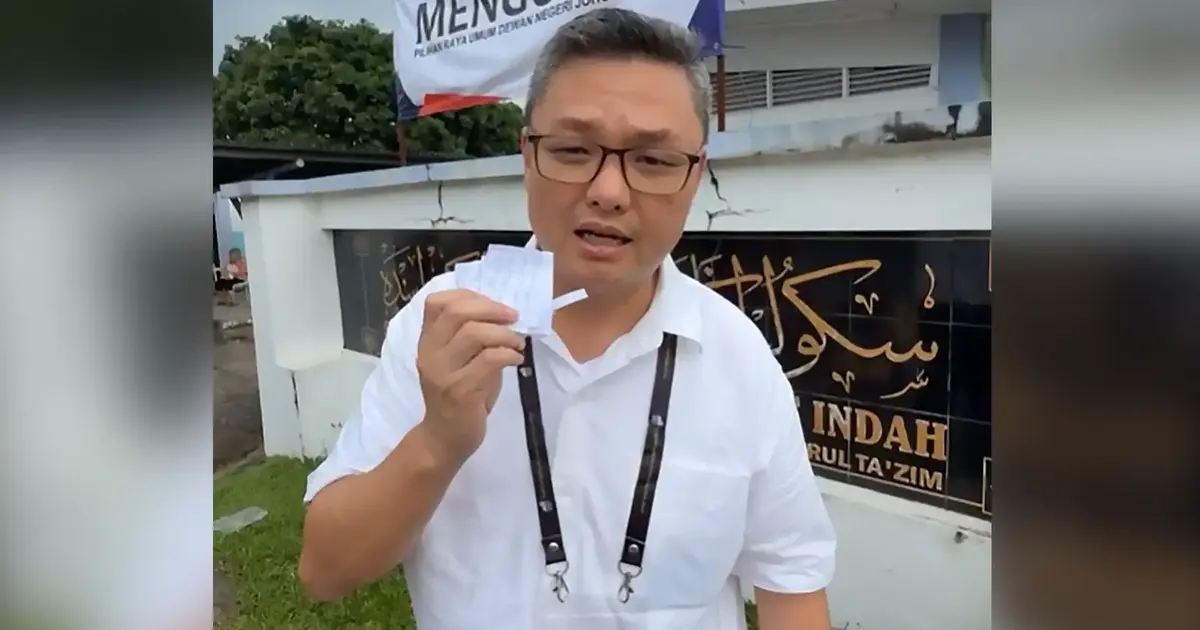
A senior Pakatan Harapan official has escalated concerns about electoral conduct by filing a formal complaint alleging that a Barisan Nasional counting agent engaged in the unauthorised recording of voter ballots during a recent polling exercise. The complaint centres on claims that the agent maintained handwritten notes documenting individual ballot selections, a practice that election observers and political watchdogs regard as a potential breach of voting privacy and electoral protocols.
Tee Boon Tsong, speaking for the Pakatan Harapan faction, contends that such documentation of voters' choices represents a serious procedural violation. The practice of recording ballot selections by a party-aligned official raises significant questions about voter privacy protections and the integrity of the electoral process. In Malaysia's electoral framework, the secrecy and independence of individual voting decisions form a cornerstone of democratic participation, and any attempt to document how specific voters cast their ballots undermines this foundational principle.
The complaint filed by Tee Boon Tsong specifically demands that the Election Commission (EC) undertake a comprehensive investigation into the alleged misconduct. Beyond merely establishing whether the recording occurred, the complaint seeks to determine the extent of any violations and whether systemic issues exist in how counting agents are trained, supervised, and held accountable during polling operations. The allegation suggests potential lapses in electoral administration that warrant rigorous scrutiny.
Crucially, Tee Boon Tsong has called for the confiscation and secure preservation of the handwritten notes as vital evidence. These documents, if they exist and contain the alleged ballot records, would be instrumental in establishing the facts of the case and understanding the scope of any irregularities. The preservation of such evidence is fundamental to any credible investigation and subsequent accountability measures. The handling of this evidence will largely determine whether the complaint produces meaningful findings or becomes mired in procedural disputes.
For Malaysian readers, this complaint highlights the ongoing tension between different political coalitions' approaches to electoral monitoring and the mechanisms through which citizens can raise concerns about election administration. The Pakatan Harapan-filed complaint reflects broader worries among opposition parties about the consistency with which electoral rules are applied and enforced, particularly regarding the conduct of counting agents whose presence is meant to ensure fairness rather than undermine it.
The incident also illuminates the delicate balance election authorities must maintain between facilitating efficient vote counting and protecting voter privacy. Barisan Nasional's representation through a counting agent provides the ruling coalition with oversight capacity, but this presence must never extend to the documentation of individual voting choices. The distinction between legitimate monitoring and improper recording is critical and appears to have been breached, according to the complaint.
From a regional perspective, Malaysia's handling of this allegation carries implications for how Southeast Asian democracies address electoral transparency and integrity. Nations across the region grapple with similar challenges: ensuring that political parties have sufficient oversight mechanisms while simultaneously protecting the sacred principle that voting remains a private act. The manner in which Malaysia's Election Commission responds to this complaint will signal to both domestic stakeholders and international observers whether election administration can remain above partisan manipulation.
The Election Commission's investigation will need to address several key questions: whether the handwritten notes actually document specific ballot selections, how the counting agent obtained such information, whether supervisory failures allowed the practice to occur, and what systemic reforms might prevent recurrence. These are not minor administrative matters but fundamental questions about whether electoral officials properly executed their duties.
For Pakatan Harapan, filing this complaint represents an attempt to establish a documented record of alleged misconduct that could support future arguments about election integrity and fairness. Whether such complaints receive expeditious investigation and transparent outcomes remains a persistent concern in Malaysian electoral politics. The party's emphasis on evidence confiscation suggests confidence that physical proof exists and warrants detailed examination.
The broader context matters considerably here. In Malaysian elections, confidence in the electoral system depends substantially on voters believing their choices remain genuinely secret and that no party apparatus can trace how they voted. When allegations surface suggesting counting agents are documenting ballot selections, they strike at the heart of voter confidence. Whether these specific allegations prove substantiated or not, the Election Commission must demonstrate that it takes such concerns seriously through transparent investigation processes.
This complaint also underscores the ongoing evolution of electoral monitoring practices in Malaysia. As political parties become increasingly sophisticated in their election-day operations, the opportunities for procedural violations may expand. Election officials must remain vigilant in distinguishing between legitimate party oversight and inappropriate interference with the voting and counting processes. The outcome of the Election Commission's investigation into this allegation will likely influence how closely future counting agent conduct is monitored and regulated across Malaysian polling stations.

