Pakatan Harapan is preparing to contest the 16th Johor State Election through an integrated campaign approach that merges traditional community engagement with contemporary digital channels. The coalition's strategy reflects the political reality that winning in Malaysia's most populous state requires reaching voters across multiple touchpoints—from village gatherings to Facebook and Instagram. PKR, the largest PH component party in the contest, will field 20 candidates and begin ground activities immediately after nominations close, signalling an aggressive push to dislodge the incumbent Barisan Nasional government that has controlled the state since independence.
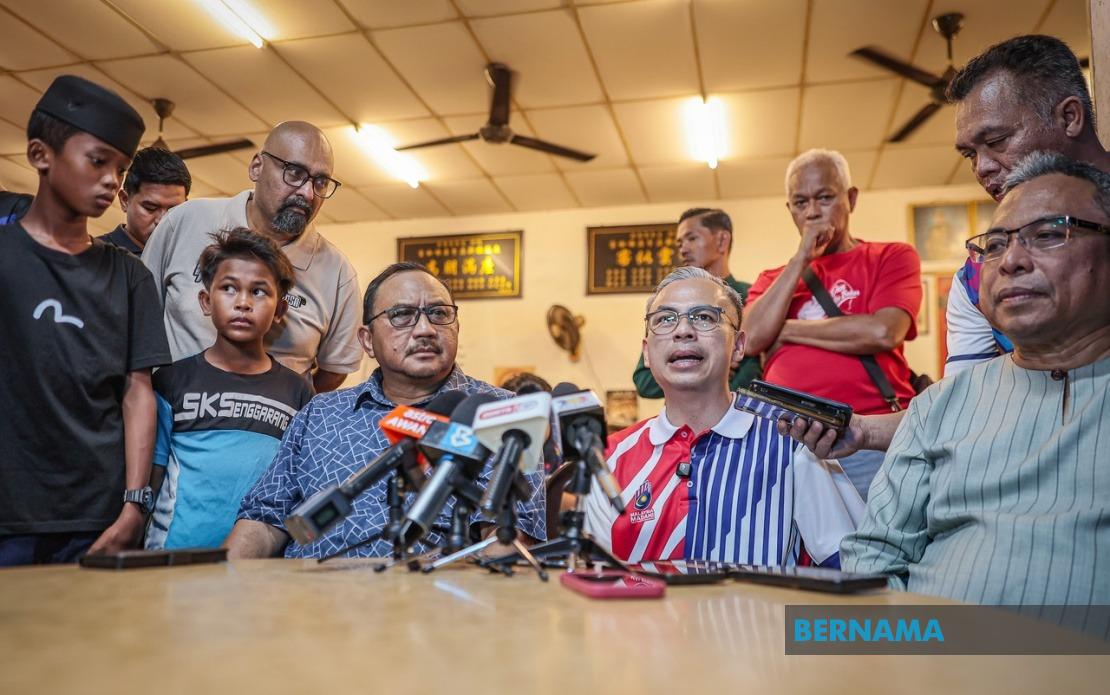
Pakatan Harapan Communications Director Datuk Fahmi Fadzil, who doubles as Minister of Communications, articulated the coalition's belief that effective messaging demands simultaneous presence on the street and online. He emphasised that this hybrid approach is essential for ensuring PH's policy platform and ideological messaging penetrate all demographic segments, from elderly rural voters to younger urban professionals increasingly making voting decisions through social media exposure. The strategy represents a recalibration from previous elections, where traditional ceramah and direct engagement sometimes struggled to compete against opposition messaging amplified through digital networks.
Fahmi outlined specific campaign activities scheduled to commence immediately after the nomination process concludes. He personally committed to leading campaign efforts in Semerah, while PKR deputy president Nurul Izzah Anwar will support candidate Onn Abu Bakar at the Senggarang nomination centre. The coalition has established a dedicated media coordination group tasked with rapidly disseminating information about PH candidates across platforms, recognising that in modern electoral contests, speed of message distribution can significantly influence voter perception and media narrative.
The emphasis on fact-based communication reflects PH's apparent response to concerns about misinformation and false narratives circulating during election periods. Fahmi underscored that voters deserve access to accurate information regarding candidates and policy proposals, positioning the coalition as a guardian against the spread of falsehoods. This messaging resonates particularly in Johor, where political discourse has historically been contentious and prone to inflammatory rhetoric, making credibility and trustworthiness potential electoral assets for PH.
On the development front, PH highlighted infrastructure projects and economic initiatives that showcase federal-state cooperation. Fahmi pointed to the Rapid Transit System Link and the Johor-Singapore Special Economic Zone as examples of tangible outcomes from coordination between the federal government and state authorities. These projects carry significance for Malaysian readers because they directly impact economic opportunities, employment generation, and cross-border trade dynamics that affect the broader Southeast Asian region. By linking governance competence to concrete development outcomes, PH attempts to shift electoral discourse from personality-driven politics toward measurable performance metrics.
The coalition's track record in other states constitutes a central pillar of its campaign narrative. PH governs Selangor, Negeri Sembilan, and Penang, three states with diverse geographic and demographic characteristics. Fahmi argued that these governance experiences demonstrate PH's capacity to deliver results rather than merely offer rhetoric. For Malaysian voters evaluating PH's fitness for high office, such state-level examples provide empirical evidence regarding coalition management, policy implementation, and administrative competence across different regional contexts.
Central to PH's Johor strategy are high-profile candidates positioned to articulate the coalition's vision for change. Dr Maszlee Malik contesting in Puturi Wangsa and Onn Abu Bakar in Senggarang represent the type of recognisable figures intended to attract voter interest and generate campaign momentum. These candidacies also reflect PH's effort to field individuals with established credentials and public visibility rather than relying solely on grassroots unknown entities. The selection reveals strategic thinking about which constituencies require heavyweight candidates capable of challenging entrenched incumbents.
Fahmi indicated that PH will release a comprehensive manifesto specifically tailored to Johor's concerns and aspirations. Rather than simply recycling national party platforms, a state-specific manifesto suggests PH's recognition that Johor voters have distinctive priorities regarding education, healthcare, economic development, and infrastructure that differ from other regions. This localised approach acknowledges that electoral success requires addressing particular state-level grievances and opportunities rather than pursuing a one-size-fits-all national campaign.
Authentication efforts to combat misinformation have expanded beyond PH's internal operations. The Malaysian Communications and Multimedia Commission has assembled a multi-agency task force including the Election Commission, Royal Malaysia Police, and Malaysian Media Council specifically to monitor and curtail misinformation dissemination throughout the election period. This institutional approach indicates recognition among government bodies that false narratives and disinformation pose genuine threats to electoral integrity and informed voting. For Southeast Asian observers watching Malaysia's democratic processes, such safeguards demonstrate commitment to maintaining electoral credibility amid the region's broader struggles with online falsehoods.
The Johor election assumes significance beyond state-level politics. As Malaysia's most developed southern state with substantial economic output and a diverse population spanning urban centres and agricultural regions, Johor represents a crucial electoral battleground affecting broader national political equilibrium. A decisive PH victory would strengthen the coalition's claims to national governance competence, whilst a Barisan Nasional hold would suggest PH faces continuing challenges in displacing the incumbent national coalition. The election thus transcends local Johor concerns, carrying implications for Malaysia's national political trajectory and the broader regional question of how Southeast Asian democracies manage electoral competition and governance accountability.
Fahmi's engagement in community activities, including attending a traditional wayang pacak film screening in Senggarang, demonstrates PH's determination to maintain presence at grassroots level beyond formal political discourse. Such activities, though seemingly modest, serve important functions in building personal connections between politicians and voters, demonstrating cultural sensitivity, and generating positive media coverage about candidate accessibility. They also reflect the reality that electoral politics in Malaysia, despite increasing digital influence, remains fundamentally rooted in personal relationships and community trust built through consistent engagement over time.

