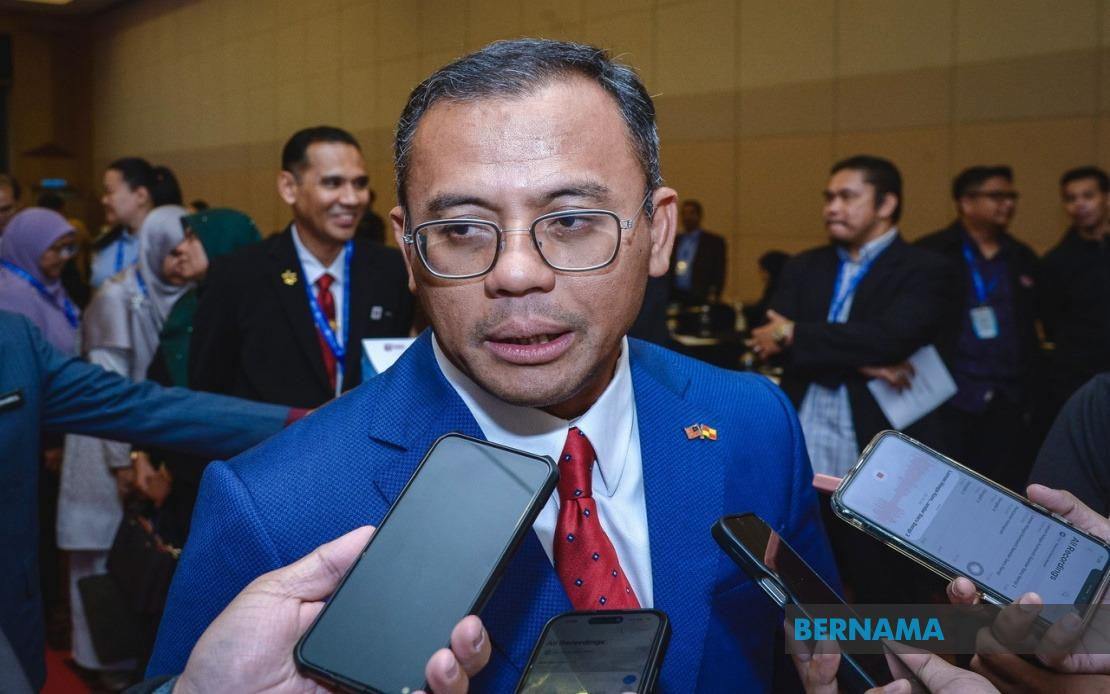
Pakatan Harapan has signalled a pragmatic but conditional willingness to explore political cooperation with rival coalitions and parties, provided such arrangements serve two overriding objectives: maintaining political stability and advancing public welfare. The coalition's position, articulated by Selangor Menteri Besar and PKR vice-president Datuk Seri Amirudin Shari, reflects a broader strategic recalibration as Malaysia's political landscape continues to shift ahead of crucial electoral contests at both national and state levels.
Spoken in Bangi following his opening remarks at the Ecology International Conference II, Amirudin's comments represent PH's most explicit endorsement to date of cross-coalition discussions, moving beyond the faction's traditional positioning. He stressed that the coalition remains receptive to arrangements involving any party or grouping—explicitly naming Bersatu and Perikatan Nasional as examples—provided these foundational principles guide negotiations. The framing suggests PH is calculating that strategic flexibility may prove essential as political terrain becomes increasingly contested and coalition structures face mounting pressure to adapt.
Yet Amirudin was equally emphatic in denying that substantive talks have already begun between Selangor's PH machinery and Bersatu. He dismissed recent media reports suggesting state-level cooperation as premature speculation, characterising them instead as external commentary reflecting broader national political realignments rather than concrete developments. This distinction matters considerably: it positions PH as theoretically open while maintaining plausible deniability that negotiations remain at an exploratory rather than binding stage, a common tactic when coalitions wish to preserve negotiating leverage whilst managing internal party anxieties.
Critically, Amirudin underscored that any meaningful cooperation framework would require validation and approval from PH's central leadership rather than emerging organically from state-level decisions. This hierarchical gatekeeping reflects PH's structural approach to coalition management and signals that Kuala Lumpur headquarters retains decisive authority over potential alignments. Such centralised control is unsurprising for a coalition grappling with internal tensions and seeking to present a unified stance, yet it also suggests that state-level initiatives—even from figures as prominent as the Selangor Menteri Besar—cannot unilaterally reshape coalition direction.
The timing of these remarks carries strategic significance. Malaysia faces multiple electoral horizons: a general election, the Melaka state election, and other state contests that collectively shape the competitive balance between coalitions. For PH, which currently anchors the federal government but faces persistent challenges to its parliamentary majority and state-level dominance, flexibility in coalition architecture offers potential defensive and offensive benefits. By publicly opening the door to cooperation on principled grounds, PH positions itself as the mature, stability-focused actor willing to transcend ideological rigidity—a framing that appeals to moderate voters whilst potentially encouraging smaller parties to view alignment with PH as strategically advantageous.
Selangor's political significance amplifies the importance of PH's positioning. As Malaysia's wealthiest state and home to the federal capital region, Selangor remains central to PH's electoral mathematics and resource base. Any shift in the state's political alignment would ripple across national calculations. Recent speculation that Selangor PH might consider Bersatu cooperation thus carries weight precisely because it involves the coalition's most critical territorial stronghold. Amirudin's carefully calibrated denial that such talks have progressed beyond speculation serves to calm any internal anxieties within PH's Selangor membership whilst keeping theoretical options alive.
The mention of electoral timing as a determining factor in any cooperation assessment reveals sophisticated political calculation. Amirudin acknowledged that central leadership would evaluate potential partnerships through a matrix encompassing election schedules, political momentum, and circumstantial factors beyond mere ideological alignment. This pragmatism—divorcing cooperation decisions from purist principle—reflects the reality that Malaysian politics increasingly functions through transactional negotiation rather than fixed ideological camps. For observers accustomed to PH's original reformist branding, such language signals evolution toward conventional coalition management, though whether this represents necessary realism or dilution of founding principles remains contested.
For Malaysian voters and political analysts, PH's posture invites important questions about the future trajectory of coalition politics. If PH proves willing to accommodate Bersatu—a party many PH figures previously rejected as opportunistic—it suggests that electoral arithmetic and governmental stability may increasingly trump historical grievances and ideological differences. The Melaka state election and forthcoming national contest will provide early tests of whether PH's rhetorical openness translates into actual cooperation or remains a negotiating stance designed to extract maximum concessions whilst maintaining strategic autonomy.
The Southeast Asian context also merits consideration. Malaysia's coalition politics influence and reflect regional trends toward dealmaking across traditional divides as parties scramble to build durable parliamentary majorities. PH's evolution from reformist challenger to pragmatic governing coalition mirrors patterns visible elsewhere across Southeast Asia, where ideological differentiation between competing coalitions has narrowed considerably. Whether this trend strengthens or weakens democratic governance depends substantially on how such cooperation unfolds and whether it serves broader public interests or primarily benefits elites seeking power consolidation.

