Pakatan Harapan has publicly challenged the notion that any single political faction can legitimately claim exclusive representation of Malaysia's Malay-Muslim population, framing such assertions as fundamentally at odds with the nation's multicultural character. The coalition's position, articulated during campaigning in Negeri Sembilan ahead of the state election, signals a strategic effort to counter narratives that have gained traction in recent political discourse—particularly the suggestion that certain groups hold a monopoly on Muslim and Malay political interests.
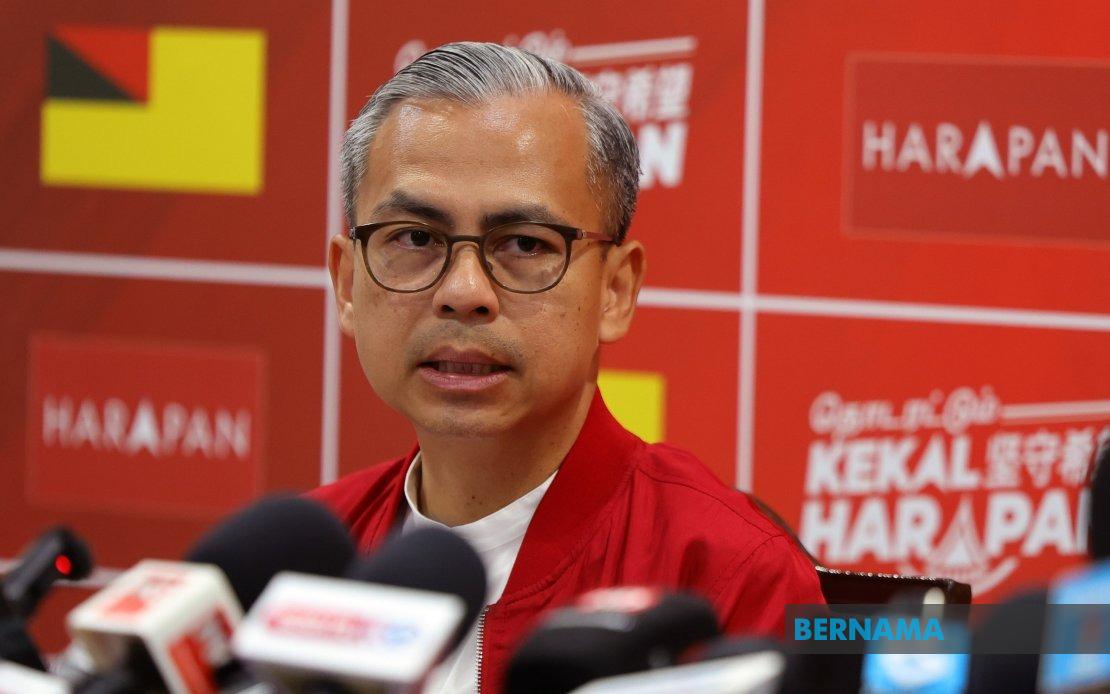
Communications Minister Datuk Seri Fahmi Fadzil delivered the coalition's rebuttal at a press conference in Seremban, directly challenging the premise underlying attempts to portray PH as inadequate custodians of Malay-Muslim concerns. He highlighted that the coalition itself includes numerous Malay-Muslim figures occupying prominent positions, questioning why such representation should be discounted or overlooked. By citing his own credentials alongside those of Khalid Abdul Samad, Amanah's communications director, Fahmi sought to demonstrate that Malay-Muslim involvement within PH extends beyond token participation to substantive leadership roles.
The broader argument advanced by PH rests on a fundamental critique of what the coalition terms "exclusive politics"—a framework that categorizes voters and communities into rigid ethnic and religious blocs rather than emphasizing shared governance values and inclusive representation. According to this interpretation, painting politics as an ethnic zero-sum competition inherently fractures social cohesion and manufactures artificial divisions where none need exist. Fahmi contended that the alternative approach PH advocates recognizes diverse Malaysian identities while prioritizing common aspirations across religious and ethnic lines, a vision he anchored in principles of unity grounded in righteousness and the public good rather than sectarian loyalty.
To substantiate its defence, Pakatan Harapan pointed to concrete administrative outcomes in Negeri Sembilan under the stewardship of Menteri Besar Datuk Seri Aminuddin Harun. The coalition highlighted increases in mosque construction and a dramatic rise in zakat collections—figures that grew by nearly two-and-a-half times compared to the preceding administration. These metrics carry symbolic weight in Malaysian political discourse, as infrastructure investment and religious revenue management are traditionally viewed as barometers of government commitment to Muslim community welfare. By marshalling such evidence, PH seeks to establish that its tenure has not resulted in neglect or marginalization of Malay-Muslim interests, contrary to opposition claims.
The timing and context of this intervention merit consideration within the electoral calendar. Early voting for the Negeri Sembilan state election was scheduled for July 28, with polling day set for August 1, meaning PH's statement constituted part of the final push to persuade undecided voters. In state-level contests, messaging discipline and targeted rebuttal of opposition narratives prove particularly consequential, as these elections often function as referenda on ruling coalitions' performance and inclusive credibility. Fahmi's press conference, attended by representatives from PKR, Amanah, and DAP, visibly demonstrated coalition unity on this messaging theme.
The substance of PH's argument reflects genuine tensions within contemporary Malaysian politics. Conservative political movements have increasingly framed themselves as uniquely qualified to defend Islam and Malay interests, a positioning that implicitly suggests rival coalitions—whether due to their multiethnic composition or secular governance emphasis—cannot be trusted with these portfolios. PH's counter-narrative rejects this framing as both empirically inaccurate and socially destructive. By emphasizing that Muslim and Malay representation within PH is neither marginal nor ceremonial, the coalition attempts to reclaim ground on cultural and religious legitimacy that opposition parties have sought to monopolize.
From a regional perspective, Malaysia's ongoing navigation of these tensions carries implications for Southeast Asian governance more broadly. As other nations in the region grapple with balancing majority community representation with inclusive institutions, Malaysia's political experiments—whether successful or contested—offer instructive examples. The question of whether multiethnic coalitions can effectively represent sectarian community interests while maintaining plural governance frameworks remains contested in Malaysian politics and extends beyond the country's borders.
Fahmi's rhetorical emphasis on unity transcending ethnic chauvinism also signals awareness that purely communal politics risks electoral and institutional exhaustion. By appealing to aspirations for cross-cutting solidarity based on shared values, PH positions itself as forward-looking and developmentally focused, contrasting implicitly with competitors characterized as backward-looking and divisive. Whether this messaging resonates with Negeri Sembilan voters—and whether such framing can overcome structural disadvantages in vote share—would be determined by the August 1 election outcome.
The coalition's commitment to demonstrating that Malay-Muslims have not experienced marginalization under its watch extends beyond rhetorical flourishes to concrete engagement strategies. Fahmi indicated that PH planned intensified voter outreach designed to reshape perceptions about the coalition's stewardship of Muslim community interests. This suggests recognition that messaging battles around identity and representation require sustained effort and cannot be resolved through occasional press conferences alone. The effectiveness of such engagement campaigns would ultimately determine whether PH's counter-narrative gains sufficient traction to influence electoral behaviour in contested constituencies.
The underlying philosophical disagreement about the proper role of identity in electoral politics cannot be easily resolved through campaign rhetoric. PH's vision of politics organized around inclusive governance and shared outcomes competes with alternative frameworks emphasizing the primacy of protecting specific communal interests through dedicated representation. These competing visions will likely continue generating electoral contests and political contestation throughout Malaysia's democratic cycle, with state elections serving as important testing grounds for their relative appeal.

