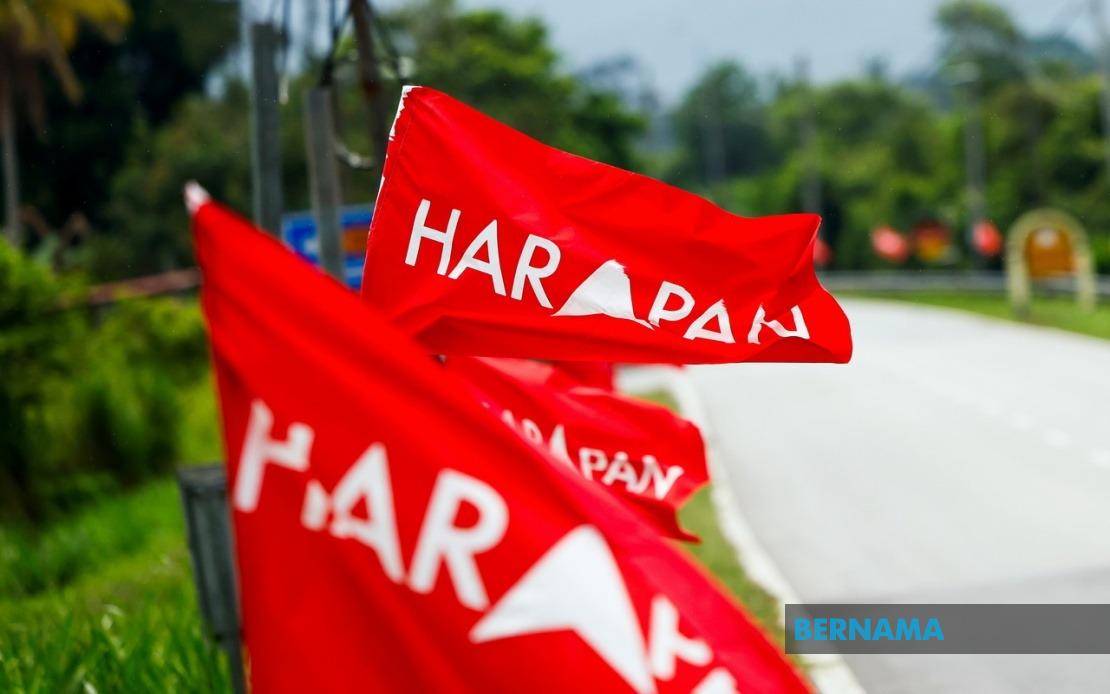
Pakatan Harapan is preparing to roll out its election platform for the 16th Negeri Sembilan state election, with the manifesto launch scheduled for tomorrow evening. The coalition has signalled that its campaign strategy will centre on demonstrating the tangible benefits residents have experienced under its governance since 2018, when it first assumed control of the state administration.
Datuk Muhammad Zaki Md Sabri, who directs PH's operations in Negeri Sembilan, explained that the manifesto represents a comprehensive policy framework developed through detailed consultation among the coalition's senior leadership. The document has been structured to articulate how the party intends to deliver measurable improvements in both economic conditions and social welfare across the state. This approach suggests PH is banking on voter satisfaction with its track record as the cornerstone of its re-election campaign.
The formal presentation will take place tomorrow night, though specific details regarding venue and the identity of party dignitaries who will attend remain pending confirmation from PH's secretariat. Muhammad Zaki's emphasis on the manifesto's holistic development process indicates that coalition partners—which typically include Democratic Action Party, Amanah, and affiliated parties in Negeri Sembilan—have aligned their respective policy priorities into a unified vision. Such coordination is crucial in multi-party coalitions seeking to maintain coherent messaging throughout a campaign period.
As the campaign entered its second day, PH's state machinery reported satisfaction with logistical execution and voter reception. Muhammad Zaki noted that candidates encountered positive responses during interactions with constituents, suggesting early momentum favours the incumbent coalition. However, he coupled this optimism with a call for all participating parties to conduct themselves responsibly during the campaign, cautioning against inflammatory rhetoric and inflammatory appeals. His specific reference to avoiding contentious discussion of the three Rs—religion, royalty, and race—reflects Malaysian electoral sensitivities and the need for political restraint during campaigns in states with diverse religious and ethnic compositions.
The Negeri Sembilan state assembly was formally dissolved on June 5, initiating the election timeline established by the Election Commission. Voting day has been scheduled for August 1, with early voting provisions arranged for July 28 to accommodate military personnel, their family members, and police officers. This staggered voting approach has become standard practice in recent Malaysian elections, allowing security and uniformed personnel to cast ballots before general polling occurs.
Negeri Sembilan's electoral roll comprises nearly 900,000 registered voters, reflecting the state's population size and demographic profile. The breakdown reveals 867,151 ordinary voters on the standard register, complemented by 16,884 military personnel and spouses eligible for early voting and 5,455 police personnel similarly entitled to vote ahead of the main election date. These figures provide context for understanding the scale of mobilisation required for both PH and opposition parties to achieve their electoral objectives across the state's constituencies.
For Malaysian observers, the Negeri Sembilan contest holds broader significance beyond the state itself. As one of the country's smaller states in terms of population and economic output, it typically garners less national media attention than Selangor or Johor but nonetheless serves as a bellwether for coalition performance and opposition strategy. A substantial swing in voter preference would signal changing sentiment across the peninsula and potentially foreshadow patterns relevant to future national elections.
PH's emphasis on continuity aligns with the coalition's broader electoral messaging across recent state contests. Rather than proposing wholesale policy overhauls, the coalition presents itself as a proven administrator capable of maintaining stability and delivering incremental progress. This positioning reflects lessons learned from previous elections where voters have sometimes punished parties perceived as proposing overly ambitious or untested programmes. The manifesto's focus on sustainable economic and social impact suggests PH is aiming to appeal to pragmatic voters concerned primarily with bread-and-butter issues rather than ideological positioning.
The coalition's call for ethical campaign conduct carries particular relevance in Negeri Sembilan, where communal harmony and respect for traditional institutions remain valued political considerations. By publicly advocating for restraint regarding sensitive topics, PH's leadership is attempting to frame the incumbent coalition as the responsible, moderate choice. Whether this messaging translates into electoral advantage depends on whether opposition parties and independent candidates reciprocate such appeals or instead pursue more aggressive tactics that voters might perceive as divisive.
As the campaign progresses toward August 1, both PH and opposition forces will intensify their ground operations and public communication strategies. The manifesto unveiling represents a formal checkpoint in this process, signalling to voters the specific commitments each coalition or party believes will resonate with their concerns. In Negeri Sembilan's case, historical factors, economic conditions, and performance comparisons with other states governed by different coalitions will collectively shape voter calculations. The manifesto serves as a document through which PH invites voters to assess whether its proposed direction aligns with their aspirations for the state's development over the coming term.

