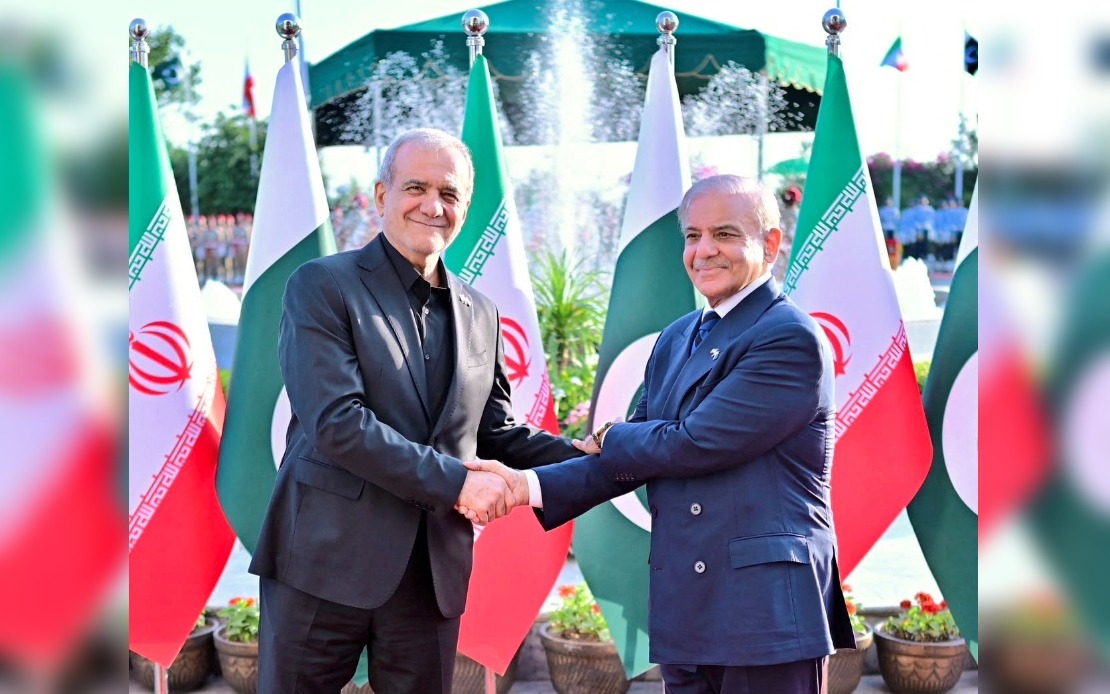
Pakistan and Iran have renewed their commitment to reviving a major freight rail corridor that could reshape trade patterns across South Asia, the Middle East and beyond. The Islamabad-Tehran-Istanbul service, which has lain dormant since 2022, represents a critical missing link in efforts to connect regional markets and unlock economic potential along the historic Silk Road route. Officials from both countries discussed the revival during high-level talks in Islamabad on Wednesday, signalling fresh momentum after years of missed opportunities and operational setbacks.
The meeting between Pakistan's Railway Minister Muhammad Hanif Abbasi and Iran's Interior Minister Eskandar Momeni underscored how critical both governments now view cross-border rail infrastructure. A Pakistani government statement emphasised that restoring the itinerary corridor would unlock significant trade benefits not only between Pakistan, Iran and Türkiye, but also create pathways to Central Asian markets, Russia and European economies. For Malaysia and other Southeast Asian nations, such developments matter considerably; improved overland corridors reduce reliance on congested maritime routes and offer alternative supply chain pathways that could reshape regional trade dynamics.
The history of the ITI service illustrates the challenges plaguing cross-border infrastructure in the region. The train resumed operations in December 2021 after lying idle for a full decade, an absence that reflected deep political and economic fractures between the countries. Yet within barely twelve months, the service collapsed again in 2022, undone by logistical complications, operational difficulties and unresolved coordination issues. The repeated false starts suggest that political will alone cannot sustain such ambitious projects; institutional capacity, investment commitment and meticulous planning prove equally essential.
Pakistan's infrastructure modernisation programme now forms the backbone of these revival efforts. The nation is substantially upgrading its Main Line-3 corridor, a vital artery that traverses Sindh and Balochistan provinces and serves as the primary rail gateway to Iran. This upgrade project carries significant weight; it represents Pakistan's concrete commitment beyond rhetoric. Minister Abbasi outlined an ambitious timeline: construction is expected to commence during the current fiscal year with completion targeted for December 2029. Such multi-year projects require sustained political backing and budgetary consistency, elements that remain uncertain in Pakistan's often turbulent governance landscape.
Iran has articulated its own infrastructure ambitions. The Iranian Interior Minister indicated that his country expects to finalise modernisation of the Zahedan–Mirjaveh railway line within approximately one month. However, Iran simultaneously pressed Pakistan to accelerate its work on the standard-gauge rail line connecting Mirjaveh to Taftan in Balochistan. This emphasis reveals how infrastructure projects depend on coordinated binational effort; one country's delay cascades into broader system failures. The interdependency underscores both the promise and fragility of regional connectivity initiatives.
For Malaysia's trading community and logistics sector, these developments warrant close attention. Improved Pakistan-Iran rail connectivity could eventually integrate with broader Asian corridors, potentially offering Malaysian exporters alternative routes to European and Central Asian markets. The China-Pakistan Economic Corridor and similar initiatives have already begun reshaping regional trade patterns; a functioning ITI service would add another layer of complexity and opportunity to these emerging networks. Malaysian companies operating across Asia would gain access to more diversified supply routes, reducing vulnerability to disruptions on any single corridor.
The discussions between Abbasi and Momeni extended beyond mere corridor restoration. Both officials highlighted the necessity of advancing broader bilateral railway cooperation, strengthening cross-border connectivity frameworks and deepening trade and economic integration. This comprehensive approach suggests recognition that piecemeal infrastructure improvements fail without accompanying institutional reforms, simplified customs procedures and harmonised technical standards. The ambitions outlined reflect lessons learned from previous attempts that stumbled on such operational details.
Regional security concerns and political relationships continue casting shadows over these initiatives. Pakistan and Iran maintain complex ties shaped by sectarian tensions, Afghan border dynamics and competing regional influence. The fact that both nations chose to publicly commit to railway modernisation suggests a calculated decision to transcend such divisions through economic interdependence. Trade corridors can serve as confidence-building mechanisms, creating mutual interest in stability and cooperation. Yet history demonstrates that economic projects can falter rapidly when political tensions escalate, as occurred with the ITI service's 2022 collapse.
The timing of these discussions matters considerably. Both Pakistan and Iran face international economic pressures and domestic resource constraints. For Pakistan, infrastructure improvements promise job creation and enhanced export competitiveness. For Iran, operating under international sanctions, regional connectivity offers pathways to circumvent restrictions and integrate into Asian trade networks. These mutual benefits create incentive structures that transcend transient political disagreements, though they do not guarantee success.
Successful implementation would fundamentally reshape how goods move between Asia, Europe and the Middle East. Currently, most cargo relies on maritime routes through the Strait of Hormuz and Indian Ocean, routes vulnerable to piracy, geopolitical tensions and shipping congestion. Overland rail alternatives provide faster transit, reduced insurance costs and decreased environmental impact. For Malaysian manufacturers sending goods to European markets, such savings prove meaningful when multiplied across thousands of shipments annually.
The broader implications extend to regional balance-of-power considerations. Enhanced Pakistan-Iran connectivity could shift economic gravity northward along Asia's landlocked interior, potentially drawing Central Asian republics into stronger commercial relationships with South Asian markets. This reorientation reflects long-term structural changes where land-based corridors gain importance relative to maritime routes traditionally dominated by naval powers.
However, scepticism remains warranted. Previous announcements of corridor revivals across South and Central Asia have frequently faltered due to technical disputes, funding shortfalls and renewed political tensions. The ITI service's own interrupted history cautions against premature optimism. The December 2029 completion deadline for Pakistan's ML-3 upgrade sits several years distant; maintaining focus and funding commitment throughout budget cycles and potential political transitions represents a formidable challenge.
Nevertheless, the fact that Pakistan and Iran chose to discuss these matters publicly, with Iranian officials visiting Islamabad for substantive negotiations, signals genuine engagement with infrastructure diplomacy. Whether this momentum translates into functioning trains remains uncertain, but the direction of travel matters. Regional connectivity, when successfully implemented, generates tangible benefits that accrue to all participating economies, including Malaysia's traders navigating an increasingly multipolar Asian economic landscape.

