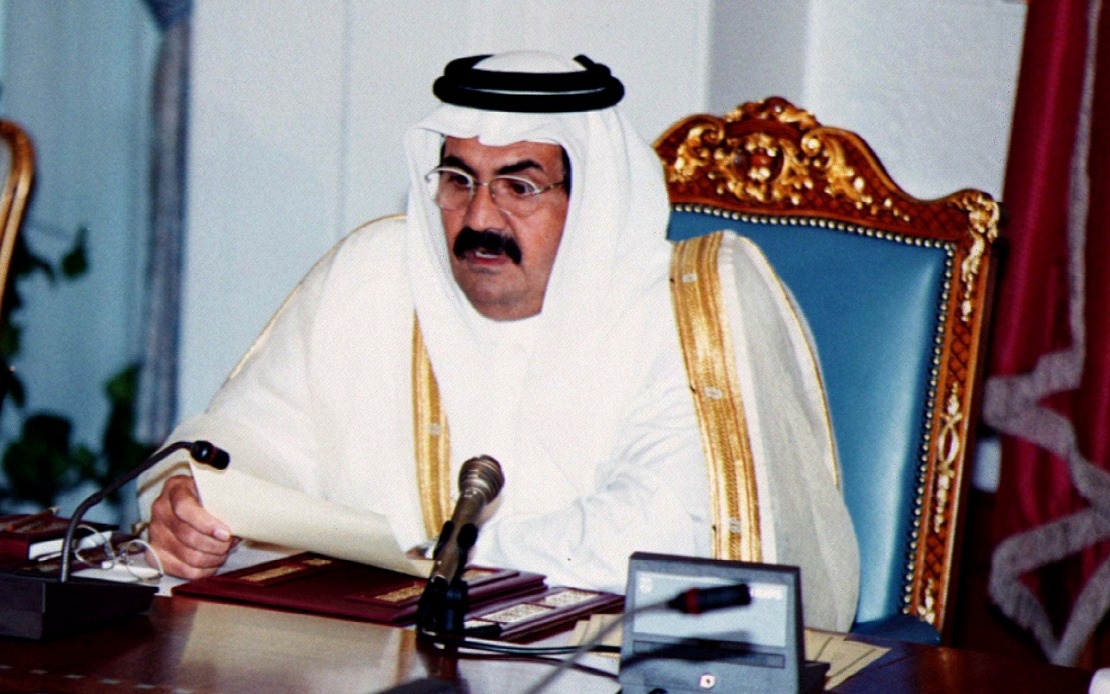
Pakistan's Prime Minister Shehbaz Sharif and Maldives President Mohamed Muizzu travelled to Qatar on Monday in a show of regional solidarity following the death of former Emir Sheikh Hamad Bin Khalifa Al Thani. The two leaders proceeded directly to offer their condolences to the current Qatari Emir Sheikh Tamim Bin Hamad Al Thani and members of the royal household. The concurrent visits underscore the diplomatic importance both nations place on their relationship with Qatar, a key player in Middle Eastern geopolitics and a major economic hub in the Gulf region.
Shehbaz Sharif's delegation reflected the significance Pakistan attaches to the occasion. Accompanying the Prime Minister were his brother Nawaz Sharif, who previously served as Prime Minister of Pakistan, along with Deputy Prime Minister and Foreign Minister Senator Ishaq Dar and Information Minister Attaullah Tarar. The inclusion of senior figures in the delegation, combined with the brevity of the visit limited to a single day, demonstrates Pakistan's intention to mark the moment with appropriate ceremonial recognition while balancing other pressing governmental duties back home.
Sheikh Hamad Bin Khalifa Al Thani, who guided Qatar through a transformative period of its modern history, passed away on Sunday at the age of 74. His reign, which stretched from 1995 until his abdication in 2013, fundamentally reshaped the Gulf nation's trajectory. During those eighteen years, he shepherded Qatar through significant economic diversification, massive infrastructure development, and strategic positioning on the international stage. The former emir's decision to step down in favour of his son represented a relatively rare instance of voluntary succession in the Gulf monarchies, setting a precedent for measured governance transitions.
The scale of international recognition paid to Sheikh Hamad demonstrates the widespread esteem in which he was held across diverse nations and political systems. World leaders have articulated their appreciation for his stewardship of Qatar's development. Bangladesh Prime Minister Tarique Rahman issued a formal message to Sheikh Tamim emphasising how Sheikh Hamad's contributions spanning regional peace, economic advancement, education initiatives, and multilateral cooperation would endure in collective memory and remain worthy of lasting reverence. These tributes highlight the former emir's impact extending beyond Qatar's borders into broader regional and international frameworks.
Maldives President Mohamed Muizzu similarly articulated the lasting significance of Sheikh Hamad's legacy within the context of Qatar's internal progress as well as his influence throughout the Arab and Islamic worlds. The Maldivian leader's emphasis on intergenerational remembrance underscores how Sheikh Hamad's policy decisions and institutional reforms are perceived as establishing foundations that will continue shaping outcomes for years to come. This perspective reflects how transformative leaders in the region are assessed not merely on immediate accomplishments but on the enduring structures and values they embed within their societies.
Both Pakistan and India observed formal national mourning on Monday as a mark of respect acknowledging Sheikh Hamad's significance. This gesture, while often accorded to prominent international figures who have maintained substantial diplomatic relations with these nations, reflects the esteem in which the former Qatari emir was held in South Asian capitals. Pakistan's decision to send such a high-level delegation underscores deeper historical ties and contemporary strategic interests linking Islamabad to Doha, encompassing everything from bilateral trade relationships to shared security considerations in a volatile region.
For Malaysian observers, Sheikh Hamad's legacy carries particular relevance given Qatar's expanding role in global Islamic finance, education, and diplomacy. The former emir's vision of positioning Qatar as a bridge between traditional Arab-Islamic values and modern international engagement created institutions and frameworks that have influenced thinking across Muslim-majority nations, including Malaysia. His emphasis on educational advancement through initiatives like Education City has established models that regional governments study when formulating their own knowledge economy strategies.
The current Qatari leadership under Sheikh Tamim, who assumed office following his father's abdication, has built substantially upon the foundations established during Sheikh Hamad's tenure. The former emir's decision to hand power to his successor in 2013, rather than clinging to authority, demonstrated a particular vision of dynastic governance emphasising meritocratic succession and institutional continuity. This approach has allowed Qatar to maintain policy consistency while enabling the younger generation of leaders to adapt governance strategies to evolving regional and global circumstances.
The diplomatic visits by Shehbaz Sharif and Mohamed Muizzu should be understood within the broader context of how the Gulf region navigates moments of leadership transition and loss. Qatar's significance as a financial centre, energy producer, and diplomatic mediator means that reassurance of continuity and stability matters considerably to its partners and trading partners worldwide. The presence of senior delegations from neighbouring and strategically important nations signals confidence in Qatar's institutional resilience and commitment to maintaining the diplomatic relationships that underpinned Sheikh Hamad's foreign policy achievements.
For Southeast Asia and South Asia, Sheikh Hamad's passing marks the conclusion of an era in which a particular vision of Gulf leadership took shape. His investments in international institutions, hosting of major sporting events, and cultivation of soft power through cultural and educational initiatives created a template that other regional leaders have attempted to emulate. Pakistan and Maldives, through their official mourning and high-level delegations, acknowledged not only the loss of an individual but the symbolic conclusion of a distinctive chapter in contemporary Islamic world leadership and Gulf regional history.

