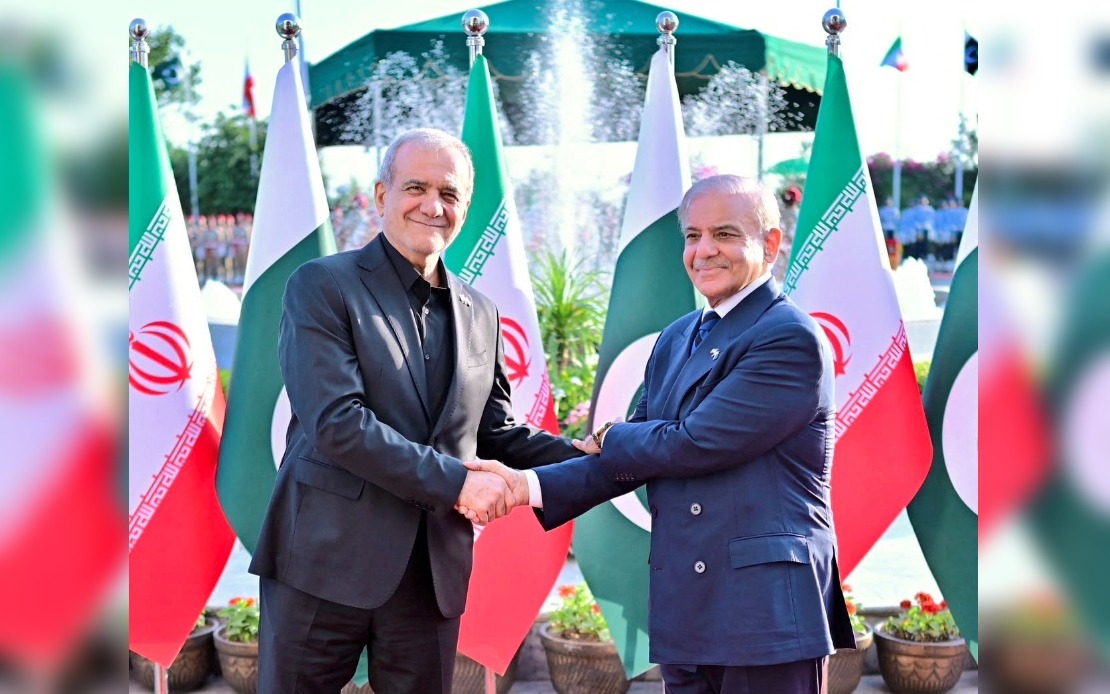
Pakistan's Prime Minister Shehbaz Sharif has emerged as a vocal supporter of Iran's ballistic missile programme, firmly rejecting suggestions that Tehran should surrender or curtail its weapons capabilities. During bilateral talks with Iranian President Masoud Pezeshkian in Islamabad on Tuesday, Shehbaz made clear that Pakistan views Iran's missile development as legitimate and outside the scope of international pressure, particularly following the recent memorandum of understanding between Iran and the United States concluded on June 17.
The Pakistani premier's unequivocal backing represents a significant diplomatic statement in a region where ballistic missile development remains deeply contentious. Shehbaz articulated a principled objection to what he termed "double standards," noting that numerous nations maintain ballistic arsenals without facing international condemnation. His position directly contradicts Western pressure campaigns that have historically sought to constrain Iran's missile ambitions as part of broader nuclear and strategic negotiations. By separating missile technology from the recent peace agreement, Pakistan's leadership has effectively shielded Iran from accusations that the US-Iran deal implicitly restricts weapons development.
Crucially, Shehbaz emphasised that ballistic missiles never constituted a negotiating point during Pakistan's mediation efforts. Neither party raised the subject during discussions leading to the memorandum, and Iran explicitly declined to entertain such conversations. This positioning allows Tehran to maintain its defensive capabilities without appearing to violate any formal international commitment. The distinction proves particularly important given the volatile security environment in West Asia, where Israeli military operations and American strategic posturing create genuine security anxieties for Iranian leadership.
Iran's military establishment views ballistic missiles as essential deterrence following the significant attacks launched jointly by Israel and the United States on February 28. President Pezeshkian echoed this perspective during the joint press conference, arguing that without defensive capabilities, Iran would face existential threats comparable to the humanitarian catastrophe unfolding in Gaza. His blunt assessment reflects how Iranian strategic planners conceptualise their weapons programmes—not as instruments of aggression but as survival mechanisms in an hostile regional environment where more powerful adversaries possess overwhelming conventional military superiority.
Pakistan's role as mediator has elevated its status as a serious diplomatic player capable of influencing outcomes in West Asian conflicts. Beyond the June peace understanding, Islamabad previously facilitated a temporary ceasefire between Iran and the United States in April, demonstrating sustained commitment to de-escalation. Deputy Prime Minister and Foreign Minister Ishaq Dar and Chief of Army Staff Field Marshal Syed Asim Munir both contributed substantially to these negotiations, positioning Pakistan's military and civilian leadership as trusted interlocutors for both Washington and Tehran.
The ceremonial aspects of Pezeshkian's visit underscored the depth of Pakistan-Iran relations. Six Pakistani Air Force fighter jets escorted the Iranian president's aircraft into Islamabad, while he received a 21-gun salute and was formally greeted by both Prime Minister Shehbaz and President Asif Ali Zardari. Such pageantry signals Pakistan's commitment to the bilateral relationship and demonstrates public solidarity with Iran at a moment when international pressure on Tehran remains pronounced. For Malaysian observers, these developments illustrate how regional powers navigate great power competition and maintain strategic autonomy through sophisticated diplomatic manoeuvring.
Shehbaz also highlighted the existence of spoilers attempting to sabotage the US-Iran agreement, identifying Israel as the principal obstacle to sustained peace in West Asia. The Israeli government's military operations in Lebanon and occupied Palestine generate continuous instability that undermines diplomatic breakthroughs. This framing aligns Pakistan's position with Iran's strategic narrative while simultaneously critiquing Israeli actions, resonating with substantial portions of the Pakistani and broader Muslim-majority public.
US President Donald Trump's recent acknowledgment that Iran should possess ballistic missiles provides unexpected international cover for Tehran's weapons programme. During remarks in Paris on June 17, Trump conceded the fairness of Iran maintaining missiles if other nations do likewise. While Trump's statement may reflect pragmatic acceptance of Iran's capabilities rather than enthusiastic endorsement, it nevertheless legitimises Iranian arguments and complicates efforts by opponents to use American authority against Iranian military development.
For Southeast Asian nations like Malaysia, these dynamics carry important implications. Pakistan's assertive diplomacy demonstrates how medium-sized powers can leverage geography, cultural ties, and institutional relationships to influence outcomes that directly affect global stability and energy security. The Middle East remains crucial to Malaysian economic interests, particularly regarding petroleum supplies and maritime trade routes. Instability resulting from unresolved Iranian-Western tensions creates uncertainties affecting regional commerce and potentially redirecting military resources away from counterterrorism and piracy suppression in Southeast Asian waters.
Moreover, Pakistan's success in facilitating agreement between adversaries offers lessons for Southeast Asian mediators addressing disputes within the Association of Southeast Asian Nations and beyond. The willingness to maintain relationships with multiple conflicting parties, coupled with demonstrated neutrality and commitment to confidential negotiations, enabled Pakistan to broker outcomes that neither side viewed as imposed externally. These principles remain relevant as ASEAN seeks to manage tensions in the South China Sea and address regional security challenges requiring multilateral cooperation.
The substantive Iranian perspective on ballistic missiles also warrants examination beyond rhetoric. Tehran's weapons programmes developed in response to specific threat perceptions shaped by decades of regional conflict, Western sanctions, and military pressure. Understanding these historical grievances remains essential for comprehending why Iranian leadership considers missile capabilities non-negotiable, regardless of international consensus favouring restraint. Pakistan's public validation of this perspective, articulated through its prime minister's remarks, strengthens Iranian resolve to maintain its defence posture even as diplomatic engagement proceeds.
Looking forward, Pakistan's positioning suggests that further mediation may occur should US-Iran tensions escalate beyond current levels. The diplomatic architecture supporting the June agreement appears fragile, dependent on continued restraint from all parties and absence of major provocative incidents. Should Israeli military operations intensify or American strategic calculations shift, Pakistan would likely face renewed requests to facilitate communication and prevent catastrophic escalation. The success of such future efforts remains uncertain, but Pakistan's demonstrated capability and willingness provide at least a channel for dialogue when tensions threaten regional and global stability.