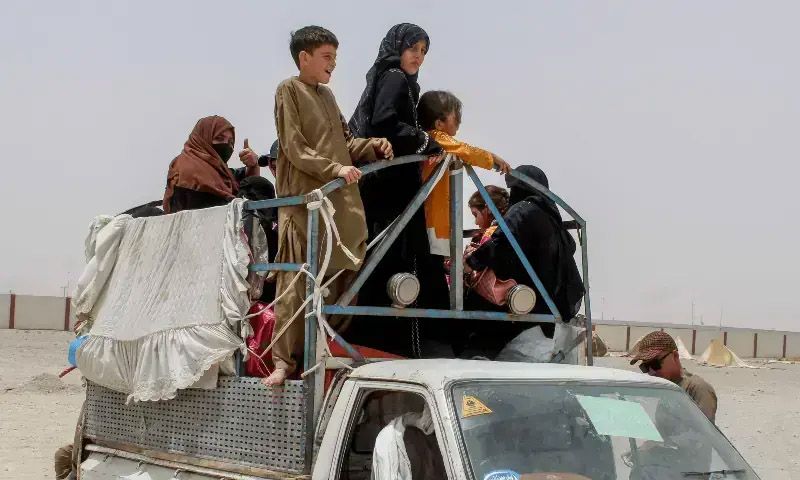
Pakistan's immigration authorities have removed approximately 2.59 million Afghan nationals from the country since the beginning of 2023, marking an unprecedented scale of deportation operations across the nation. The federal government and provincial administrations have coordinated what amounts to a sweeping crackdown on undocumented migration, with the campaign showing no signs of slowing as authorities continue systematic enforcement across populated areas and border regions.
Punjab, Pakistan's most populous province, has emerged as the focal point of these deportation efforts. The provincial home department's foreign national security cell has processed 138,342 Afghan nationals through its network of detention facilities, completing documentation and arranging transportation for each individual destined for repatriation. The province currently operates 36 functioning holding centres where detainees are processed and held pending deportation, with at least 53 additional Afghan nationals currently in custody undergoing final processing stages.
The scale of Pakistan's deportation machinery reflects a fundamental shift in how the government approaches irregular migration from Afghanistan. Officials have articulated a zero-tolerance policy regarding undocumented residents, arguing that anyone lacking valid travel documentation cannot legally remain within Pakistani territory regardless of personal circumstances. This position represents a hardening stance from Islamabad, which has historically hosted one of the world's largest Afghan refugee populations due to decades of conflict and instability in Afghanistan.
The deportation process, according to statements from Punjab's home department, follows a standardized procedure designed to handle large volumes of migrants. Authorities conduct coordinated sweeps through residential neighbourhoods and commercial markets, detaining individuals unable to produce valid immigration documentation. Once apprehended, detainees are transferred to holding centres where their identities are verified, documentation is processed, and arrangements are made for their movement toward the Torkham border crossing—the primary land route between Pakistan and Afghanistan.
Conditions within Punjab's detention facilities have become increasingly critical given the volume of people being processed. The 36 holding centres now represent a significant administrative infrastructure dedicated solely to Afghan deportations, indicating the scope of resources the provincial government has allocated to the operation. Staff at these facilities provide basic accommodation and organize the logistics of mass deportation, though humanitarian organizations have raised concerns about conditions and the speed at which individuals are being removed without adequate opportunity to challenge detention decisions.
The federal government's public messaging emphasizes administrative compliance rather than humanitarian considerations. A spokesman for the home department stressed that visa regulations are non-negotiable and that possession of valid travel documents is a legal requirement for residence in Pakistan. This framing positions deportations as routine immigration enforcement rather than a policy shift with profound humanitarian implications for millions of people with deep historical and family connections to Pakistani communities.
The involvement of federal authorities alongside provincial governments suggests coordination at multiple levels of administration. The federal home department has reportedly completed comprehensive surveys and examinations across residential and commercial areas, establishing the foundation for provincial-level enforcement operations. This systematic approach indicates that deportations are not reactive responses to isolated incidents but rather part of a coordinated national strategy implemented through established institutional channels and holding centre networks.
The government has actively encouraged public participation in the deportation campaign, requesting that Pakistani citizens report undocumented Afghan nationals to an emergency hotline. Officials have offered assurances that informants' identities will remain confidential, attempting to overcome potential community reluctance to report neighbours or business associates. This public engagement strategy suggests authorities recognize that systematic enforcement requires cooperation from the broader population, particularly in mixed urban areas where Afghan and Pakistani communities overlap.
For Afghanistan itself, the deportation campaign creates mounting humanitarian and administrative challenges. The Taliban-controlled government in Kabul must accommodate the sudden arrival of hundreds of thousands of its nationals expelled from Pakistan, stretching already fragile economic and social services. The Torkham border crossing has become a bottleneck for deportations, with convoys of returnees creating visible evidence of Pakistan's enforcement intensity.
The timing and intensity of Pakistan's deportation campaign raises questions about regional stability and Pakistan's relationship with Afghanistan under Taliban rule. Prior to the Taliban's 2021 takeover, Pakistan maintained complex diplomatic relations with successive Afghan governments while hosting millions of Afghan refugees. The current operation suggests that Pakistan is fundamentally recalibrating its approach to Afghan migration, prioritizing border security and administrative control over historical obligations toward asylum seekers.
For other Southeast Asian nations, Pakistan's example offers a cautionary perspective on the sustainability of hosting large undocumented migrant populations. Malaysia and other regional countries managing significant irregular migration face similar pressures between humanitarian concerns and immigration enforcement, making Pakistan's approach an increasingly relevant reference point for policy discussions across Asia.
The broader geopolitical implications extend beyond migration policy. Pakistan's actions reflect its assessment that the Taliban government, while unpredictable in other respects, can be pressured to accept mass deportations of its own nationals. This operational relationship between Islamabad and Kabul continues despite tensions over other issues, suggesting that migration management has become a shared institutional concern transcending their broader disagreements.

