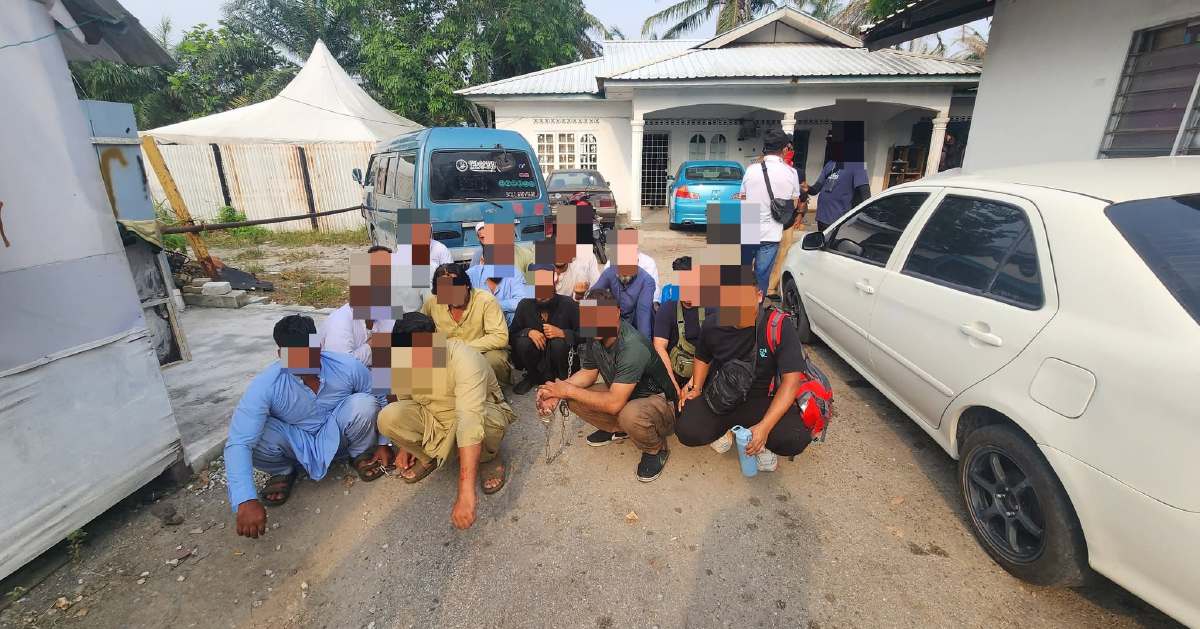
The Immigration Department has successfully disrupted a well-organised criminal network engaged in the systematic dismantling and illegal distribution of vehicle components, with authorities apprehending 20 suspects during coordinated enforcement action conducted in Klang yesterday. The operation, centred on a location along Jalan Kapar, is understood to have targeted a sophisticated syndicate with alleged leadership from foreign nationals, particularly one individual from Pakistan believed to have orchestrated the broader criminal enterprise.
Vehicle parts trafficking remains one of Southeast Asia's most persistent organised crime challenges, driven by the high resale value of components salvaged from stolen or accident-damaged vehicles. In Malaysia's industrial corridor, Klang's strategic position and established logistics networks have historically made it an attractive hub for such illicit operations. The scale of this particular bust—involving two dozen individuals in a single raid—suggests the syndicate had achieved considerable operational sophistication, likely operating multiple collection, dismantling, and distribution points across the Klang Valley region.
The involvement of foreign nationals as operational heads reflects a broader pattern observed across the region, where transnational criminal networks exploit gaps between national legal systems and border enforcement capabilities. Pakistani nationals have been implicated in various organised crime enterprises across Malaysia previously, from drug trafficking to document fraud schemes. The identification of a Pakistani mastermind in this case indicates the syndicate may have connections extending beyond Malaysia's borders, potentially linking to networks in South Asia or facilitating export of stolen components to overseas markets where demand remains consistently high.
The modus operandi of vehicle parts syndicates typically involves three interconnected stages. Initially, members source vehicles either through theft or by acquiring vehicles declared total losses from insurance companies. Subsequently, the vehicles are transported to secure locations where professional dismantlers strip them of valuable components—catalytic converters, GPS systems, airbags, and engine management units command premium prices in secondary markets. Finally, the parts are laundered through legitimate-appearing channels, often rebranded and resold to unsuspecting consumers, workshop operators, or exported to jurisdictions with weaker regulatory oversight.
Clang's prominence as a manufacturing and logistics centre creates particular vulnerabilities to such operations. The district hosts numerous industrial estates, vehicle workshops, and scrapyards, providing convenient cover for illegal dismantling activities. Additionally, Klang's proximity to Port Klang facilitates both the importation of stolen vehicles and the export of salvaged components to regional markets. The sprawling urban-industrial landscape also offers multiple concealment options and complicates law enforcement surveillance efforts, allowing syndicates to maintain operations relatively undetected until authorities receive substantial intelligence.
The consequences of vehicle parts trafficking extend significantly beyond direct victim impact. Insurance companies face elevated claims from theft-related losses, ultimately driving up premiums for all Malaysian motorists. Workshop operators purchasing inadvertently stolen components may face legal liability, while consumers unknowingly installing counterfeit or salvaged components encounter serious safety risks. Furthermore, organised trafficking networks generate broader security concerns, as the criminal infrastructure often overlaps with narcotics distribution and human smuggling operations, amplifying community harm.
Importantly, this operation demonstrates the Immigration Department's expanding enforcement mandate beyond conventional border and documentation concerns. Modern immigration agencies increasingly partner with domestic law enforcement to investigate syndicates involving foreign nationals, recognising that transnational crime networks represent both immigration and national security challenges. The department's capability to coordinate intelligence and execute targeted raids suggests improved inter-agency collaboration within Malaysia's security apparatus.
The investigation's progression from intelligence gathering to execution phase remains undisclosed, though source development likely involved monitoring vehicle movements, tracking component distribution channels, and identifying coordination between local facilitators and foreign organisers. The 20 arrests represent individuals at various operational levels—from senior coordinators to street-level facilitators—suggesting authorities have comprehensively disrupted the syndicate's functioning across its supply chain.
For Malaysian vehicle owners and the legitimate automotive aftermarket sector, dismantling this syndicate offers qualified relief. However, enforcement success against one operation should not create complacency; spare parts trafficking represents an adaptive criminal enterprise, with displaced networks quickly reconstituting under new operational arrangements. Authorities will need sustained investigative pressure and coordinated enforcement with neighbouring jurisdictions to meaningfully degrade trafficking capacity across the region.
The case underscores Malaysia's ongoing challenge in managing organised crime involving transnational elements. While arresting a foreign mastermind and two dozen associates represents significant enforcement achievement, addressing root causes—consumer demand for inexpensive vehicle components, insurance industry vulnerabilities, and porous supply chain oversight—requires comprehensive policy responses beyond prosecutorial action alone. Effective intervention demands coordination between vehicle manufacturers, insurance regulators, workshop associations, and law enforcement agencies to implement supply chain transparency measures and consumer awareness initiatives that collectively diminish syndicate profitability and operational sustainability.

