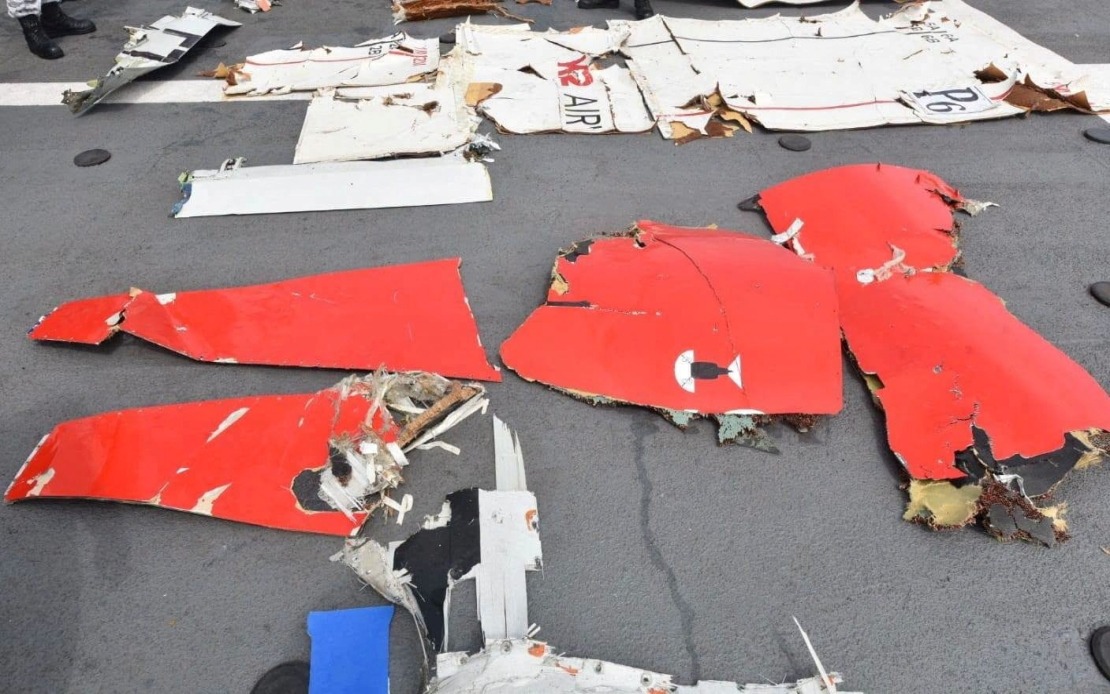
A Pakistani cargo aircraft has crashed in the Arabian Sea, with naval forces recovering scattered debris from the fuselage but finding no sign of the five crew members on board. The Pakistan Civil Aviation Authority confirmed on Thursday that fragments of the Boeing 737, operated by K2 Airways, were located off the coast near Amara, west of Karachi, following an intensive 12-hour underwater search effort.
The aircraft disappeared from air traffic control radar on Tuesday evening while flying from Sharjah in the United Arab Emirates to Karachi. The crew had reported experiencing navigation difficulties moments before the plane rapidly descended and vanished from radar screens, suggesting the aircraft encountered severe technical or operational complications during its final moments aloft.
K2 Airways, a privately-owned Pakistani carrier that commenced operations in 2018, identified the missing crew as two pilots, two flight engineers, and a loadmaster. Through a statement posted on Facebook, the airline expressed its full cooperation with Pakistani Civil Aviation Authority officials and other government agencies investigating the incident. The company also offered prayers for the safety and wellbeing of its missing staff members.
Prime Minister Shehbaz Sharif acknowledged the tragedy on Wednesday, issuing a formal expression of sympathy and extending condolences to the families of the affected crew. His intervention underscored the gravity with which Pakistan's government is treating the loss, signalling a coordinated national response to the disaster.
The search operation faces considerable obstacles from environmental conditions. The commencement of the monsoon season has generated rough seas across the Arabian Sea, significantly hampering both underwater recovery operations and efforts to locate additional survivors or remains. These weather patterns are typical for the region during this time of year and frequently complicate maritime rescue and recovery missions in South Asian waters.
The aircraft involved in the incident was a Boeing 737 that originally entered commercial service in 1999 as a passenger aircraft. The plane was subsequently converted to cargo configuration, a common practice that extends the operational life of aging airframes. Such conversions are widespread across South Asian and Middle Eastern freight operators seeking to maximise asset utilisation as passenger demand fluctuates.
The loss of this aircraft adds to growing concerns about aviation safety within Pakistan's domestic and regional operations. While K2 Airways is a relatively younger carrier by industry standards, having established its operations only six years ago, the incident highlights the risks associated with operating aged aircraft in demanding regional environments. The conversion from passenger to cargo operations, while economically sensible, requires meticulous maintenance oversight and rigorous compliance with modified aircraft specifications.
For Malaysian and Southeast Asian aviation stakeholders, this incident serves as a reminder of the inherent vulnerabilities in regional air transport infrastructure. The Arabian Sea corridor connecting Middle Eastern hubs like Sharjah with South Asian destinations handles substantial volumes of international trade and passenger traffic. Disruptions caused by weather, mechanical failure, or operational error can have cascading effects across integrated supply chains that depend on reliable air freight connectivity.
The rapid loss of radar contact combined with reported navigation problems suggests a potential combination of factors may have contributed to the crash. Navigation failures in modern aircraft are rarely isolated technical malfunctions; they typically indicate either systemic aircraft degradation, procedural errors, or environmental interference exceeding equipment tolerances. The crew's ability to communicate their difficulties before contact was lost indicates they maintained some level of situational awareness, though insufficient to execute recovery procedures.
Investigators will focus on several critical areas during the formal inquiry. Aircraft maintenance records will be scrutinised to determine whether the aged airframe had been adequately maintained according to cargo-conversion specifications. Flight data recorders, if recovered intact from the wreckage, will provide crucial information about the aircraft's performance parameters during its final minutes. Weather conditions at the time of the incident will be analysed to assess whether meteorological factors, including possible microbursts or severe wind shear associated with monsoon onset, played a role in the rapid altitude loss.
The broader implications extend beyond this single incident. Pakistan's aviation sector, like those across South Asia, relies heavily on ageing aircraft imported from developed markets after extended passenger service. While cost-effective, this dependence creates vulnerability windows where maintenance standards may deteriorate or critical systems may fail without warning. Regulatory oversight and compliance verification become increasingly important as fleets age.
Regional aviation authorities will likely use this incident to review oversight protocols for cargo operators, particularly those utilising converted aircraft. The International Civil Aviation Organization standards apply universally, but implementation and enforcement vary considerably across regional carriers and jurisdictions. Malaysia's own aviation regulatory framework, considered among the region's more robust, provides a template that neighbouring countries increasingly seek to emulate.
The families of the missing crew face an agonising period of uncertainty as recovery operations continue. Pakistani authorities have committed to sustained search efforts despite challenging conditions, reflecting both humanitarian commitment and the operational imperative to recover the aircraft's flight recorders and investigate the underlying causes. The resolution of this tragedy will ultimately depend on recovered evidence, including any data the black boxes contain regarding the aircraft's final moments.

