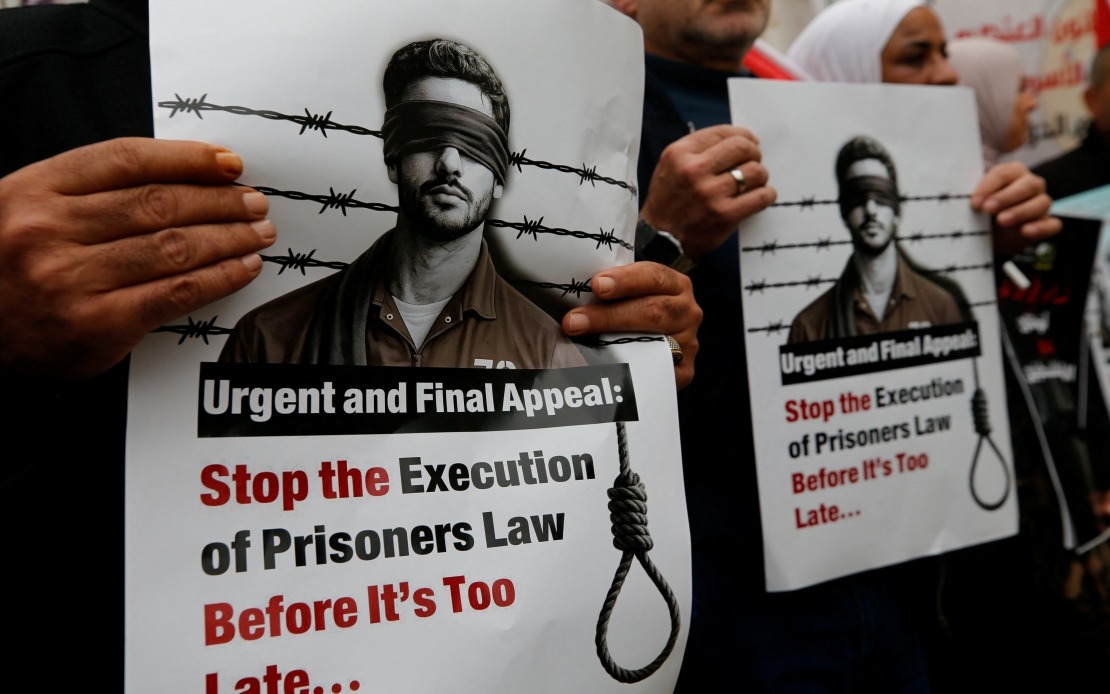
The Palestinian government has documented what it characterises as systematic and pervasive human rights violations against detainees held in Israeli facilities, according to a situation report released on June 30. The allegations encompass a range of mistreatment methods including physical abuse, psychological torture, and inadequate prison conditions that Palestinian authorities argue contravene international humanitarian law and conventions protecting detainees' rights.
According to Situation Report #92 issued by the Palestine Prime Minister's Office, detainees have allegedly endured beatings, extended stress positions, electrical shocks, sleep deprivation, enforced starvation, and sexual assault. The Palestinian government maintains that these practices occur within a broader context of institutional neglect, where prisoners face insufficient food and water rations, deliberate disease transmission, and systematic denial of medical treatment. The report specifically highlights the vulnerability of certain categories of detainees, including three pregnant women allegedly denied adequate prenatal care and subjected to degrading interrogation techniques.
The scale of administrative detention without formal charges represents a central concern in the Palestinian government's assessment. More than 3,376 Palestinian administrative detainees are said to be held in Israeli prisons without charge or trial, a legal status that human rights organisations have long criticised as circumventing due process protections. The figure becomes more acute when considering that 360 Palestinian children are also reportedly held in similar circumstances, raising child welfare and safeguarding questions that resonate across the region and internationally.
The broader detention infrastructure documented in the report encompasses considerably larger numbers. According to Palestinian data, more than 9,500 Palestinian detainees have been recorded across the West Bank and occupied Jerusalem. This extended prisoner population reflects what Palestinian officials describe as a prolonged security operation affecting civilian populations and disrupting community structures. For Southeast Asian readers, the scale and character of these detentions warrant attention given Malaysia's historical advocacy for Palestinian rights and its engagement with international humanitarian frameworks.
The report presents sobering accounts of post-release trauma among former detainees. Hundreds of individuals released from custody reportedly suffer severe physical and psychological consequences, with some documented instances of former prisoners dying shortly after their release due to complications arising from abuse sustained during detention. These long-term health impacts underscore the alleged intensity and duration of mistreatment, extending the humanitarian consequences beyond the period of incarceration itself.
Beyond detention conditions, the Palestinian government's report quantifies the human cost of the broader conflict that has intensified since October 2023. Gaza has witnessed at least 73,054 Palestinian fatalities, including 21,638 children, with 173,480 individuals injured. The West Bank and occupied Jerusalem account for an additional 1,175 deaths, including 246 children, and 12,919 wounded as of mid-June. Additionally, 11,200 Palestinians remain classified as missing, whilst 1,700 healthcare professionals and 262 journalists have been killed, figures that reveal the conflict's impact on civilian infrastructure and information dissemination capacities.
During the documented six-day period from June 22 to 28, the Palestinian government recorded 362 military operations conducted by Israeli forces, 47 shooting incidents excluding airstrikes, and 114 incidents attributed to settler violence in the West Bank and occupied Jerusalem. This frequency of military and paramilitary activity illustrates the operational intensity and suggests ongoing flashpoints that maintain security tensions and civilian vulnerability across Palestinian territories.
Parallel to its security concerns, the Palestinian government has pursued institutional and economic reforms aimed at strengthening governance structures. President Mahmoud Abbas approved amendments to the Value Added Tax law, facilitating a comprehensive institutional development programme within the Ministry of Finance. These legislative adjustments support the establishment of a Higher Council for Public Revenues and represent efforts to modernise financial administration in alignment with international standards, combat revenue leakage through tax evasion and smuggling, and enhance the government's capacity to deliver essential services to civilians.
Digital transformation initiatives form another dimension of Palestinian administrative development. The Cabinet endorsed a General Policy for the Telecommunications and Information Technology Sector covering 2026 through 2028, designed to expedite digitalisation, strengthen government service delivery through digital channels, and enhance administrative transparency. Simultaneously, the government approved transitioning from paper-based to smart health insurance cards, a modernisation step that improves data security, reduces fraud, and establishes infrastructure for expanded digital health services. These reforms reflect Palestinian institutional efforts to function more efficiently despite the conflict environment, with implications for service resilience and administrative capacity-building across the territories.
The concurrent documentation of security allegations and institutional reform initiatives reflects the complexity of Palestinian governance during conflict. Whilst the government articulates serious human rights concerns regarding detained populations and security operations, it simultaneously pursues administrative improvements intended to strengthen institutional legitimacy and service delivery. For regional observers including Malaysia, these parallel developments underscore the multifaceted nature of Palestinian institutional challenges, where security concerns coexist with governance modernisation efforts.
The Palestinian government's release of detailed documentation regarding detentions and conflict casualties functions partly as advocacy within international forums where Malaysian representation carries weight. Given Malaysia's consistent support for Palestinian statehood and its seat on international bodies addressing human rights and humanitarian concerns, such reports inform the country's foreign policy positions and its advocacy within regional and global platforms addressing the Israeli-Palestinian conflict.

