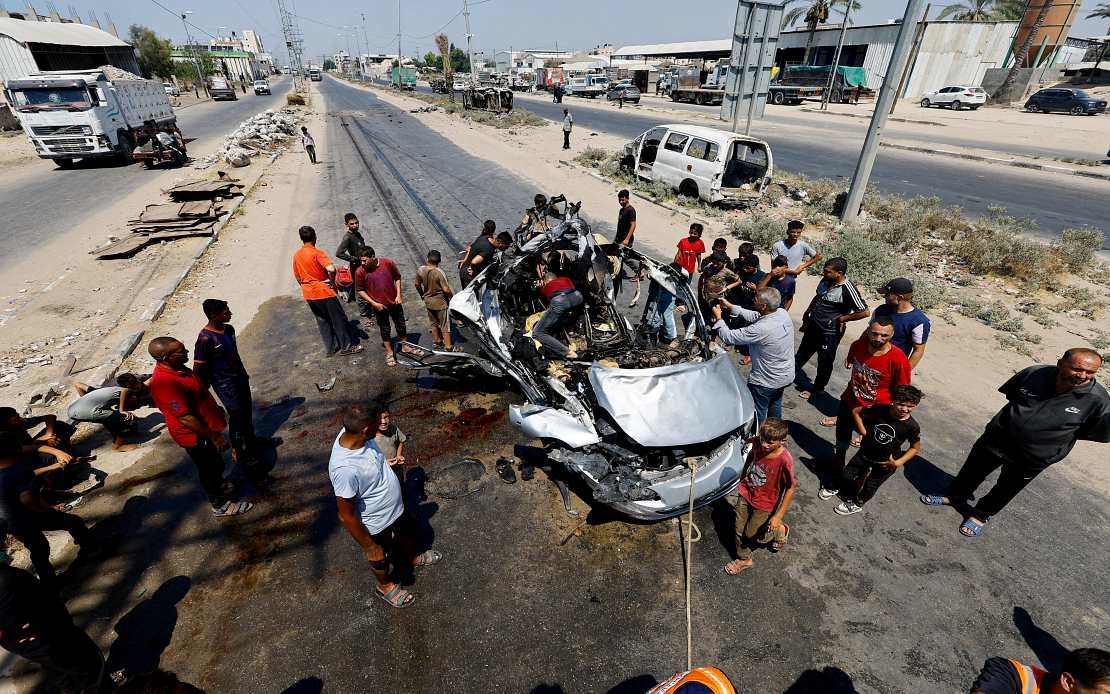
The Palestinian leadership has levelled serious accusations against Israel, claiming that military operations persist across Gaza and the West Bank despite the announcement of a ceasefire agreement's second phase implementation. Speaking on Monday, Palestinian presidential spokesperson Nabil Abu Rudeineh expressed deep frustration with the situation, characterising the arrangement as merely symbolic while violence continues unabated on the ground. The remarks underline the profound mistrust and tension that remain even as diplomatic efforts attempt to restore calm across the territories.
Abu Rudeineh's stark assessment that the agreement represents "an agreement on paper and death on the ground" reflects the Palestinian view that the ceasefire lacks substantive enforcement mechanisms. According to reports from the Palestine News and Information Agency (WAFA), the spokesperson stressed that the accord has failed both to establish a genuine halt to fighting and to provide meaningful protection for Palestinian civilians caught in the conflict zone. This characterisation suggests that Palestinian negotiators regard the agreement as insufficient in scope and implementation, falling far short of their expectations for comprehensive peace.
The Palestinian official specifically highlighted continued military strikes on refugee camps and inhabited villages as evidence of Israel's non-compliance with ceasefire terms. He portrayed these attacks as part of a deliberate strategy to diminish Palestinian demographic presence and undermine claims to refugee rights and return—issues central to any eventual peace settlement. These allegations, if substantiated, would represent serious violations of the ceasefire framework and raise questions about international oversight and enforcement mechanisms designed to monitor compliance.
Abu Rudeineh warned that Israel's apparent disregard for international diplomatic initiatives threatened to deepen the regional crisis. By continuing military operations despite international pressure and ceasefire agreements, Israel risked provoking further Palestinian retaliation and widening the cycle of violence. This escalatory dynamic poses particular concern for neighbouring countries and the broader Middle East, where instability in the Israeli-Palestinian conflict regularly has ripple effects across the region.
The Palestinian leadership has directed an urgent appeal to the international community, particularly the United Nations Security Council, to take decisive action. The spokesperson called on the Security Council to fulfil its mandate by compelling Israeli authorities to implement the ceasefire agreement's second phase, cease all military operations in Gaza and the West Bank including occupied East Jerusalem, and establish international protection mechanisms for Palestinian populations. This appeal underscores Palestinian dependence on multilateral institutions to counterbalance Israel's military superiority.
Abu Rudeineh further argued that the pattern of alleged violations without consequences perpetuates a cycle of impunity that emboldens further breaches of international law and humanitarian standards. He contended that as long as occupying forces face no accountability for military actions against civilians, the incentive structure remains skewed toward continued aggression rather than negotiated settlement. This argument reflects a long-standing Palestinian grievance regarding the asymmetry in international enforcement and accountability mechanisms.
The Palestinian position articulated by the spokesperson establishes explicit preconditions for regional stability. He asserted that lasting peace and security cannot be achieved while what Palestinians term "occupation" continues and military operations persist. Instead, he called for a comprehensive resolution based on United Nations resolutions, the Arab Peace Initiative framework, and Palestinian statehood with East Jerusalem designated as the capital. These demands represent longstanding Palestinian negotiating positions that have remained consistent across multiple rounds of peace talks.
For Malaysian and Southeast Asian observers, the Palestinians' escalating rhetoric and accusations carry significance beyond the immediate conflict zone. The apparent breakdown in ceasefire compliance—if accurate—indicates that diplomatic initiatives remain fragile and vulnerable to military escalation. Regional powers with interests in Middle Eastern stability, including Malaysia, monitor such developments closely as indicators of broader geopolitical trends and potential humanitarian crises requiring international response.
The timing of these accusations, emerging after the ceasefire agreement's announcement, raises questions about the negotiation process and whether all parties genuinely committed to implementation. Palestinian officials appear increasingly pessimistic about the agreement's viability, suggesting that the gap between terms on paper and actual military conduct on the ground remains dangerously wide. This disconnect between formal agreements and operational reality has characterised previous Israeli-Palestinian peace efforts and represents a fundamental obstacle to conflict resolution.
The international community faces renewed pressure to address what Palestinian officials characterise as systematic non-compliance with ceasefire terms. The Palestinian appeal to the UN Security Council signals that bilateral negotiations have reached an impasse and that external intervention and enforcement mechanisms are deemed necessary. Whether the Security Council possesses sufficient consensus and political will to impose meaningful consequences on any party remains uncertain, particularly given historical divisions among permanent members regarding Middle East policy.
These developments reflect deeper structural challenges in the Israeli-Palestinian conflict that extend beyond temporary ceasefires or diplomatic agreements. The competing claims to territory, sovereignty, refugees' rights, and security create fundamental incompatibilities that require resolution at a more fundamental level than routine ceasefire arrangements can address. Until such underlying issues receive comprehensive negotiated settlement, periods of relative calm appear destined to remain temporary rather than transformative.
For regional stability and international humanitarian concerns, the credibility of ceasefire agreements depends entirely on demonstrable compliance and visible reduction in civilian casualties. Palestinian accusations of continued military operations suggest that such visible improvement may not yet be materialising, raising doubts about whether the current diplomatic framework possesses adequate mechanisms to translate political agreements into practical cessation of hostilities and protection for affected populations.

