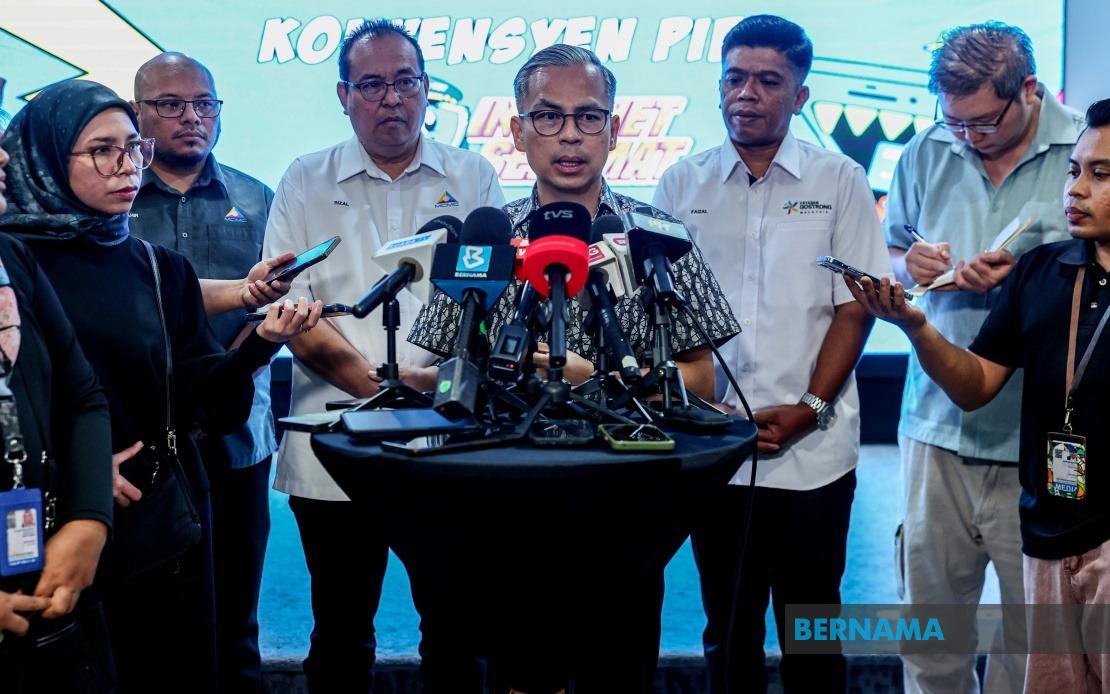
Communications Minister Datuk Seri Fahmi Fadzil has sounded an alarm about the growing phenomenon of children treating artificial intelligence systems as friends or romantic partners, urging Malaysian parents to exercise heightened vigilance in their homes. Speaking at the Kuala Lumpur Federal Territory Safe Internet PTA Convention 2026, Fahmi emphasised that while AI technology offers genuine utility in research and information-gathering, it fundamentally lacks the human qualities necessary for authentic friendship and should never occupy that psychological role in a child's life.
The minister articulated a distinction that many parents struggle to communicate to their digitally native children: AI systems, despite their conversational sophistication, are not sentient beings capable of genuine relationship. These technologies are engineered by humans and trained on human-generated data, yet they operate according to algorithmic logic rather than emotional intelligence or genuine care. The danger intensifies when children mistake the system's responsiveness for authentic understanding, potentially replacing real human connections with simulated ones. This substitution becomes particularly concerning during formative years when peer relationships and family bonds should be developing naturally.
Beyond the psychological implications of emotional attachment to machines, Fahmi highlighted a practical reality that parents often overlook: AI systems regularly generate false information, a phenomenon technologists call "hallucination." These systems can present fabricated data with convincing confidence, and the information they draw from may be outdated or contextually inappropriate. For a child seeking advice or information from an AI companion, the stakes become higher. There is no gatekeeper mechanism ensuring accuracy, no responsibility framework holding the system accountable for harmful guidance, and no recourse when misinformation leads to real-world consequences.
The minister rejected the approach of complete internet prohibition, recognising that digital literacy is now essential for Malaysian children's educational and professional futures. Instead, Fahmi advocated for a balanced strategy centred on active parental engagement and technological oversight. Parents must remain present in their children's digital lives, understanding what platforms they use, what AI tools they interact with, and most importantly, maintaining open dialogue about these experiences. Schools too must become partners in this effort, with teachers trained to recognise warning signs of unhealthy AI engagement and equipped to intervene constructively.
Fahmi also raised concerns about the inadequacy of current content moderation systems, particularly in their failure to understand linguistic and cultural nuances. He cited troubling incidents of cyberbullying within Tamil-speaking communities on TikTok, where AI moderation tools proved ineffective at identifying harmful language. The system's inability to grasp context, cultural references, and the layered meanings within specific languages represents a critical gap in platform accountability. Language is not merely a dictionary of words but a repository of culture, history, and subtle social signalling. When AI systems trained primarily on English-language datasets attempt to moderate content in regional languages, they inevitably miss harmful intent and allow abuse to flourish.
Raising this issue directly with TikTok, Fahmi underscored that content moderation cannot be wholly automated. Human expertise, particularly from communities fluent in specific languages and culturally embedded in their contexts, remains irreplaceable. The tendency of technology companies to rely excessively on algorithmic solutions to regulatory challenges represents a fundamental misunderstanding of how language and social harm operate. For Malaysia, a multilingual, multicultural society, this deficiency poses particular risks to vulnerable communities already experiencing higher rates of online harassment.
The Malaysian government has moved beyond warnings into regulatory action through the implementation of the Child Protection Code and Risk Mitigation Code, which social media platforms have been given several months to integrate into their systems. These codes address specific harms including fraud, online gambling, cyberbullying, and other criminal activities. Fahmi indicated that the Malaysian Communications and Multimedia Commission is currently engaged with major platforms including YouTube in Singapore to ensure compliance. The message is clear: voluntary cooperation is being sought, but enforcement mechanisms with substantial financial penalties stand ready if platforms fail to meet standards.
This two-code framework represents a sophisticated regulatory approach suited to the complexity of digital harms. Rather than imposing blanket restrictions that might stifle innovation or access, the codes create a standards-based system that allows platforms flexibility in how they achieve protection while holding them accountable for outcomes. When these measures are fully operational, platforms that ignore them face not merely administrative sanctions but court action with severe financial consequences. This escalation signals that Malaysia's government treats child safety online with the seriousness it deserves.
The convention itself, organised by the GoStrong Malaysia Foundation in collaboration with the Malaysian Communications and Multimedia Commission, drew nearly 500 stakeholders including parents, educators, school administrators, and government representatives. This gathering of diverse community voices reflects recognition that protecting children online requires ecosystemic effort rather than isolated intervention. Parents cannot act alone; teachers cannot act alone; platforms cannot act alone. The challenge demands coordinated action across family units, educational institutions, regulatory bodies, and corporate entities, with each recognising their distinct responsibilities.
For Malaysian families specifically, Fahmi's warnings arrive at a moment of acute relevance. Southeast Asia leads globally in social media usage, and Malaysia's youth are among the earliest adopters of emerging AI tools. The risks identified by the minister—emotional dependency on non-sentient systems, exposure to misinformation, linguistic moderation failures, and targeted cyberbullying—are not hypothetical. They are manifesting now in Malaysian schools, households, and online communities. The question for parents is not whether these issues will affect their children, but when, and whether they will be prepared to respond thoughtfully rather than reactively.
The path forward requires parents to resist both extremes: neither technological prohibition nor unmonitored access, but informed, engaged oversight. This means learning enough about AI and digital platforms to understand what children are experiencing, recognising the signs when virtual connections are replacing real ones, and maintaining conversations about technology's role in their lives. It means schools integrating digital citizenship into curricula, ensuring students understand both the capabilities and limitations of AI. And it means holding platforms accountable for features that knowingly exploit young users' developmental vulnerabilities. In this ecosystem, Fahmi's intervention serves as both catalyst and reminder: protecting Malaysian children online is not a luxury but an urgent necessity.

