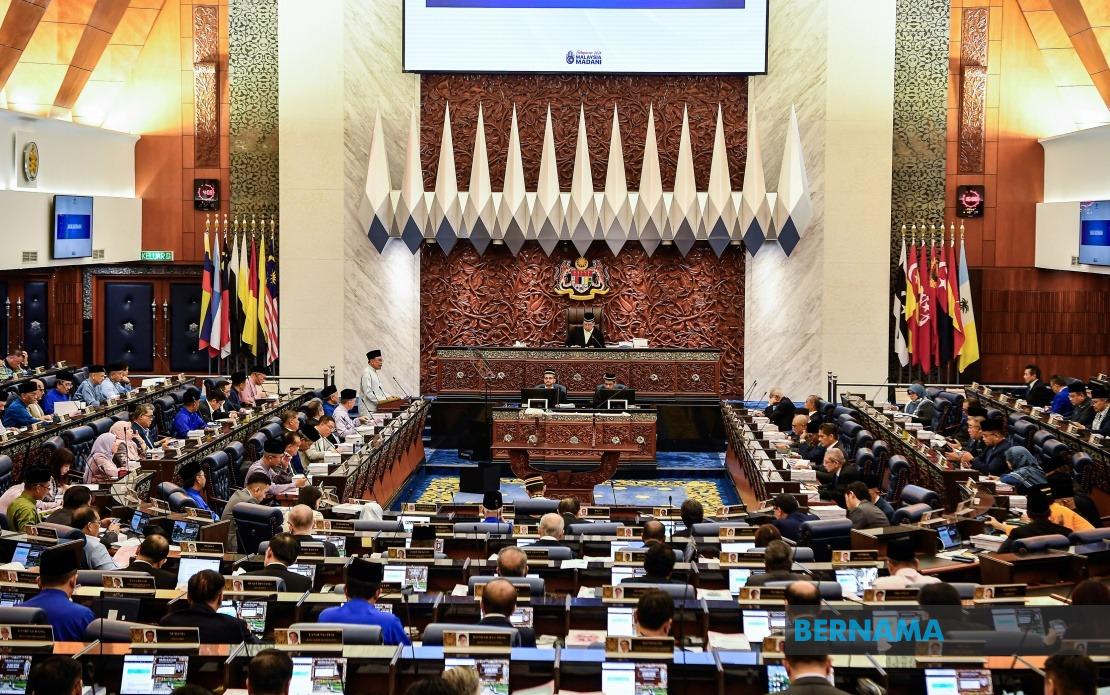
The Dewan Rakyat has endorsed the Malaysian Communications and Multimedia Commission (Amendment) Bill 2026, marking a significant legislative step to modernise the institutional framework governing Malaysia's sprawling communications sector. Passed by majority voice vote following deliberation among fourteen parliamentarians spanning government and opposition ranks, the measure addresses a range of operational and governance matters intended to position the MCMC for sustained effectiveness in an increasingly complex digital landscape.
Deputy Communications Minister Teo Nie Ching underscored that the amendments respond to practical realities facing the commission after nearly three decades of largely static regulations. The Bill permits ministerial appointment of the MCMC chairman and commissioners based on established statutory criteria encompassing professional qualifications, personal integrity, relevant experience, and demonstrated leadership capability. This appointment mechanism, Teo explained, has existed since 1998 and continues to serve as the foundation for building a capable governing board attuned to national communications policy objectives.
A centerpiece of the amendments involves substantially raising the MCMC's financial thresholds for autonomous procurement decisions. The existing RM5 million limit, unchanged since 1998, will rise to RM50 million, bringing the regulator's contracting authority into alignment with broader federal statutory body guidelines. Teo characterised this adjustment as essential to account for inflation, modern technological requirements, and escalating material and labour expenses that have compounded over two and a half decades. The Finance Ministry's own procurement framework, she noted, permits fully internally-funded statutory agencies to approve transactions reaching RM499 million, though the government judged RM50 million a prudent and proportionate ceiling for the MCMC.
A particularly contentious element concerned political independence safeguards. The Bill explicitly stipulates that the MCMC chairman cannot simultaneously hold membership in any legislative body, a provision designed to eliminate potential conflicts of interest arising from dual allegiances. This measure reflects growing recognition in governance circles that regulators require some insulation from political pressures to function credibly, a concern amplified during parliamentary debate by multiple lawmakers questioning the adequacy of existing protections.
Dr Halimah Ali, representing Kapar under the Perikatan Nasional banner, articulated comprehensive reservations about ministerial dominance in the appointment process. She advocated restructuring the selection mechanism along lines paralleling the Human Rights Commission of Malaysia (SUHAKAM), wherein candidates undergo broader scrutiny emphasising expertise, track record, and public standing rather than ministerial preference alone. Halimah additionally urged implementation of mandatory recording and parliamentary tabling of all ministerial directives to the MCMC, creating an auditable trail of executive influence over regulatory decisions. Her interventions reflected opposition anxieties that the amendments, while procedurally tidying the MCMC's operations, insufficiently addressed systemic concerns about regulatory capture through appointment processes.
Datuk Mas Ermieyati Samsudin, the Masjid Tanah MP from Perikatan Nasional, similarly pressed the government to strengthen institutional checks and balances. She specifically highlighted the Universal Service Provision (USP) Fund—a key mechanism for extending communications access to underserved communities—as requiring enhanced oversight. Mas Ermieyati recommended periodic parliamentary reports on USP utilisation, improved audit frameworks, and transparent publication of ministerial instructions to ensure accountability in fund deployment. These suggestions signal unease among certain opposition figures that expanded MCMC procurement authority might proceed without corresponding transparency mechanisms.
Dr Richard Rapu of Betong, representing the Gabungan Parti Sarawak coalition, offered a more supportive reading of the amendments' trajectory. He characterised the legislative package as fortifying the MCMC's institutional scaffolding whilst positioning it as a professionally-oriented, autonomous body prepared to navigate the digital economy's mounting complexity. This framing emphasised how modernised governance structures and expanded operational flexibility collectively enable the regulator to respond with agility to technological disruption and market evolution, an interpretation aligned with government messaging regarding the Bill's reformist intent.
The amendments arrive at a critical juncture for Malaysian communications regulation. The sector has undergone profound transformation since 1998—the baseline reference year for much current legislation—encompassing mobile broadband proliferation, over-the-top media service emergence, data protection imperatives, and cybersecurity imperatives. The MCMC has consequently faced mounting pressure to oversee an ecosystem of exponentially greater scope and complexity with frameworks conceived for a less dynamic environment. Raising procurement thresholds acknowledges this reality, permitting the regulator to contract infrastructure, technology, and expertise without constant ministerial or parliamentary bottlenecking.
Yet the parliamentary discourse illuminated an underlying tension animating Malaysian regulatory politics. Enhancement of an agency's operational autonomy necessarily presumes the agency will exercise that autonomy consistently with public interest, a presumption complicated by concerns about ministerial appointment patterns and political influence. The MCMC's track record on sensitive issues—including online content moderation, data localisation requirements, and media ownership concentration—has occasionally attracted criticism from civil society advocates alleging regulatory drift toward executive preferences. Opposition lawmakers' emphasis on appointment transparency and ministerial directive recording reflects scepticism that governance reforms alone can counteract structural incentives toward political deference.
For Malaysian technology enterprises, telecommunications carriers, and digital service providers, the Bill's passage carries mixed implications. Expanded MCMC procurement authority may accelerate regulatory infrastructure modernisation and swifter adoption of digital tools enhancing regulatory efficiency. Simultaneously, questions about regulatory independence persist, potentially influencing investor confidence in the MCMC's willingness to enforce rules evenhandedly across politically-connected and non-connected market participants. Regional comparators such as Singapore's Infocomm Media Development Authority maintain stronger institutional independence through statutory appointment mechanisms less susceptible to partisan influence, a distinction not lost on multinational firms navigating Malaysian regulatory terrain.
The Bill's passage also situates the MCMC within broader regional patterns of regulatory evolution. Southeast Asian nations increasingly grapple with balancing digital economy facilitation against consumer protection, national security prerogatives, and developmental objectives. Malaysia's approach—modest institutional strengthening paired with sustained ministerial appointment authority—occupies a middle path between more independent models and more executive-dominated frameworks. Whether this calibration proves durable depends substantially on how successive governments exercise appointment powers and whether transparency mechanisms can meaningfully constrain arbitrary exercise of ministerial direction.
Looking forward, the MCMC faces the challenge of translating expanded procurement authority into tangible regulatory improvements whilst simultaneously maintaining public confidence in its impartiality. Parliamentary focus on appointment processes and ministerial direction transparency suggests these governance questions will remain contested in Malaysian politics, potentially prompting further amendments should concerns about regulatory independence intensify. For now, the legislative framework has been updated; whether institutional culture and practice adapt correspondingly remains an open question shaping the regulator's credibility in navigating Malaysia's accelerating digital transformation.

