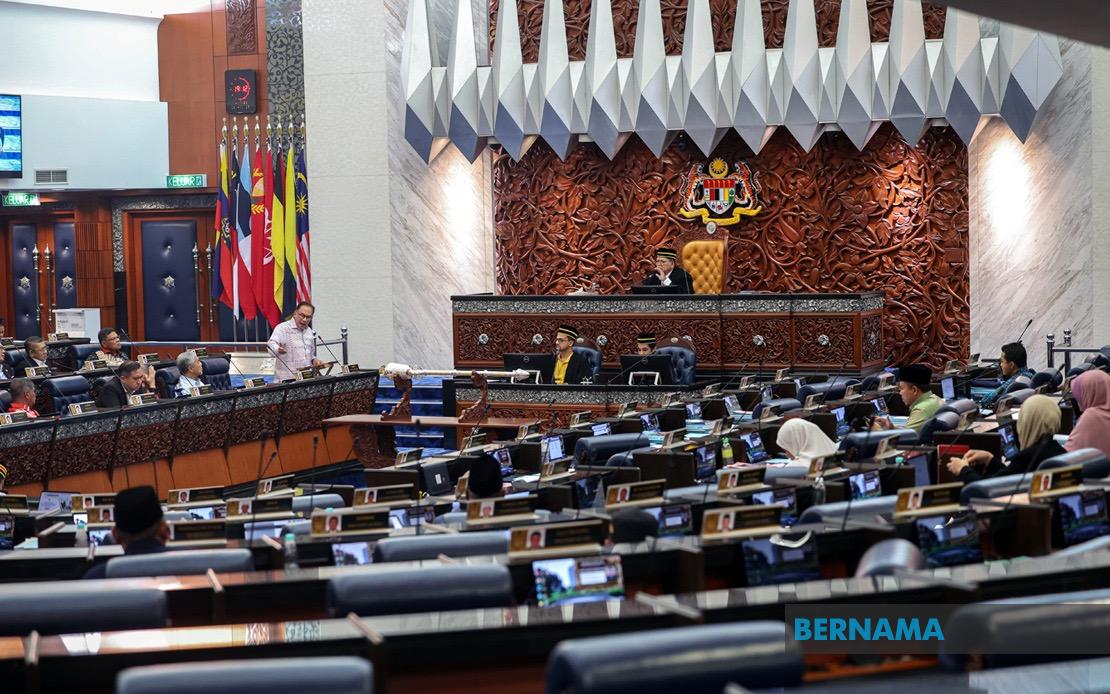
Parliament has given final legislative approval to amendments reshaping how Malaysia enforces employer compliance with job vacancy reporting requirements. The Dewan Rakyat voted to adopt the Employment Insurance System (Amendment) Bill 2025 on June 30, establishing a progressive fine structure that takes effect after the Dewan Negara had already endorsed the changes on March 12. The new framework introduces penalties of RM1,000 for an initial breach, RM3,000 for a second infraction, and up to RM5,000 for any subsequent offences, fundamentally altering how the Social Security Organisation (PERKESO) will pursue non-compliant employers across the labour market.
The legislative debate, which involved 13 MPs spanning government and opposition parties, reflected broader concerns about balancing regulatory enforcement with the operational constraints faced by Malaysian businesses. Rather than adopt a heavy-handed approach immediately upon discovering non-compliance, the government has structured the regime to reward early cooperation, signalling that education and voluntary adherence form the cornerstone of the new policy. Deputy Human Resources Minister Datuk Khairul Firdaus Akbar Khan stressed during the debate's conclusion that the amendments represent a measured approach designed to cultivate a more organised and efficient employment ecosystem, one where employers understand their obligations and actively participate in connecting job seekers with opportunities.
The scaling of penalties reflects significant compromises reached during consultation. The government initially proposed a maximum fine of RM10,000, but feedback gathered through extensive engagement sessions with employers across various sectors prompted a recalibration downward to RM5,000. This reduction carries symbolic weight, signalling receptiveness to business concerns without compromising the core objective of improving labour market transparency. The revision also speaks to the government's recognition that many Malaysian employers, particularly small and medium enterprises operating in less-developed regions, may require patient education rather than immediate financial penalties to achieve compliance.
Critical to the implementation framework is a graduated approach to enforcement that prioritises corrective action before financial consequences materialise. Under the new system, employers identified as non-compliant will initially receive formal compliance notices that create an opportunity window for correction without triggering fines. This safeguard addresses concerns raised during parliamentary debate about the capacity of businesses, especially those in rural areas with limited access to digital resources and regulatory guidance, to navigate reporting requirements swiftly. By decoupling the notice from immediate penalties, the government has designed a system that accommodates the operational realities of enterprises across Malaysia's diverse economic landscape.
The job vacancy reporting mechanism itself remains central to the government's broader labour market modernisation agenda. Parliamentarians, including Azahari Hasan from Padang Rengas, stressed that efficient and straightforward reporting systems are fundamental to the state's ability to match jobseekers with employment opportunities and ultimately to reduce structural unemployment. When employers consistently report vacancies to PERKESO, the organisation gains visibility into regional and sectoral labour demand patterns, enabling policymakers to design training programmes and employment incentives more effectively. This data-gathering dimension transforms the reporting requirement from a mere administrative burden into a cornerstone of evidence-based labour policy.
Concerns articulated during the parliamentary debate underscore persistent implementation challenges. Nurul Amin Hamid, representing Padang Terap, highlighted particular anxieties regarding awareness levels among rural businesses that may have limited familiarity with the reporting obligations mandated under the relevant legislation. The physical and informational distance between rural enterprises and PERKESO's central operations, combined with lower digital literacy in some communities, creates genuine obstacles to compliance. These concerns point toward the necessity for PERKESO to invest in outreach, particularly in East Malaysia and rural peninsular areas, to ensure that the regulatory framework does not inadvertently penalise businesses simply because they lacked adequate guidance.
The role of user-friendly digital infrastructure emerged as a recurring parliamentary theme. Multiple MPs insisted that PERKESO develop reporting systems that impose minimal operational friction on employers while capturing accurate vacancy data. A system that is cumbersome or technically inaccessible risks creating frustration and non-compliance among well-intentioned businesses. The government's undertaking to continue providing guidance and engagement sessions suggests recognition of this challenge, though the adequacy of these support mechanisms will ultimately determine whether the penalty framework functions as intended or becomes a source of friction in the business community.
Transparency in job advertisements through government portals, as emphasised by Syerleena Abdul Rashid of Bukit Bendera, adds another dimension to the policy's social objectives. Beyond simply gathering data, the amendments support a vision of fairer labour markets where jobseekers from disadvantaged backgrounds have genuine visibility into available opportunities. When vacancies are properly reported to PERKESO rather than advertised exclusively through private channels or word-of-mouth networks, meritocratic hiring practices become more feasible. This dimension appeals particularly to parliamentarians concerned with equity and social mobility, lending the amendments broader legitimacy across political lines.
The legislative process itself, spanning from March through June, reflects the careful deliberation required when amending employment law affecting millions of workers and thousands of employers across Malaysia. The Dewan Negara's initial approval followed by the Dewan Rakyat's subsequent endorsement demonstrates that consensus emerged across political divides regarding the fundamental approach of progressive penalties combined with guidance. This bipartisan backing signals that the framework enjoys legitimacy as a reasonable compromise between labour market modernisation and business practicality, an important prerequisite for effective implementation.
Implementation success now hinges on PERKESO's capacity to execute the compliance notice regime fairly and consistently, develop genuinely user-friendly reporting infrastructure, and conduct sustained outreach to employers across all regions and sectors. The penalty framework's deterrent effect will only materialise if businesses perceive the system as fair, accessible, and consistently applied. Conversely, if implementation proves inconsistent or the reporting system remains burdensome, the penalties will generate resentment without achieving the underlying objective of comprehensive vacancy reporting that enables better labour market matching and more responsive employment policy throughout Malaysia.

