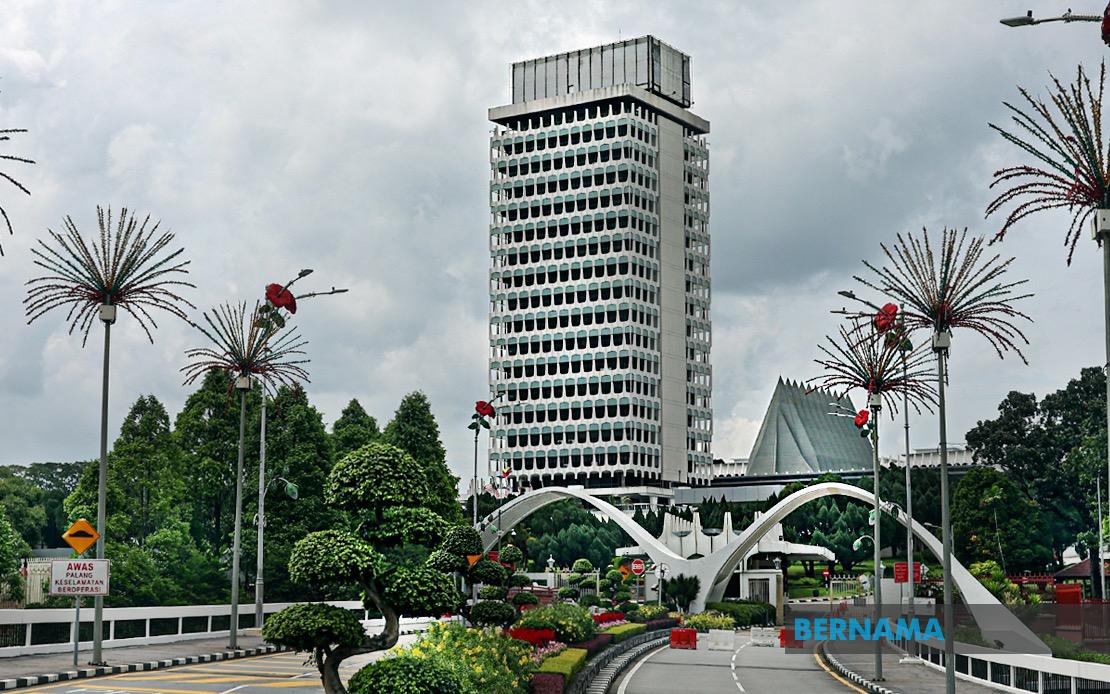
The Dewan Rakyat convened on July 1 for a 16-day sitting that placed two critical domestic issues at the forefront of parliamentary scrutiny: potential reforms to the Human Rights Commission of Malaysia and the growing disconnect between official economic data and the financial pressures facing Malaysian households. The Second Meeting of the Fifth Session of the 15th Parliament, running until July 16, signals Parliament's recognition that these structural challenges demand sustained legislative attention and government accountability.
The proposed amendment to the SUHAKAM Act 1999 represents a substantive effort to reshape the commission's financial framework. Teresa Kok Suh Sim, the Seputeh member from Pakatan Harapan, will query the Prime Minister on whether SUHAKAM could establish revenue streams through educational initiatives, including training programmes and specialised courses. This line of questioning reflects broader anxieties about institutional sustainability in Malaysia's human rights infrastructure. By diversifying revenue beyond direct government allocation, such a measure would theoretically insulate SUHAKAM from budgetary pressures and grant it greater operational latitude to pursue investigations and advocacy work independently. For Malaysian civil society and international observers monitoring the country's commitment to human rights standards, the outcome of this amendment carries symbolic weight beyond its immediate fiscal implications.
The rationale underpinning the SUHAKAM reform proposal stems from a structural vulnerability: heavy reliance on annual government appropriations can inadvertently compromise a human rights body's perceived independence, even when government intentions are benign. Allowing SUHAKAM to generate supplementary income through fee-bearing educational services would strengthen its institutional autonomy whilst maintaining core government support. Malaysian universities, professional bodies, and corporations increasingly demand training in anti-discrimination law, workplace rights, and governance standards—a market SUHAKAM could serve whilst simultaneously raising public awareness of human rights issues. The amendment, if passed, would position Malaysia more closely with regional peers like Thailand and Indonesia, whose human rights commissions operate with greater financial flexibility.
Equally pressing is the widening chasm between official inflation statistics and the actual cost-of-living experiences of ordinary Malaysians. Mohd Syahir Che Sulaiman, the Bachok representative from Perikatan Nasional, will challenge the Economy Minister to explain this disconnect. The question probes whether government inflation indices adequately capture the rapid escalation in essential expenses—housing, food, transportation, and utilities—that dominate household budgets. Many Malaysian families report that their purchasing power has stagnated or declined despite official announcements of contained inflation and moderate economic growth. This perception gap between headline figures and lived experience has become a significant source of public frustration and political vulnerability for the administration.
The significance of this parliamentary inquiry extends beyond simple statistical debate. Inflation metrics traditionally emphasise broad baskets of consumer goods, sometimes smoothing out sharp increases in necessities by averaging them against stable or declining prices in discretionary categories. For lower and middle-income Malaysians, however, housing costs and food prices—which have surged considerably—consume far larger portions of income than national averages suggest. Energy subsidies mask the true energy costs that households would face without government support, further distorting inflation readings. The parliamentary questioning implicitly demands that the government clarify what economic indicators actually matter for ordinary Malaysians and how policy interventions should be calibrated to enhance genuine purchasing power rather than merely managing statistical narratives.
A secondary parliamentary focus involves land-use management and urban flood resilience. V. Ganabatirau, the Klang member representing Pakatan Harapan, will ask the Prime Minister about the status of reviewing land transfers and conversions involving flood retention ponds, particularly in Kuala Lumpur. This question reflects mounting concern over urban development pressures that encroach on critical environmental infrastructure. Flood retention ponds function as essential drainage features and natural buffers against seasonal inundation; their diversion to commercial or residential use directly increases flood risk for surrounding communities. The review referenced in the question appears aimed at establishing clearer protocols for assessing and approving such conversions, potentially requiring impact assessments and alternative mitigation measures. For Klang, an area historically vulnerable to flooding, the effectiveness of such land-use governance directly affects public safety and property values.
Higher education and workforce alignment also feature prominently in parliamentary deliberations. Datuk Dr Ku Abd Rahman Ku Ismail, representing Kubang Pasu from Perikatan Nasional, will request the Higher Education Minister provide precise data on the distribution of students across Science, Technology, Engineering and Mathematics fields versus non-STEM disciplines. Furthermore, he seeks clarity on whether Malaysia has defined target numbers of engineers in various specialisations needed to support high-technology industrial development. This inquiry underscores persistent anxiety that Malaysia's higher education system may not be calibrating graduate output to anticipated labour market demands, particularly in advanced manufacturing, semiconductors, renewable energy, and digital technologies. Without transparent targets and regular monitoring, universities risk perpetuating educational mismatches that leave graduates underemployed while industries struggle to fill specialist vacancies. The question signals parliamentary appetite for more granular workforce planning.
Simultaneously, the Cybercrime Bill 2026 advances to second reading, marking a pivotal juncture for this legislation. A Minister from the Prime Minister's Department will present the bill, signalling executive priority for enhanced digital security governance. Cybercrime encompasses everything from financial fraud and identity theft to sophisticated state-sponsored intrusions and ransomware attacks targeting critical infrastructure. Malaysia's digital economy, fintech sector, and government services increasingly face cyber threats; appropriate legislative frameworks are essential. However, cybercrime legislation in the region has sometimes expanded government surveillance capabilities or restricted digital freedoms under the guise of security. Parliamentarians will likely scrutinise how the bill balances cybersecurity imperatives against data privacy, freedom of expression, and due process. The second reading provides an opportunity to refine definitions, establish proportionate penalties, and embed safeguards against authoritarian misuse.
Collectively, these parliamentary foci reflect Malaysia's navigation of interconnected governance challenges: institutional independence, economic equity, environmental management, human capital development, and digital security. The Dewan Rakyat's sustained engagement with these issues, spread across a 16-day sitting, suggests Parliament is functioning as a genuine deliberative forum rather than a ceremonial body. For Malaysian stakeholders—whether civil society organisations concerned with human rights, working families struggling with cost pressures, urban residents facing flood risks, young people planning educational and career paths, or businesses defending against cyber threats—these parliamentary proceedings offer crucial windows for influence and accountability. The outcomes of debates and votes on these matters will shape Malaysia's policy trajectory, institutional health, and citizens' lived experiences over coming years.

