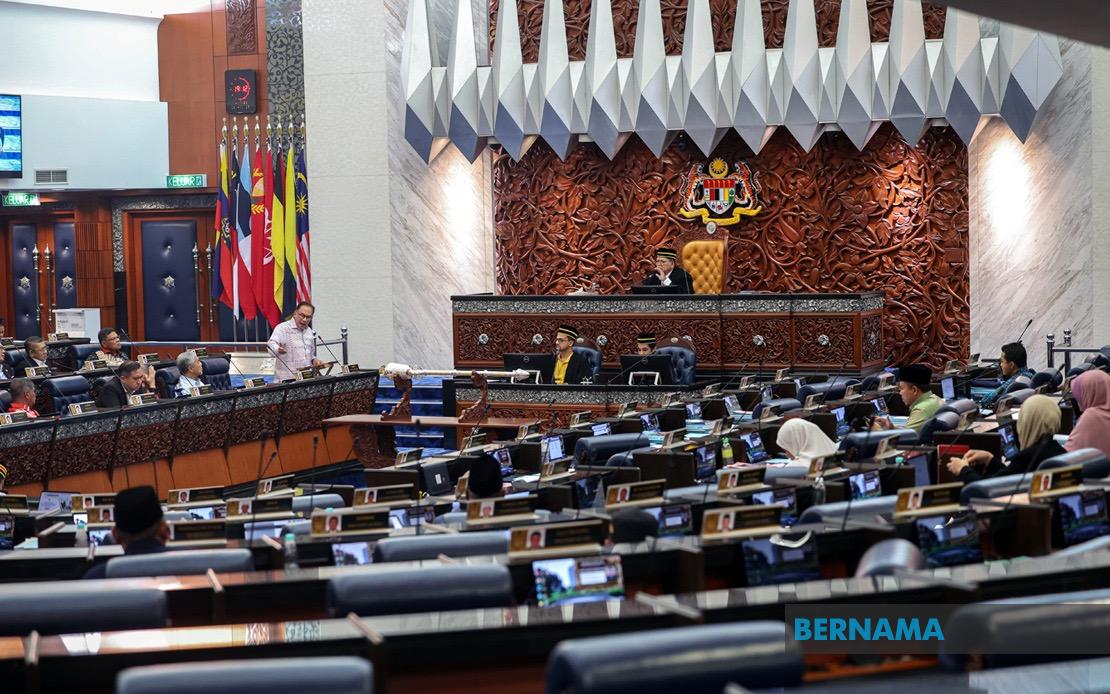
Lawmakers in the Dewan Rakyat have converged on a shared commitment to fortify Malaysia's defences against child sexual exploitation, backing significant amendments to existing legislation while tabling ambitious proposals that would reshape how the nation investigates, prosecutes, and prevents such crimes. The debate surrounding the Sexual Offences Against Children (Amendment) Bill 2026 revealed rare unity across government and opposition benches, with 26 members contributing to discussions focused on transforming scattered enforcement efforts into a coordinated national response. The convergence signals growing recognition that existing frameworks contain critical gaps allowing offenders—whether domestic or international—to operate with relative impunity.
At the heart of current concerns lies Malaysia's vulnerability to criminals who exploit jurisdictional limitations. Abd Ghani Ahmad, representing Jerlun under Perikatan Nasional, highlighted how international predators leverage the nation's borders to evade accountability, arguing that Malaysia must activate dormant legal mechanisms such as the Mutual Legal Assistance framework and extradition protocols to pursue offshore offenders. His intervention addressed a fundamental reality: sexual abusers increasingly operate across borders, using technology and geographical distance to obscure their activities from law enforcement. The amendment seeks to eliminate jurisdictional constraints that currently prevent Malaysian authorities from prosecuting crimes committed outside national territory, provided the perpetrator is Malaysian or the victim is Malaysian.
The proposed expansion of cross-border capabilities requires foundational changes to how domestic agencies function. Abd Ghani emphasised that enforcement breakthroughs depend on unprecedented coordination between the Royal Malaysia Police, Immigration Department, Attorney-General's Chambers, Department of Social Welfare, hospitals, and schools. This horizontal integration remains aspirational in many jurisdictions; Malaysia's current framework operates through loose ad-hoc arrangements rather than formalised protocols. Better collaboration would streamline digital evidence preservation—a critical vulnerability given that most child exploitation increasingly occurs online—and accelerate investigation timelines that currently drag across months or years while victims remain in psychological limbo.
Datuk Seri Doris Sophia Brodi from GPS-Sri Aman elevated the discussion by proposing a dedicated task force focused specifically on digital sexual crimes, recognising that traditional crime-fighting approaches fail when perpetrators operate through encrypted platforms and darknet markets. Her proposal acknowledges that child exploitation has undergone fundamental transformation; predators no longer require physical proximity to their victims, making prevention through surveillance and community awareness insufficient. She further advocated for intensive digital literacy programmes in schools, positioning parents and educators as first-line defenders capable of recognising grooming tactics and suspicious behavioural changes in children. This preventative angle complements enforcement measures, creating a two-pronged strategy that combines detection with inoculation.
Yet enforcement and prevention mean little without victim-centred responses that address the profound trauma abuse inflicts. Datuk Mas Ermieyati Samsudin proposed establishing a specialised prosecution unit dedicated exclusively to child sexual offences, separating these cases from general crime streams to ensure prosecutorial expertise and continuity. More innovatively, she called for dedicated funding to subsidise psychological treatment, legal representation, and rehabilitation services—costs that typically overwhelm survivors' families and often force victims to choose between healing and financial stability. Her emphasis on child psychology experts reflects a critical shortage; Malaysia's public health system lacks sufficient specialists trained in trauma-informed care for child survivors. Creating a special fund would create alternative pathways when public services reach capacity.
The concept of a National Child Sexual Offender Registry, championed by Young Syefura Othman of PH-Bentong, addresses institutional vulnerability by centralising knowledge about convicted offenders. Her proposal mandates background screening for anyone seeking employment or volunteer positions in child-adjacent environments—schools, religious institutions, sports facilities, welfare homes, and tahfiz centres. This represents a significant administrative burden but acknowledges uncomfortable reality: institutions frequently rehire individuals with documented histories of child abuse due to fragmented record-keeping and inadequate screening protocols. A centralised registry accessible to vetted agencies would function as a gatekeeper mechanism, preventing known offenders from securing positions that provide access to vulnerable populations.
The legislative framework itself requires modernisation to close loopholes that enable exploitation. The current Sexual Offences Against Children Act 2017 contains language crafted when online abuse was nascent; amendments must explicitly address digital offences, including live-streaming of abuse, production and distribution of child sexual abuse material, and grooming conducted across social media platforms. RSN Rayer's advocacy for expanded legal jurisdiction represents essential foundation-building; without jurisdictional reach extending to offshore crimes by Malaysian perpetrators or against Malaysian victims, enforcement remains geographically constrained in an interconnected digital age.
The broader context shaping this parliamentary focus involves Southeast Asia's emergence as a significant hub for child sexual exploitation material production and distribution. Criminal networks exploit the region's economic disparities, weak institutional capacity in certain jurisdictions, and high internet penetration to manufacture abuse content for global markets. Malaysia, positioned as a relatively developed economy with substantial digital infrastructure, has become both a source location for predators and a transit point for international trafficking networks. Parliamentary action signals that policymakers recognise this positioning as a liability requiring active mitigation rather than passive acceptance.
The amendment's emphasis on preserving victim identity and providing long-term support acknowledges psychological research demonstrating that survivors require sustained intervention extending years beyond immediate investigation and prosecution. Trauma-informed rehabilitation encompasses mental health counselling, educational support to address school disruption, and family therapy to rebuild fractured domestic relationships. The costs prove substantial, yet delaying investment in recovery multiplies downstream expenses through increased mental health service utilisation, reduced educational attainment limiting future earning potential, and heightened suicide risk among survivors. Treating victim support as capital investment rather than charitable expenditure would reframe budgetary allocation discussions.
Implementation will test political commitment. The proposals require sustained funding, recruitment of specialised personnel including digital forensics experts and trauma psychologists, and institutional changes that diminish bureaucratic silos—all challenging in resource-constrained environments. International cooperation demands diplomatic coordination and treaty frameworks that move sluggishly through governmental channels. The test will emerge in subsequent parliamentary sessions when budgets require allocation and mechanisms demand operationalisation. Whether this moment of bipartisan consensus translates into functioning infrastructure or dissolves into rhetorical exercise remains to be determined through concrete governmental action in coming fiscal years.

