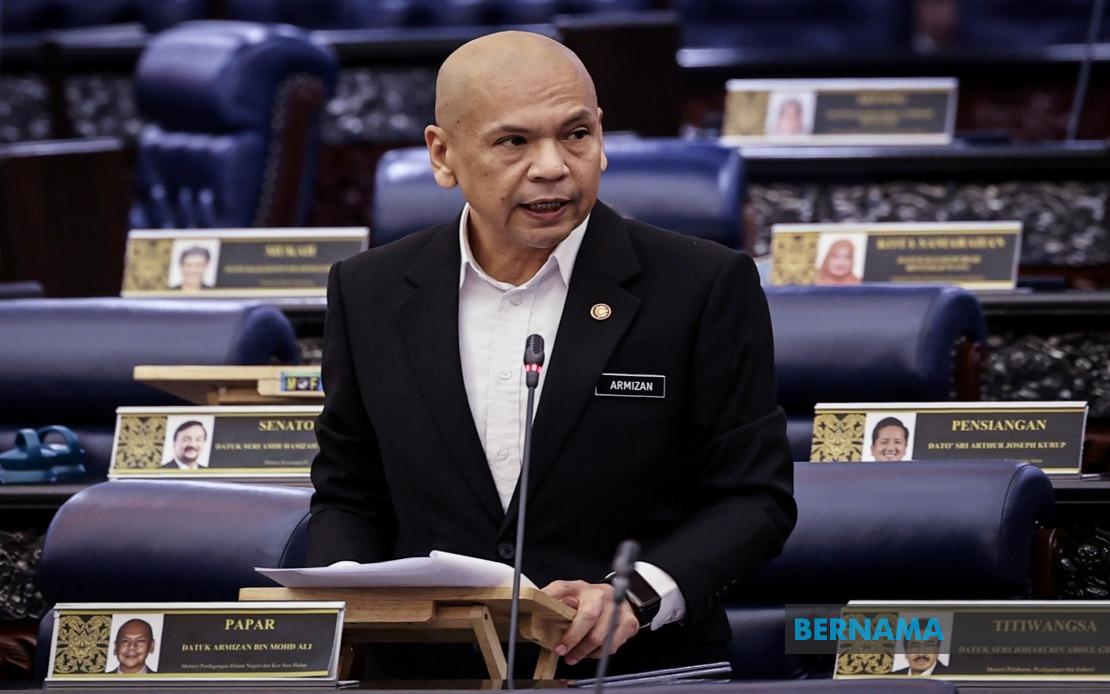
Parliament has called for a transparent and professionally executed investigation into the Royal Commission of Inquiry report on Lembaga Tabung Haji, with lawmakers emphasizing that such a probe must be conducted independently to safeguard the rights of depositors and the broader Malaysian public. The demand reflects growing concern that the contentious issues surrounding the pilgrimage fund require a credible process to restore public trust and establish accountability.
Datuk Armizan Mohd Ali, the Minister of Domestic Trade and Cost of Living and Member of Parliament for Papar, articulated the parliament's position during a special sitting of the Dewan Rakyat on August 11 dedicated to examining the RCI report. He stressed that any investigation must operate according to rigorous professional standards, allowing findings to emerge from a careful assessment of factual evidence and legal frameworks rather than from political rhetoric or partial viewpoints.
The minister highlighted a particular concern plaguing the discourse around Tabung Haji: the proliferation of accusation and counter-accusation among various stakeholders that has obscured rather than clarified the underlying issues. He noted that claims of slander and defamation have become so widespread that the public cannot easily discern who has genuinely been wronged and who bears responsibility for misconduct. This fog of conflicting allegations has left ordinary Malaysians increasingly bewildered about what actually transpired within the institution and who should be held accountable.
Armizan expressed welcome for enforcement agencies to conduct formal investigative action at the appropriate level, suggesting that such institutional scrutiny could cut through the political noise and provide clarity. Beyond investigation alone, he underscored the importance of thoroughly examining the 25 recommendations contained in the RCI report, viewing their implementation as integral to the institution's complete recovery and the strengthening of its governance structures and strategic direction going forward.
The RCI report, released publicly on July 29 after the government determined its contents should be shared with Malaysians, documents weaknesses in Tabung Haji's management and operations spanning the 2014 to 2020 period. As of July 30, the institution had already implemented 75 percent of the recommended improvements, signalling some momentum toward institutional reform. However, parliamentarians remain keen to ensure that both investigative action and remedial measures proceed with sufficient rigour and transparency.
Datuk Seri Nancy Shukri, the Minister of Women, Family and Community Development, brought a complementary perspective during the parliamentary discussion, endorsing the existing division whereby haj affairs remain under the Minister in the Prime Minister's Department (Religious Affairs) while finance and investment matters fall under the Finance Ministry's purview. She characterized this arrangement as a rational specialization of responsibilities aligned with areas of professional expertise, reducing duplication and ensuring that each function receives appropriate technical support and oversight.
On the sensitive issue of political appointments to Tabung Haji's board of directors, Nancy articulated a nuanced position that has become increasingly important in Malaysian governance discourse. Rather than categorically opposing the involvement of individuals with political backgrounds, she proposed that the salient criterion must be whether appointees possess the requisite integrity, qualifications, relevant experience, specialized expertise, and demonstrated capability to discharge their duties competently. An individual's political affiliation, she argued, should not automatically disqualify them if they meet these substantive requirements.
However, Nancy cautioned against allowing political connections to become a substitute for proper fit-and-proper criteria. This distinction reflects an underlying tension in Malaysian institutional management: the reality that senior government appointees often have political dimensions to their careers, yet the necessity that appointment decisions be grounded primarily in merit and suitability rather than factional loyalty. Her comments suggest parliament is increasingly conscious that perception of politically-motivated or unqualified appointments undermines public confidence in major institutions.
To address these concerns prospectively, Nancy advocated for the establishment of specific, transparent criteria governing board member appointments, coupled with clearly defined selection methodologies and explicit specification of required areas of expertise. By anchoring appointment processes to such frameworks, she suggested that institutional decisions would be demonstrably merit-based rather than vulnerable to accusations of cronyism or political interference. This approach would also ensure that each appointment can be publicly justified by reference to objective standards rather than opaque decision-making.
The special parliamentary sitting provided lawmakers with a formal opportunity to scrutinize the RCI report's findings and recommendations in detail. This deliberative process reflects parliamentary oversight functioning as intended: examining major institutional failures, holding ministers accountable, and shaping the trajectory of reform efforts. For Malaysians following the Tabung Haji saga, the parliament's emphasis on transparent investigation and merit-based governance signals that political actors recognize both the seriousness of the issues identified and the public's expectation that remedies will be credible and thorough.
The Tabung Haji situation carries particular resonance for Malaysian depositors, many of whom are ordinary citizens who have placed savings with the institution in anticipation of performing the haj pilgrimage. The institution's difficulties therefore constitute not merely an administrative or financial matter but one touching the religious aspirations and financial security of millions. This context explains parliament's evident determination to ensure that investigation and reform proceed with the utmost integrity and transparency, restoring confidence in an institution central to the religious and civic life of Malaysia's Muslim majority.

