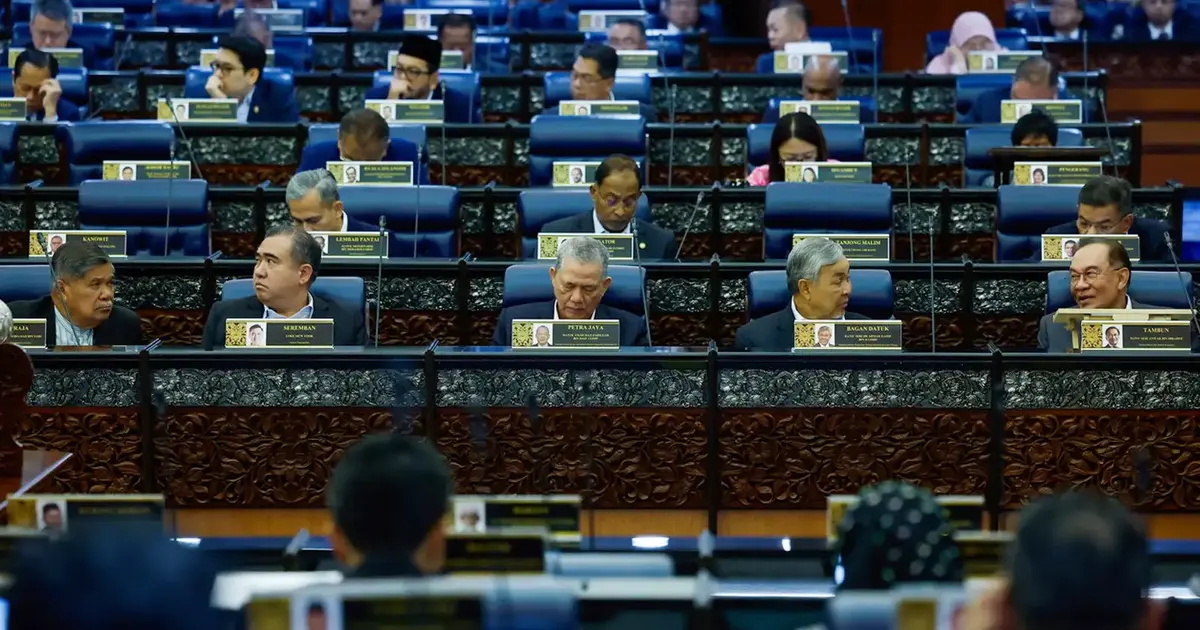
The government coalition remains stable enough to withstand a departure by the Democratic Action Party from executive positions without triggering the need for parliamentary dissolution, according to PKR deputy secretary-general Saifuddin Shafi Muhammad. His comments address growing speculation about potential fractures within the ruling bloc and clarify the parliamentary mathematics underpinning the current administration's survival.
The question of coalition stability has gained prominence as observers monitor tensions within the multiparty government formed after the 2022 general election. The presence of DAP within cabinet ranks has occasionally drawn criticism from coalition partners, and the deputy secretary-general's remarks suggest contingency thinking among government leaders regarding potential realignments of ministerial positions.
Saifuddin's assurance hinges on a crucial distinction: while DAP ministers and deputy ministers might relinquish their portfolios, the party's parliamentary members would maintain their representation in the Dewan Rakyat as government-aligned MPs. This separation between executive participation and legislative support is fundamental to understanding how Malaysia's cabinet system can accommodate internal reorganisations without precipitating constitutional crises.
The current government configuration reflects the pragmatic necessity of coalition-building in a fractionalised political landscape. No single party commands an absolute parliamentary majority, making partnerships essential for maintaining the confidence of the Dewan Rakyat. Within this framework, individual parties can negotiate their level of cabinet representation without automatically destabilising the entire structure—provided enough MPs remain committed to supporting government legislation and confidence motions.
DAP's participation in the cabinet has represented a historic convergence, as the party previously occupied an opposition role for decades. The party's presence alongside traditional governing parties signals a broader realignment of Malaysian politics away from the former binary of government-opposition blocs. However, this arrangement creates vulnerabilities if internal pressures mount or if coalition partners harbour fundamental disagreements about governance direction.
From a structural perspective, the government would need to lose sufficient parliamentary support to fall below the simple majority threshold of 112 MPs in the 222-member chamber. The PKR official's statement implicitly confirms that DAP's legislative contingent, even without ministerial representation, would continue providing this crucial numerical foundation. This scenario parallels arrangements in other democracies where coalition partners rotate cabinet positions or face circumstances requiring temporary withdrawal from executive roles.
The broader context involves ongoing negotiations within the coalition regarding resource allocation, policy priorities, and representational fairness. Coalition mathematics in Malaysia frequently necessitate delicate balancing acts, particularly when constituent parties possess different demographic bases and electoral calculations. Each major coalition partner weighs potential gains and losses from continued collaboration against alternative political strategies.
For regional observers, the Malaysian government's structural resilience despite internal tensions offers lessons about coalition durability in multiparty systems. Southeast Asian democracies increasingly feature complex coalition arrangements, and understanding how these configurations withstand strain remains relevant to broader governance discussions. Malaysia's experience demonstrates that executive reshuffles need not automatically trigger institutional crises if underlying legislative support remains intact.
The PKR leader's clarification also reflects proactive communication strategy aimed at managing market and investor confidence. Political uncertainty traditionally unsettles financial markets and complicates long-term economic planning. By publicly articulating scenarios where government transitions could occur without parliamentary dissolution, officials seek to demonstrate controlled management of internal dynamics rather than governance chaos.
DAP's position within the coalition involves tangible ministerial and deputy ministerial positions spanning multiple portfolios. The party's ministers represent significant departmental responsibilities, meaning any departure would necessitate reassignment to coalition partners or adjustment of portfolio structures. The transition itself would likely generate temporary uncertainty, though Saifuddin's comments suggest the process could occur without threatening parliamentary stability.
Looking ahead, coalition partners will likely continue evaluating their participation costs and benefits. Malaysian politics frequently witnesses renegotiation of coalition terms as political circumstances evolve and electoral calculations shift. The current government's first full term provides a crucial testing ground for managing coalition friction through institutional means rather than allowing tensions to escalate into parliamentary crises.
The deputy secretary-general's remarks ultimately convey reassurance about the government's structural flexibility. Rather than portraying coalition tensions as existential threats, the PKR official frames potential realignments as manageable adjustments within a sustainable parliamentary arrangement. This messaging simultaneously acknowledges internal dynamics while asserting that the government coalition retains sufficient internal cohesion to navigate challenges without institutional breakdown.

