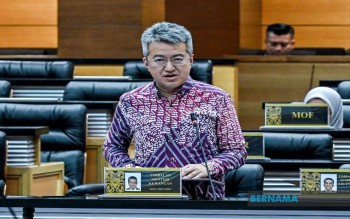
Parliament has cleared two major legislative reforms aimed at modernising Malaysia's financial governance and statistical infrastructure. The Dewan Rakyat passed both the National Trust Fund (KWAN) Bill 2026 and the Statistics Bill 2026 on July 16, concluding a 16-day session that began on June 22. These measures represent significant efforts to reshape how Malaysia manages long-term savings and collects official data, with implications extending across economic planning, development budgeting, and policy formulation for years to come.
The KWAN legislation, tabled by Deputy Finance Minister Liew Chin Tong, addresses longstanding structural weaknesses in the nation's intergenerational savings mechanism. After nearly four decades of operation, the fund has accumulated RM22.43 billion in assets as of end-2024, though this growth reflects contributions from a single voluntary contributor—Petronas, which has supplied RM13.5 billion of the total. The new bill establishes a reinforced legal architecture designed to lock in consistent funding flows, tighten oversight of withdrawals, and create transparent governance arrangements. By embedding the 0.1 per cent minimum contribution rate directly into legislation, the framework prevents future governments from arbitrarily reducing commitments to intergenerational reserves. Any amendment to this contribution threshold now requires parliamentary approval, fundamentally shifting how political decisions affect long-term savings.
The revised withdrawal provisions introduce greater discipline by restricting fund access to three specifically defined purposes: education, healthcare, and climate change mitigation and adaptation. This constraint differs markedly from earlier regimes that permitted broader discretionary use of the reserve. The structural change reflects growing international consensus around protecting sovereign wealth funds from short-term political pressure, a lesson reinforced by experiences across the region and globally. For Malaysian policymakers, the mechanism ensures that funds accumulated for future generations cannot be easily redirected toward immediate fiscal demands, regardless of electoral cycles or budget pressures.
Parallel to these financial governance reforms, the Statistics Bill 2026 modernises Malaysia's approach to official data collection after six decades under the original Statistics Act 1965. Economy Minister Akmal Nasrullah Mohd Nasir emphasised that the updated framework enables more accurate reflection of Malaysia's evolving social, economic, and environmental landscape. The timing proves particularly significant given rapid changes in demographics, labour markets, digitalisation, and climate vulnerability since the existing legislation took effect. A new National Statistics Council will serve as the principal advisory body, providing guidance on statistical methodology, endorsing standards and procedures, and ensuring alignment with contemporary practice.
The bill's architecture incorporates recommendations and guidelines from the United Nations, the United Nations Statistical Commission, and the United Nations Economic Commission for Europe, positioning Malaysia within international best-practice frameworks. This alignment matters substantially for businesses, researchers, and international organisations operating in or studying Malaysia. Standardised data collection and reporting mechanisms facilitate cross-border investment comparisons, enable more reliable regional economic assessments, and support evidence-based policymaking. For multinational enterprises evaluating expansion into Southeast Asia, credible and current statistical infrastructure reduces investment uncertainty.
Datata confidentiality protections represent another critical dimension of the new legislation. The bill strengthens safeguards in line with the United Nations Fundamental Principles of Official Statistics, which recognises confidentiality as foundational to statistical integrity. This enhancement addresses legitimate concerns about privacy in an era of expanding data collection and digital surveillance. By establishing robust protections, the framework encourages greater public cooperation with official surveys and censuses, ultimately improving data quality and representativeness. Malaysian citizens and businesses can participate in statistical exercises with clearer assurances that personal and commercial information remains protected from unauthorised disclosure.
Beyond these major bills, parliament approved additional fiscal measures on July 15, transferring RM14.5 billion in remaining proceeds from Malaysian Government Investment Issues to the Development Fund for the January-May 2026 period. This reallocation represents routine funding management within Malaysia's capital budget framework, where the Development Fund receives financing from multiple sources including the Consolidated Revenue Account, the Consolidated Loan Account, and repayments of earlier development loans. Such transfers enable sustained infrastructure investment despite broader fiscal constraints.
During the 16-day session, lawmakers scrutinised several sensitive financial matters reflecting deeper governance concerns. Discussion surrounding the Retirement Fund's (KWAP) investment losses in eFishery—an Indonesian startup that collapsed following management fraud and falsified financial reporting—underscores vulnerabilities in due diligence processes for public pension fund allocations. The incident raises questions about investment governance structures within sovereign wealth vehicles and the adequacy of oversight mechanisms protecting accumulated retirement savings from sophisticated fraud schemes spanning multiple jurisdictions.
Lingering liabilities from 1Malaysia Development Bhd likewise featured prominently in parliamentary discourse. The government has settled RM42.5 billion in debts and commitments attributable to 1MDB, with RM20.1 billion outstanding should no additional recoveries materialise. This substantial burden continues to constrain fiscal space available for development initiatives and social spending, representing an enduring drag on Malaysia's medium-term economic management. The persistence of these liabilities illustrates how governance failures from earlier administrations create compounding financial obligations affecting current and future budget allocations.
These legislative developments must be understood within Malaysia's broader trajectory toward stronger institutional frameworks and more transparent governance mechanisms. The KWAN and Statistics bills represent incremental but meaningful progress toward insulating critical long-term economic institutions from short-term political manipulation. They reflect recognition that sustainable development and intergenerational equity require legal architecture capable of surviving changes in political leadership and resisting immediate fiscal pressures. For Malaysian stakeholders—businesses requiring reliable data, retirees dependent on pension fund integrity, and citizens invested in long-term prosperity—these reforms signal commitment to institutional durability.
The passage of both bills also positions Malaysia more favourably within Southeast Asian peer comparisons. Nations across the region are similarly modernising sovereign wealth fund governance and statistical infrastructure in response to demographic shifts, climate change, and economic volatility. By aligning statutory frameworks with international best practices and UN principles, Malaysia enhances its standing as a reliable destination for investment and international collaboration. The reforms demonstrate that despite historical governance challenges, institutional capacity exists to implement sophisticated financial and statistical mechanisms.
Moving forward, implementation effectiveness will determine whether these legislative reforms deliver substantive governance improvements. The National Statistics Council must function as an independent advisory body capable of resisting political pressure to manipulate or suppress inconvenient data. KWAN's governance arrangements must resist erosion through subsequent legislative amendments or creative reinterpretation. Parliamentary committees responsible for oversight require adequate resources and genuine authority to scrutinise fund management and statistical operations. Success depends not merely on legislative language but on sustained political commitment to institutional independence and transparent operation across successive governments.

