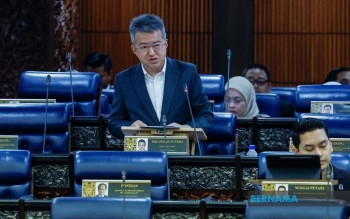
Malaysia's Dewan Rakyat has approved the National Trust Fund (KWAN) Bill 2026, marking a significant legislative step to place the nation's sovereign wealth vehicle on firmer legal footing. The bill secured parliamentary support after receiving substantial debate from 15 lawmakers during proceedings on July 16, with Deputy Finance Minister Liew Chin Tong steering the measure through. The legislation represents a watershed moment for Malaysia's long-term savings mechanism, introducing structural safeguards designed to ensure the fund operates with greater rigour and transparency in how money flows in and out.
The passage of this bill addresses longstanding vulnerabilities in how Malaysia manages one of its most important financial assets. The KWAN, established nearly four decades ago in 1988, has accumulated RM22.43 billion in total assets by the close of 2024. However, for the overwhelming majority of its existence, the fund operated under a framework that left critical decisions to discretion rather than law. The absence of mandatory contribution requirements meant that inflows depended entirely on voluntary participation, a reality crystallised by the fact that Petronas, the national oil company, has been the sole contributor, channelling RM13.5 billion into the kitty over the decades.
The voluntary nature of contributions created a fundamental weakness: reliance on a single source, however stable, leaves the fund vulnerable to shifting corporate priorities and provides no mechanism to build generational savings systematically across the entire economy. Liew articulated this challenge in his closing remarks, emphasising that inter-generational savings must be embedded in statutory obligation rather than goodwill. The bill now mandates a minimum contribution rate of 0.1 per cent, a figure set deliberately low to ensure accessibility while establishing a baseline commitment that cannot be abandoned without parliamentary intervention.
Equally damaging to public confidence in the fund was the 2021 withdrawal of RM5 billion, which triggered controversy and exposed the absence of withdrawal discipline embedded in law. With no statutory ceiling on drawdowns and vague language around permissible uses, the fund operated essentially at the pleasure of the government of the day. That episode underscored the gap between how Malaysia managed its savings and best practices employed by sovereign wealth funds globally, where contributions and outlays are typically defined with precision to prevent short-term raids on long-term wealth.
The new framework transforms KWAN's operational architecture in three critical ways. First, contributions are no longer discretionary but mandatory, with the 0.1 per cent rate establishing a floor that can be adjusted only through an act of Parliament. This constitutional-style protection means that no future administration can unilaterally reduce Malaysia's commitment to savings without facing public debate and formal legislative change. Second, the bill introduces withdrawal discipline, though the specific mechanisms and limits have not been detailed in parliamentary discourse reported here. Third, the legislation modernises governance and accountability structures, creating expectations of transparency and prudence that align with international norms.
Liew stressed that the 0.1 per cent contribution rate represents a minimum rather than a ceiling, signalling openness to increasing Malaysia's savings rate if economic conditions improve or consensus builds. However, the protective barrier he constructed is deliberate: any increase or decrease must return to the Dewan Rakyat. This approach recognises that long-term savings policy ought not to swing with quarterly budget cycles or electoral calendars but should reflect considered national judgment. By vesting change authority in parliament rather than in executive discretion, the bill embeds generational thinking into Malaysia's fiscal governance.
For Malaysian readers, the implications are substantial. Sovereign wealth funds serve multiple purposes: they stabilise government budgets during commodity downturns, provide capital for strategic investments, and accumulate reserves for future generations. Malaysia's resource wealth has historically made such funds critical to managing petrodollar flows. However, the KWAN's evolution from 1988 onwards revealed how easily legal ambiguity can permit erosion of savings discipline. The 2021 withdrawal, though prompted by pandemic-related needs, demonstrated that crisis—or perceived emergency—could override prudence unless law provided explicit constraints.
Regionally, Malaysia's move matters beyond its borders. Southeast Asian economies increasingly recognise the value of sovereign wealth mechanisms, yet governance failures in regional counterparts have sometimes squandered savings accumulated through commodity booms. The KWAN bill reflects learning from those experiences and from Malaysia's own history, embedding lessons in binding legal form. The precedent of parliamentary control over contribution rates also provides a template for how democracies can protect long-term savings from short-term political pressures without removing them from democratic accountability.
The bill's passage also signals confidence in Malaysia's institutional framework and parliament's willingness to address governance questions raised by historical experience. The 15 lawmakers who participated in debate evidently recognised the importance of strengthening the fund's architecture. By requiring parliamentary amendment to alter contribution rates, the legislation transfers stewardship of savings policy from transient administrations to the institution with the broadest legitimate claim to represent enduring national interests.
Petronas's four-decade commitment as sole contributor will likely attract discussion going forward. While the oil giant's contributions have been transformative, the statutory framework now permits—and implicitly encourages—other entities to join the savings effort. As Malaysia's economy diversifies and new revenue streams emerge, the legal infrastructure is now in place to broaden the contributor base, potentially drawing savings from telecoms, utilities, or other state-linked enterprises.
The KWAN bill also carries implications for fiscal transparency. Modern governance standards, which Malaysia is adopting here, typically require public reporting on fund performance, contribution mechanisms, and withdrawal justifications. Such disclosure, while constraining government flexibility, builds public trust and deters abuse. The parliamentary debate itself contributed to this transparency, with Liew articulating the rationale for the 0.1 per cent rate and the withdrawal controls.
Looking ahead, the bill's effectiveness will depend on implementation and on whether successive governments respect the discipline it imposes. The legal framework is now established, but institutional culture—the willingness of finance officials and ministers to live by the constraints—remains crucial. Malaysia has taken an important step toward sustainable fiscal management, placing long-term savings beyond the reach of short-term expedience while maintaining democratic oversight.

