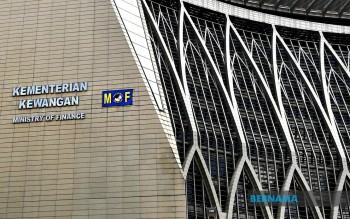
Malaysia's parliament has approved the National Trust Fund Bill 2026, a landmark piece of legislation that fundamentally reshapes how the country manages its long-term sovereign wealth. The measure, which cleared the Dewan Rakyat in a majority vote following debate among 14 members, represents the most significant overhaul of the National Trust Fund (KWAN) since its creation nearly four decades ago. Finance Ministry officials say the reforms embody the government's broader push to strengthen public financial governance while securing resources for Malaysians not yet born.
The establishment of KWAN in 1988 reflected forward-thinking policy, but the statutory framework governing the fund had remained largely unchanged until now. The new bill addresses this by introducing a comprehensive legal architecture that sets clear rules around how contributions flow into the fund, how money can be withdrawn, and what investments are permissible. These provisions move beyond regulatory guidance to create binding obligations enforceable through parliamentary oversight, a significant tightening of accountability compared to the discretionary arrangements of the past.
At the heart of the reforms lies a restructured governance model. Rather than operating through an existing panel arrangement, KWAN will become an incorporated statutory body with its own board tasked with administration, management, and investment decisions. This transition will unfold gradually to avoid operational disruption. Bank Negara Malaysia, which has stewarded the fund since its inception and grown it to RM22.43 billion as of end-2024, will maintain its custodial role during the transition period. All assets will transfer to the new entity by automatic operation of law, ensuring continuity of investment performance and contract obligations.
The legislation introduces mandatory contribution formulas designed to place the fund on a more predictable financial footing. The Federal Government must contribute at least 0.1 per cent of its projected annual revenue, supplemented by 2.0 per cent of Petronas dividends and 2.0 per cent of depletable resource export duties after state allocations are deducted. By pegging contributions to revenue and resource income, the framework ensures the fund grows alongside the economy while embedding discipline into budget planning. These rates are prescribed minimums; the government may inject additional capital when circumstances permit, but cannot fall below these thresholds without legislative change.
Equally significant are the withdrawal restrictions, which represent a departure from how many sovereign wealth funds operate globally. Withdrawals are now limited exclusively to three strategic domains: education, healthcare, and climate change mitigation and adaptation. Annual drawdowns cannot exceed 50 per cent of the expected long-term real rate of return, a constraint specifically designed to preserve the fund's principal value and allow compound growth to work across generations. Any attempt to breach these limits requires explicit parliamentary approval, embedding a democratic check into what might otherwise be tempting fiscal shortcuts during periods of budget pressure.
Finance Minister II Datuk Seri Amir Hamzah Azizan framed the legislation as a philosophical commitment to trusteeship. His remarks emphasised that natural resources and accumulated wealth belong not to the current generation alone but represent a legacy held in temporary stewardship. This framing resonates particularly in Southeast Asia, where resource-rich nations have struggled to transform commodity revenues into durable development benefits. Malaysia's experience with oil revenues—and the volatility they introduce to public finances—provides a practical context for why such discipline matters. Countries like Norway and Botswana have demonstrated that rigorous sovereign wealth fund governance can sustain prosperity across economic cycles; the new KWAN framework appears designed with such lessons in mind.
The move toward legally-binding investment parameters also signals a shift toward professionalised fund management. Previously, investment decisions operated within broader administrative discretion. Now, a Strategic Asset Allocation approved by the finance minister will guide investments across approved asset classes, likely spanning equities, bonds, real estate, and alternative investments. This structure mirrors international best practice while ensuring alignment with government economic policy. For Malaysian pension funds and institutional investors, the establishment of a large, professionally-managed sovereign wealth vehicle could also influence capital market dynamics and create benchmarking standards.
The bill's passage carries particular significance for Southeast Asia's development trajectory. Demographic aging, climate costs, and the region's transition away from commodity dependence all demand that nations preserve capital for future public investment. Malaysia's willingness to enshrine such discipline in statute—rather than leaving it to administrative discretion—may influence how neighbouring countries approach similar questions. Thailand, Indonesia, and the Philippines all grapple with managing resource revenues; Malaysian success in building a credible intergenerational fund could serve as a model for regional policy learning.
The legislation now moves to the Dewan Negara for further consideration, where it is expected to encounter less contentious debate given the upper house's composition. Assuming passage there, implementation will focus on the technical work of transitioning governance structures while maintaining uninterrupted fund operations. For ordinary Malaysians, the bill's impact will likely remain invisible in the near term—the real effects will unfold across decades as education and healthcare systems benefit from compound returns on assets set aside today. Yet the philosophy underpinning the measure—that present prosperity must be balanced against future obligations—represents a fundamental statement about how Malaysia understands its fiscal responsibilities.
The reform also addresses a gap in Malaysia's fiscal architecture. While countries establish sovereign wealth funds for various purposes, few anchor them as comprehensively in law as the new KWAN framework does. The binding contribution rules prevent future governments from raiding the fund during budget crises, while the withdrawal restrictions and parliamentary oversight create multiple gates against misuse. These safeguards matter most precisely when political pressure mounts to divert resources toward short-term spending. By making such diversions procedurally difficult and legislatively transparent, the bill protects the fund's integrity across changing administrations.
Finally, the legislation reflects broader regional and global trends toward transparency and institutional discipline in managing public wealth. International pressure for sovereign funds to disclose holdings and adopt governance standards aligned with Santiago Principles—a voluntary set of best practices—has grown steadily. Malaysia's statutory codification of KWAN's rules represents a response to these expectations while also building domestic accountability. The requirement for parliamentary approval of extraordinary withdrawals, in particular, ensures that use of the fund remains a public matter subject to democratic scrutiny rather than an executive prerogative. As the Dewan Negara takes up the bill, implementation teams will begin preparing the operational framework that translates this legislative vision into functioning institutions capable of stewarding Malaysia's wealth across the decades ahead.

