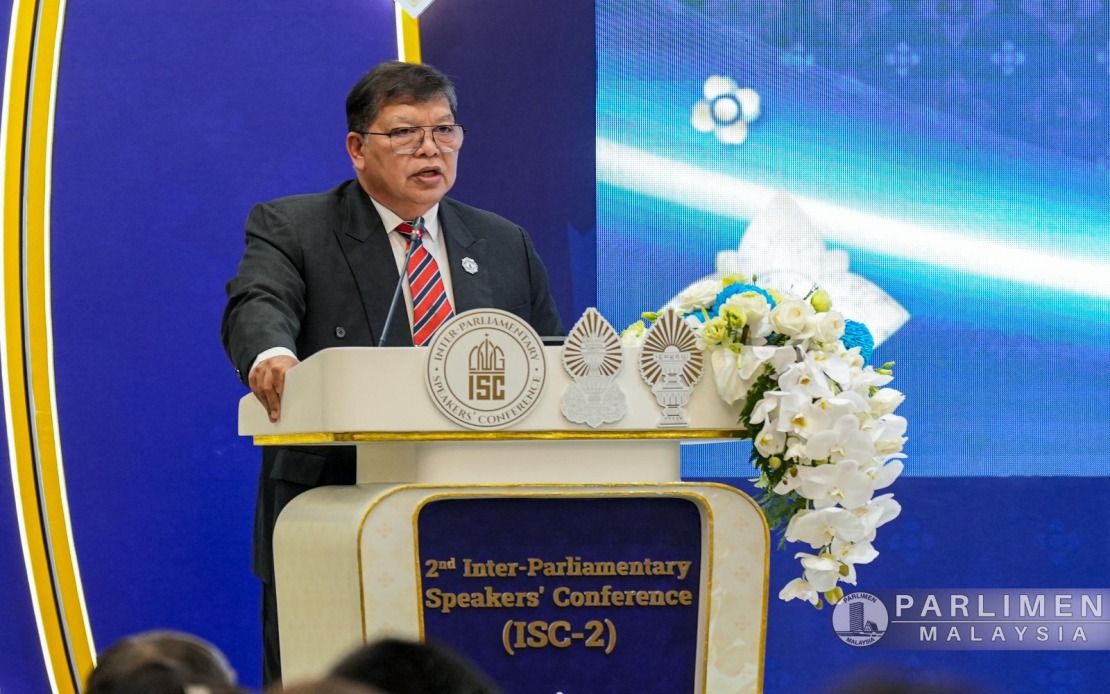
At the Second Inter-Parliamentary Speakers' Conference in Phnom Penh, Dewan Rakyat Speaker Tan Sri Dr Johari Abdul delivered a stark warning about the consequences of inaction on climate change, emphasizing that vulnerable communities worldwide are bearing the brunt of environmental degradation and that planetary damage continues to accelerate. Speaking to media on the sidelines of the three-day gathering that concluded on Friday, Johari articulated a perspective that extends far beyond traditional environmental concerns, framing the climate crisis as a multifaceted threat touching nearly every aspect of modern life.
The speaker highlighted how the climate emergency has evolved into a complex crisis with ramifications across multiple sectors of society. Beyond its role as an environmental issue, the crisis directly undermines economic stability, jeopardizes public health systems, and threatens the foundations of food and energy security that billions depend upon daily. This interconnected nature of climate impacts means that addressing the problem requires coordinated responses across governance, industry, and society rather than siloed environmental initiatives alone.
Johari expressed frustration with the current state of climate discourse among political leadership, noting a troubling gap between the magnitude of the challenge and the corresponding priority it receives in policy discussions. He pointed out that many lawmakers lack adequate education and understanding of climate science, which translates into poorly informed decision-making. The most egregious example, he suggested, lies in widespread deforestation practices that continue largely unchecked despite overwhelming evidence of their harmful effects on carbon cycles and ecosystem health.
The speaker advocated strongly for a fundamental shift in energy infrastructure and investment priorities. Rather than perpetuating dependence on coal and fossil fuels for power generation, he stressed the urgency of transitioning toward renewable sources including solar, wind, and ocean wave energy, technologies that remain underutilized across much of the region despite their potential. He contended that this energy transition cannot succeed without deliberate policy choices and substantial financial commitments from governments and private sectors.
Crucially, Johari identified education as a cornerstone of any effective climate response strategy. He argued that introducing climate change subjects into school curricula would build a foundational understanding among younger generations who will inherit the consequences of today's decisions. Alongside formal education, he emphasized the need for significantly increased research and development spending dedicated to developing and scaling technologies that can mitigate climate impacts and transition societies toward sustainable practices.
The timing of Johari's remarks proved particularly poignant, coming days after catastrophic flooding devastated Nepal, underscoring the immediate human costs of climate vulnerability. A glacial collapse in the Himalayan mountain range triggered unprecedented flooding across river systems along the Nepal-China border, resulting in confirmed deaths of 469 people with 2,381 others reported missing, including 644 foreign nationals according to The Himalayan Times. Several Malaysians remain among the unaccounted for in this tragedy, bringing the issue directly to the doorstep of Malaysian citizens and policymakers.
The geographic and climatic context of the region reveals just how precarious the situation has become for multiple nations. From the mountainous terrain of Nepal in South Asia to the landlocked geography of Laos in Southeast Asia, communities face escalating exposure to catastrophic weather events. Rural populations in particular live under perpetual threat from flash floods, severe storms, landslides, and tropical typhoons that destroy agricultural lands and critical infrastructure upon which livelihoods depend. The Philippines demonstrates the scale of the challenge, enduring approximately 20 typhoon events annually, each carrying potential for widespread devastation.
Johari emphasized that climate change represents fundamentally a global challenge requiring global solutions, and that mere discussion falls short without concrete action backed by political will and committed leadership. He acknowledged that the disparity between wealthy nations and developing countries compounds the challenge, as those with greater resources can invest in adaptation and mitigation while vulnerable populations lack equivalent capacity. This inequity threatens to widen existing development gaps and deepen poverty in already marginalized regions.
As evidence of what determined policy can achieve, Johari referenced China's long-term strategic approach to promoting green technology and environmental protection. The nation has invested extensively in eco-friendly technologies, electric vehicle infrastructure, and expansion of green spaces, demonstrating that large-scale transitions are possible with sufficient commitment and investment. Such examples provide a model that other nations, including those in Southeast Asia, might adapt to their own contexts.
The scientific consensus continues to grow more urgent as researchers document accelerating climate impacts. Rising global temperatures, elevating sea levels, and shifting rainfall patterns compound risks to communities and natural ecosystems throughout the region. The urgency intensifies because many of these changes appear to be accelerating beyond earlier projections, suggesting windows for preventive action are narrowing.
Cambodian Prime Minister Hun Manet reinforced these concerns during remarks delivered days before the conference, warning riverine communities about rising water levels in the Mekong River and urging heightened vigilance. While acknowledging that governments cannot eliminate natural disasters entirely, Hun Manet stressed the importance of building resilience through functional systems capable of detecting and responding rapidly to disaster risks. This emphasis on adaptive capacity reflects the practical reality facing Southeast Asian nations: they must prepare for intensifying climate impacts while working toward long-term mitigation.
The challenge confronting Malaysian policymakers and regional leaders involves translating concern into coordinated action across multiple fronts simultaneously. Investments in renewable energy infrastructure, educational reform, research institutions, and disaster preparedness systems all require substantial financial outlays at moments when many governments face competing budgetary pressures. Yet the alternative—continued inaction amid mounting climate impacts—promises far greater economic, social, and humanitarian costs. The speakers' conference provided a regional platform for articulating these priorities, but converting rhetoric into sustained policy implementation remains the genuine test ahead.

