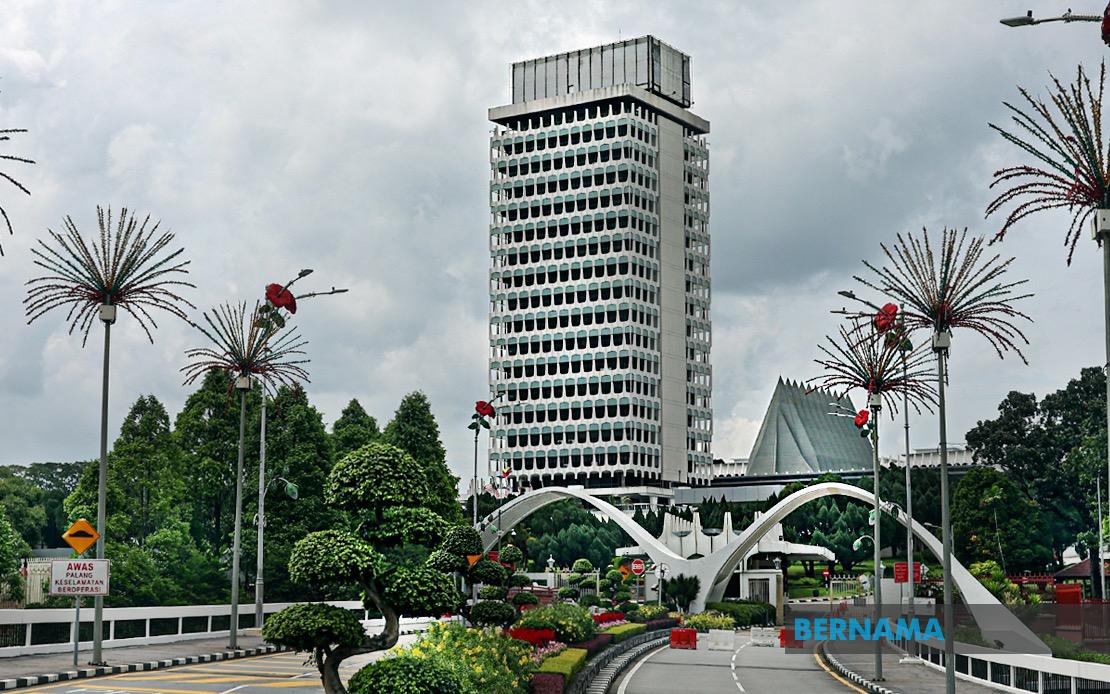
Parliament resumed deliberations on three critical policy areas affecting infrastructure, consumer protection, and digital rights as lawmakers convened for a 16-day session extending until July 16. The agenda reflects growing parliamentary scrutiny of fundamental challenges facing the nation, from resource management to competitive practices and the governance of social media platforms in an increasingly digital society.
Water security has emerged as a pressing concern for Johor, one of Malaysia's most developed but water-stressed states. Suhaizan Kaiat from the Pakatan Harapan coalition representing the Pulai constituency will pose questions to the Energy Transition and Water Transformation Minister regarding comprehensive long-term strategy to bolster the state's water resource infrastructure. The inquiry specifically targets the government's vision for dam construction, water treatment facility development, and the broader integration of recycled water systems into the water supply chain. These questions come at a time when Johor, despite being home to major industrial zones and serving as a critical water source for neighbouring Selangor, faces mounting pressure to balance rapid urban and industrial expansion with sustainable water management practices.
The focus on recycled and alternative water sources reflects a global trend towards circular economy approaches in water security. Southeast Asia's tropical climate traditionally assured abundant freshwater, yet urbanisation and climate variability have complicated this assumption. For Malaysia, particularly peninsular regions, exploring advanced treatment technologies and non-conventional water sources has become essential to meet demand from both domestic consumers and industrial users. The parliamentary inquiry will likely reveal the timeline and budgetary commitments required for these infrastructure upgrades, offering insights into the government's confidence in securing Johor's water future.
Parallel to infrastructure concerns, the parliament will also examine the teeth available to the Malaysia Competition Commission in protecting consumers from anti-competitive behaviour. Datuk Seri Ismail Abd. Muttalib from the Perikatan Nasional party representing Maran has tabled questions to the Domestic Trade and Cost of Living Minister regarding MyCC's effectiveness in monitoring housing sector competition. Housing affordability remains a volatile political issue across Malaysia, with price escalation frequently attributed to market manipulation and collusive pricing practices among developers and related players.
The inquiry into MyCC's investigative capabilities and enforcement mechanisms against suspected price-fixing in housing carries broader implications for consumer confidence and market efficiency. A competition authority perceived as weak or under-resourced may struggle to deter anti-competitive conduct, ultimately translating to higher costs for homebuyers. The questions will probe not only MyCC's monitoring systems but also the rigour of investigations into suspected price coordination and market manipulation schemes. For property-buying Malaysians, the answers will indicate whether regulators possess adequate tools and determination to safeguard fair pricing in a sector that represents the largest asset purchase for most households.
On the digital frontier, concerns about child safety and data privacy converge in parliamentary debate over age verification mechanisms for social media. Syahredzan Johan of the Pakatan Harapan coalition representing Bangi will interrogate the Communications Minister on the legislative purpose and practical safeguards surrounding age verification systems. This question gains urgency in Southeast Asia, where social media penetration among youth populations is exceptionally high, yet regulatory frameworks remain nascent.
Age verification technology presents a classic policy tension between protection and privacy. While verifying users' ages can shield minors from age-inappropriate content and exploitation risks, the process inherently requires collection of personal identity data. The parliamentary query zeroes in on this dilemma: how can authorities ensure that licensed service providers collecting age verification data access only the minimum necessary information, and crucially, how will deletion and data retention be enforced once verification is complete? These questions reflect growing Malaysian awareness of data misuse risks and the need for proportionality in how government mandates translate into private sector data practices.
The Communications Minister's responses will clarify whether Malaysia's approach to age verification follows principles of data minimisation and purpose limitation championed by international privacy frameworks. Service providers granted access to personal data for age verification should not be permitted to exploit that data for secondary commercial purposes. For Malaysian parents and digital rights advocates, the answer will indicate whether child protection measures include robust safeguards against authorised data handlers becoming conduits for privacy violation.
The parliamentary session itself, spanning 16 days, provides ample opportunity for substantive debate beyond the immediate questions raised during Question Time. Members may pivot to related concerns: whether water investment schemes adequately serve rural populations dependent on aging communal systems; whether MyCC's budget and enforcement staff match its expanded mandate; whether age verification technology adequately protects younger users while respecting developmental rights to digital participation. The breadth of topics also reveals a parliament grappling with the interconnection between infrastructure resilience, fair markets, and digital governance.
For Malaysian stakeholders across sectors, outcomes from these parliamentary exchanges will shape policy clarity and regulatory direction in coming months. Water managers planning infrastructure investment will await signals on government funding priorities. Housing market players will assess whether competitive scrutiny is tightening. Technology companies and service providers will calibrate compliance strategies based on age verification expectations. Citizens themselves have vested interests in each domain: reliable water supply, affordable housing, and safe digital spaces for young people are expectations that shape quality of life and social stability.
The convergence of these three disparate issues—water, competition, and digital governance—within a single parliamentary sitting underscores a maturing governance agenda. Malaysia's parliament is increasingly confronting policy problems that transcend traditional sectoral boundaries and demand integrated solutions. Water security links to industrial competitiveness and consumer costs. Competition policy affects housing affordability and social equity. Digital governance touches child protection, commercial fairness, and fundamental rights. How parliamentarians engage with these questions, and what ministers commit to, will indicate the sophistication of Malaysia's approach to 21st-century governance challenges.