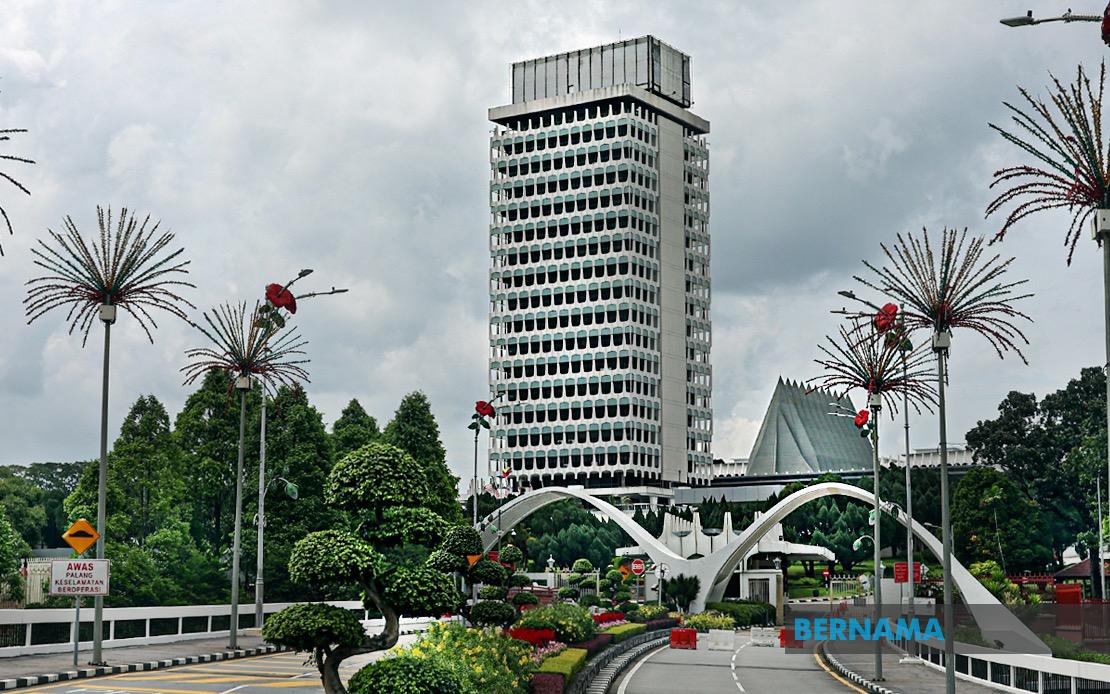
Malaysia's response to a potential ceasefire agreement between the United States and Iran will come under parliamentary scrutiny when the Dewan Rakyat convenes on June 23, reflecting growing regional interest in how the country positions itself amid escalating Middle Eastern tensions. The sitting, commencing at 10 am, will feature questions directed at senior ministers about the nation's diplomatic posture and practical measures to support stability in West Asia, signalling that parliamentarians across the political spectrum remain attentive to international security developments affecting trade routes and regional equilibrium.
Datuk Mohd Isam Mohd Isa, representing the Barisan Nasional coalition from the Tampin constituency, will query the Foreign Minister during the ministerial question session about Malaysia's role and stance following the announcement of the bilateral memorandum. His inquiry will extend beyond mere acknowledgment of the agreement to encompass the specific diplomatic initiatives and policy mechanisms the government intends to deploy in pursuit of durable peace within the region. This line of questioning underscores parliamentary expectations that foreign policy responses should articulate concrete, forward-looking strategies rather than passive observation of international developments.
The inquiry into Malaysia's Middle Eastern engagement takes on heightened significance given the nation's position as a significant trading hub and its substantial Muslim-majority population, both of which create intrinsic interests in regional stability and conflict resolution. The government's response will likely need to address Malaysian investments in West Asian markets, the security of Malaysian nationals residing in affected areas, and the country's broader strategic interests in preserving maritime security and economic continuity throughout the Indian Ocean and Arabian Sea corridors.
Parallel to the geopolitical discussion, parliament will examine the government's domestic cost-of-living programme through questions regarding the MADANI Mart initiative. Datuk Rosol Wahid from Perikatan Nasional's Hulu Terengganu division will press the Minister of Domestic Trade and Cost of Living for an operational update covering the number of active retail outlets, applications under consideration, and the quantity of entrepreneurs incorporated into the scheme. This scrutiny reflects persistent public concern about price inflation and the effectiveness of government interventions designed to ease household expenses.
The MADANI Mart initiative represents a signature government effort to address consumer affordability through direct retail engagement, and parliamentary questions about its implementation metrics indicate backbench impatience for tangible results and transparent progress reporting. The emphasis on outlet counts, pending applications, and entrepreneur participation suggests legislators want concrete evidence that the programme is translating from announcement to operational reality, a common parliamentary demand when evaluating flagship policy initiatives with significant public visibility.
Drug addiction and substance abuse will constitute another substantive parliamentary focus when Khoo Poay Tiong, a Pakatan Harapan member from Kota Melaka, questions the Home Minister about synthetic drug cases recorded since 2023. His inquiry specifically highlights the fentanyl threat, reflecting parliamentary anxiety about emerging narcotics dangers and the adequacy of government countermeasures. The request for both historical data and strategic responses indicates legislators' desire for comprehensive government briefings on drug enforcement priorities and preventative measures.
Fentanyl's emergence as a particularly lethal synthetic opioid has triggered global alarm, and the parliamentary question demonstrates Malaysian legislators' awareness of transnational drug trafficking patterns and their determination to ensure the Home Ministry maintains robust interdiction and treatment capacities. The emphasis on data collection since 2023 suggests the government has been tracking addiction trends relatively recently, enabling comparative analysis that might reveal whether intervention programmes are gaining traction or whether the problem is escalating despite enforcement efforts.
Trade policy will also feature prominently when Datuk Seri Hamzah Zainudin, representing PN's Larut division, questions the Minister of Investment, Trade and Industry regarding the Agreement on Reciprocal Trade (ART) implementation between Malaysia and the United States. This bilateral trade arrangement merits parliamentary attention given its implications for Malaysian exporters, investment flows, and market access in the American economy. The minister's response will provide legislators with updated implementation timelines, trade volume changes, and sectoral impacts stemming from the reciprocal agreement.
The ART represents a substantive commercial instrument binding Malaysia to the United States across multiple economic sectors, and parliamentary inquiry into its operational progress reflects legislators' responsibility to monitor whether negotiated trade terms are yielding anticipated benefits or whether implementation obstacles require ministerial intervention. The question implicitly asks whether the agreement is merely a signed document or an actively functioning framework generating measurable commercial advantages for Malaysian businesses and workers.
Complementing these question-and-answer sessions, the parliament will introduce three pieces of legislation for first reading, namely the Prisons (Amendment) Bill 2026, the Competition (Amendment) Bill 2026, and the Competition Commission (Amendment) Bill 2026. The penitentiary reform measure suggests the government intends to update incarceration frameworks, whilst the dual competition bills indicate legislative refinement of the regulatory architecture governing commercial practices and market conduct. These legislative proposals will undergo procedural reading before advancing toward committee scrutiny and substantive debate in subsequent parliamentary sittings.
The convergence of international security inquiries, domestic economic policy scrutiny, drug enforcement questions, trade relationship monitoring, and legislative reform initiatives reflects parliament's multifaceted agenda and the government's simultaneous engagement across diplomatic, commercial, social policy, and regulatory domains. June 23's sitting encapsulates the breadth of concerns occupying Malaysian legislators and the necessity for ministerial responsiveness across security, economics, health, and institutional frameworks that together shape national outcomes and regional positioning.

