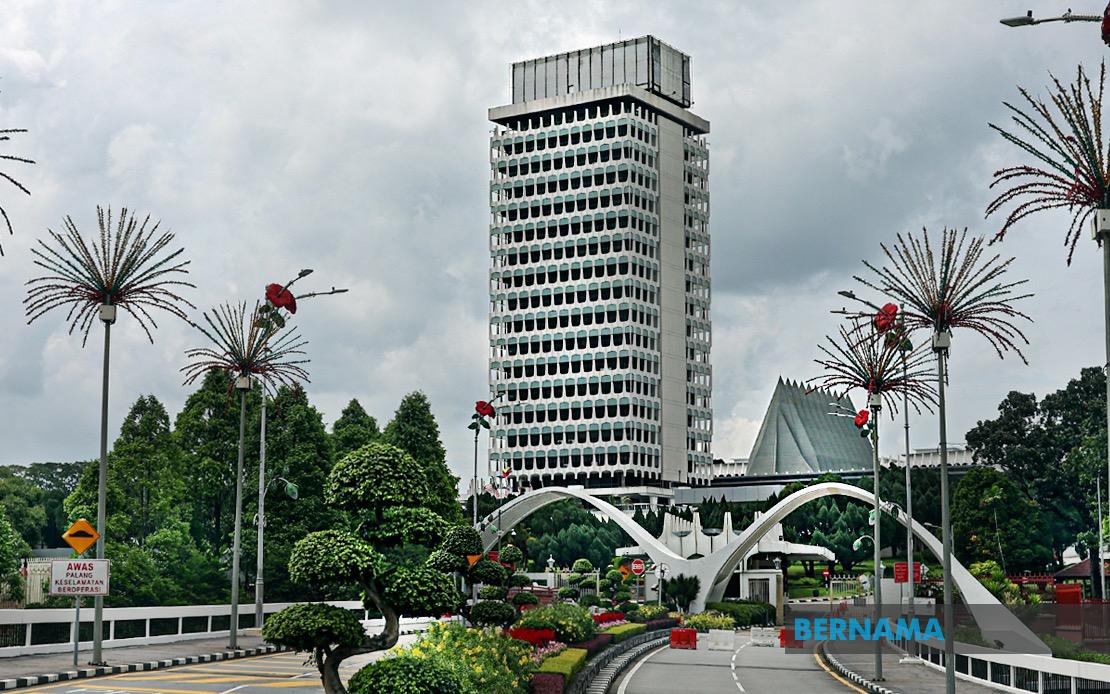
Parliament sits today with legislators prepared to grill ministers on three pressing matters that reflect Malaysia's dual challenge of advancing economic resilience while navigating geopolitical complexities in Southeast Asia. The Dewan Rakyat's agenda spotlights the Corporate Renewable Energy Supply Scheme (CRESS), the country's positioning on Myanmar following international pressure, and the race to build world-class digital infrastructure without compromising national security—issues that intertwine Malaysia's energy transition ambitions with broader regional stability concerns.
The renewable energy debate centres on CRESS implementation, a cornerstone of Malaysia's shift towards cleaner industrial power. Rodziah Ismail, representing Ampang, will press the Minister of Energy Transition and Water Transformation for concrete details: how many companies have participated so far, and what the government has learned from reviewing System Access Charge rates. This inquiry carries weight because Malaysia aims to become Southeast Asia's preferred data centre hub, a vision dependent on stable, affordable, renewable energy supplies. The cost structure for data centre operations hinges significantly on electricity pricing, meaning that SAC rate decisions will ripple across the entire sector. Additionally, the government's Corporate Green Power Programme and Battery Energy Storage Systems investments are being scrutinised for their cost-effectiveness and ability to support this strategic ambition.
The energy crisis looming over global markets has already strained Malaysian businesses, prompting Mohd Syahir Che Sulaiman to demand accountability from the Minister of Economy. He will seek specifics on how the National Economic Action Council has counteracted job losses and business contractions triggered by surging energy costs and broader economic uncertainty. This line of questioning reflects anxieties within Malaysia's manufacturing and services sectors, which depend on predictable input costs. The government must demonstrate tangible mitigation results, not merely policies on paper, if confidence in economic stewardship is to hold.
Fuel subsidy policy also takes centre stage when Datuk Seri Hasni Mohammad questions the Finance Minister on diesel subsidy targeting via MyKad. The standardisation approach signals a shift towards means-testing, yet he challenges whether the 200-litre entitlement for both petrol and diesel adequately serves consumer needs. This reflects broader tensions between fiscal discipline and social protection in an era of commodity price volatility and inflation. For Malaysian households and small businesses, the sustainability of fuel subsidies remains a sensitive political and economic barometer.
Malaysia's foreign policy stance towards Myanmar dominates the international relations portion of today's session. William Leong Jee Keen will quiz the Foreign Minister on how the Five-Point Consensus—the ASEAN-backed framework for resolving Myanmar's political crisis—translates into actual policy formulation. The Five-Point Consensus, endorsed in 2021, aimed to end violence, facilitate dialogue, and restore stability, yet implementation has stalled amid Myanmar's military consolidation of power. Malaysia, as chair of ASEAN at various points and a key voice in regional diplomacy, faces pressure to clarify whether it will maintain engagement, impose consequences, or pursue a middle path. This questioning probes the gap between Malaysia's stated commitment to ASEAN solidarity and its willingness to challenge a military regime that has destabilised the region.
Data sovereignty emerges as a leitmotif of Malaysia's digital ambitions, with Datuk Seri Amirudin Shari pressing the Digital Minister on alignment between federal and state-level initiatives. Selangor's Dark Fiber Network exemplifies state-driven infrastructure that could underpin data security, yet without coherent national standards, overlapping or fragmented approaches could weaken rather than strengthen sovereignty. The minister will face questions on whether data sovereignty is genuinely embedded in Malaysia's vision to become an AI-ready nation by 2030, or whether commercial and technological expediency might override security concerns. This exchange signals growing awareness that digital infrastructure is not merely economic but strategically vital.
Islamic education standards attract scrutiny when Datuk Idris Ahmad asks the Prime Minister to assess the Islamic Education curriculum's effectiveness and to clarify coordination mechanisms between federal and state Islamic Religious Councils. Malaysia's plural system, where states retain significant autonomy over religious affairs, can create inconsistency. The federal government must ensure that Islamic education meets high standards nationwide while respecting federalism—a perennial balancing act in Malaysian governance.
Sabah and Sarawak's constitutional rights also feature prominently. Isnaraissah Munirah Majilis will demand clarity on Malaysia Agreement 1963 implementation timelines, specifically progress towards raising parliamentary representation for the two states to 35 per cent of total seats. This constitutional commitment, affirmed in recent years but not yet fully honoured, remains contentious as it touches on East Malaysian identity and federal fairness. Prolonged delay risks deepening grievances in Sabah and Sarawak, where political sentiment increasingly emphasises distinct interests.
The Public Accounts Committee will then brief Parliament on surging health insurance premiums and private hospital charges, examining their impact on public health outcomes under the purview of the Finance Ministry, Health Ministry, and Bank Negara Malaysia. This scrutiny reflects concern that private-sector cost inflation is pricing lower and middle-income Malaysians out of adequate healthcare, potentially shifting burdens onto already stretched public facilities. The intersection of monetary policy, health financing, and equity takes centre stage as legislators confront the trade-offs between market liberalisation and universal access to care.
With these multi-faceted discussions, Parliament demonstrates the interlocking nature of Malaysia's contemporary challenges. Energy transition, economic resilience, regional diplomacy, digital security, federalism, and social protection all converge in today's session. The responses from ministers will signal whether the government views these as discrete technical problems or as components of a coherent national strategy. For Malaysian observers and regional watchers, today's exchanges will clarify how seriously Kuala Lumpur takes renewable energy localisation, Myanmar stability, data autonomy, and constitutional commitments—measures against which future government performance will be judged.

