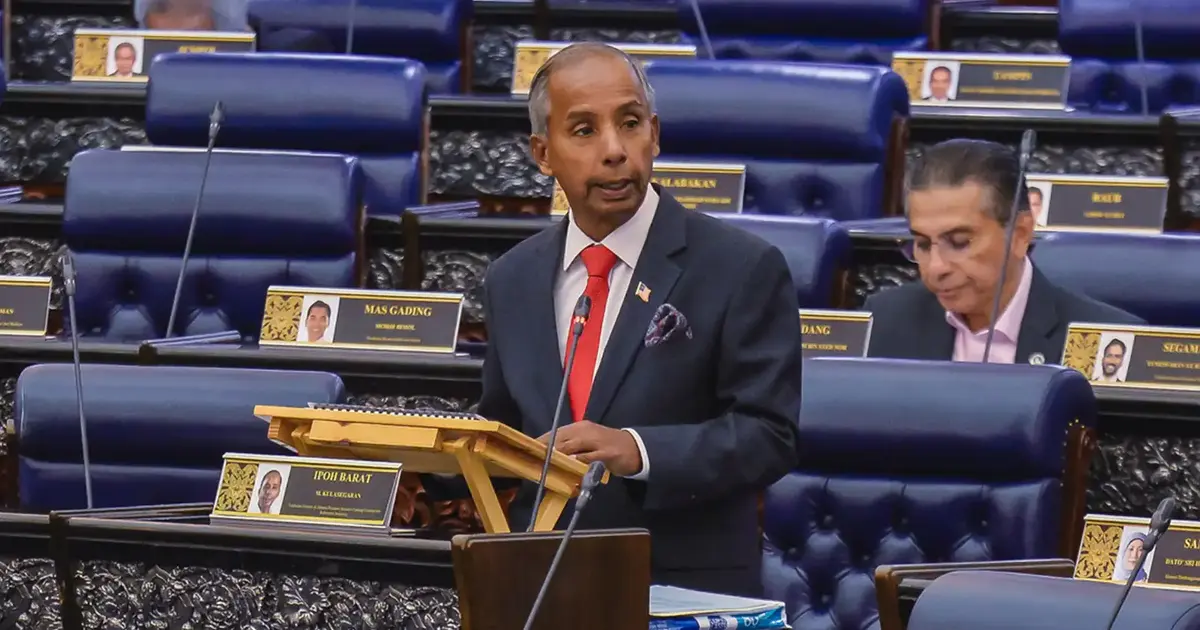
Parliamentarians may eventually be given access to closed-circuit television footage documenting the recent disturbance at Taiping prison, though such permission cannot be granted without official Cabinet approval, according to the deputy minister responsible for law and institutional reform. The official indicated that several considerations must be weighed, particularly surrounding the court cases still in motion relating to the incident.
The prospect of legislative scrutiny through direct viewing of security camera records represents an important accountability mechanism for lawmakers seeking to understand events within the nation's custodial system. However, institutional processes must be observed before such sensitive materials can be shared with parliamentary bodies. The minister's cautious stance reflects the government's recognition that premature public disclosure or widespread legislative viewing could compromise ongoing judicial investigations or prejudice fair trial proceedings.
The Taiping prison disturbance occurred within Malaysia's corrections infrastructure, an area that traditionally maintains considerable operational secrecy. Security footage from correctional facilities contains sensitive information about facility layouts, guard movements, and inmate handling procedures—details that could have security implications if released indiscriminately. The deputy minister's insistence on Cabinet-level approval demonstrates acknowledgment of these competing concerns: parliamentary oversight on one hand and institutional security on the other.
Court cases connected to the riot remain active, with various charges potentially pending against individuals involved in the disorder. Allowing parliamentarians unrestricted viewing rights before trials conclude could theoretically influence public perception of defendants, complicate legal arguments, or create complications for prosecutors and defence counsel alike. The minister's invocation of ongoing litigation as a limiting factor aligns with established principles in Commonwealth democracies regarding the separation between legislative and judicial functions.
The question of parliamentary access to sensitive government records, particularly those emanating from enforcement agencies, has long represented a balance between transparency and operational necessity. Malaysian legislators have increasingly sought greater visibility into activities within state institutions, reflecting broader global trends toward institutional accountability. The deputy minister's statement suggests openness to this principle while maintaining that proper governmental consultation must precede any such access.
The Taiping incident itself has drawn significant public attention, generating legitimate questions about conditions, management practices, and events within the facility. Parliamentarians representing constituencies with constituents in custody or with corrections-related concerns would naturally seek to understand precisely what occurred during the disturbance. The deputy minister's acknowledgment that viewing may be possible, contingent on approval, indicates that categorical rejection is not the government's position.
The Cabinet approval process would likely involve consultations across multiple government agencies. The Home Ministry, which oversees correctional services, would certainly be consulted. The Attorney-General's Chambers would need to weigh judicial sensitivities. Security agencies might assess whether footage release could compromise facility operations or staff safety. This multi-agency deliberation, while bureaucratic, reflects the complexity of releasing sensitive institutional materials.
Such an approval process, if it proceeds, would establish important precedent for future parliamentary access to security apparatus documentation. Malaysian legislators may regard success in obtaining access to Taiping footage as opening doors for scrutiny of other incidents within prisons, police stations, or military installations. The government's willingness to even consider such access, with appropriate safeguards, represents movement toward greater legislative oversight compared with historical practice.
The phased approach—acknowledging possibility while requiring approval—also allows the government to manage the release strategically. Rather than releasing footage broadly to all parliamentarians, Cabinet approval could specify which members of which committees might view materials, under what conditions, and with what restrictions on disclosure or discussion. This measured approach addresses security and judicial concerns while permitting meaningful legislative insight.
For Malaysian citizens concerned with prison conditions and inmate welfare, parliamentary access to objective documentation of incidents carries symbolic importance. Legislators who have examined security footage can speak with greater authority about conditions and events, potentially leading to more informed legislative discussions about corrections policy, staffing levels, and facility management. The deputy minister's comments thus represent more than procedural technicality; they engage broader questions about institutional accountability and the public's right to understand state operations.
The timeline for Cabinet consideration remains unclear. The minister did not specify whether such approval would be pursued imminently or whether it would await concluding phases of related court proceedings. This ambiguity leaves parliamentarians in a holding position, aware that access may be possible but uncertain regarding timing or scope. Clarification on the government's intentions could come through parliamentary questions or ministerial statements in the coming weeks.
Ultimately, the deputy minister's position reflects contemporary tensions between security and transparency that democracies worldwide increasingly confront. The specific resolution in this case may influence how Malaysian governance institutions balance institutional autonomy with legislative oversight—a relationship that continues evolving as public expectations around accountability and institutional transparency intensify.

