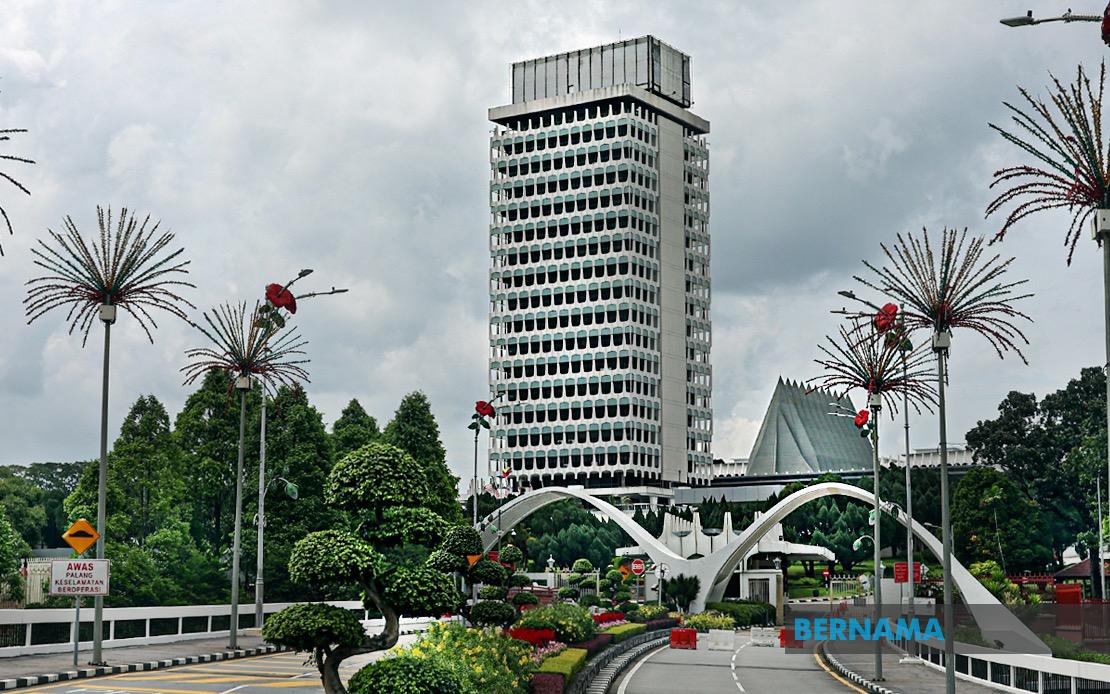
Parliament's third week of sitting concluded with lawmakers advancing significant legislation on competition enforcement and food security, whilst grappling with persistent questions about media freedoms and lingering financial liabilities from past governance failures. The week demonstrated the legislative agenda's breadth, spanning economic regulation to national security, yet also highlighted tensions between government oversight and press independence that continue to occupy parliamentary discourse.
Two competition bills dominated the legislative agenda, addressing a gap that has widened as Malaysia's digital economy expands. The Competition (Amendment) Bill 2026 and Competition Commission (Amendment) Bill 2026 represent the government's attempt to modernise enforcement mechanisms against anti-competitive behaviour in an era where digital platforms increasingly shape market dynamics. These amendments signal recognition that traditional competition frameworks struggle to address monopolistic practices in technology-driven sectors, a challenge facing regulators throughout Southeast Asia as e-commerce and digital services reshape regional commerce.
Equally significant was the tabling of the Control of Padi and Rice (Amendment) Bill 2026, which targets long-standing concerns about malpractice within a sector critical to Malaysia's food security. The proposed legislation strengthens regulatory oversight through escalated penalties, with maximum fines climbing to RM1 million, reflecting government determination to eliminate fraud and quality violations in rice production and distribution. For Malaysian consumers, this reflects acknowledgment that robust enforcement matters when supply chains directly affect household food costs and national self-sufficiency in a strategic commodity.
Parliament devoted considerable attention to the Human Rights Commission of Malaysia's annual report for 2024, with the motion and subsequent debate providing a forum for diverse parliamentary voices to advance human rights recommendations. This accountability mechanism, though sometimes dismissed as procedural formality, creates a structured opportunity for legislators to scrutinise rights protections and propose strengthening measures. The exercise underscores the commission's continuing relevance as an independent institution tasked with monitoring compliance with international human rights standards.
Prime Minister Datuk Seri Anwar Ibrahim's ministerial question time intervention focused parliamentary attention on two interconnected governance challenges: supporting Malaysia's fragmented small business ecosystem and defending the government's record on press freedom. His remarks on micro, small and medium enterprises stressed improved access to financing, acknowledging that banking sector caution towards smaller borrowers remains a structural impediment to enterprise growth. The emphasis on efficient and prudent processing reflects frustration with bureaucratic delays that disproportionately disadvantage businesses lacking institutional relationships with major lenders.
The press freedom discussion proved more contentious, as Anwar addressed Malaysia's declining ranking in the World Press Freedom Index. Rather than defensively dismissing the assessment, he contextualised enforcement action against media organisations as targeted responses to content breaching specific boundaries: religion, race, and royal institution protections, alongside national security concerns. This formulation reflects a persistent Southeast Asian tension between democratic governance and state authority to define permissible speech limits, though critics contend such boundaries remain ambiguously drawn and subject to expansive interpretation.
A significant procedural safeguard emerged from Anwar's clarification that complaints against journalists representing established news organisations will no longer automatically trigger investigations, but must first route through the Malaysian Media Council. This modification, whilst appearing technical, represents meaningful institutional protection against capricious enforcement. It acknowledges that journalism requires some predictability and due process to function, even within systems maintaining speech boundaries that international observers question.
Parliament received reports from special select committees addressing organ donation protocols and the alarming trajectory of abuse and violence cases over the six-year period since 2020. The latter merits particular attention, as rising violence indicators suggest existing prevention frameworks require strengthening. Public health and safety concerns transcend party politics, yet committee recommendations often await resource allocation and bureaucratic priority-setting before generating tangible improvements.
Security discussions centred on maritime capability modernisation, specifically selecting a replacement missile system for the Littoral Combat Ships. This procurement decision carries strategic weight given regional naval competition and the importance of credible naval presence for protecting Malaysia's extended maritime interests. Simultaneously, lawmakers addressed vape product seizures involving suspected synthetic narcotics, reflecting law enforcement's struggle to contain emerging drug delivery mechanisms that traditional regulatory categories struggle to address. Healthcare digitalisation acceleration represented a practical governance priority, acknowledging that public hospital system efficiency depends on modern information infrastructure.
Deputy Finance Minister Liew Chin Tong's revelation that 1Malaysia Development Berhad liabilities totalled RM51.4 billion—encompassing settled and outstanding obligations—served as an unwelcome reminder of the financial legacy of earlier misgovernance. This figure, whilst widely reported during earlier parliamentary sessions, recirculates as taxpayer burden and constrains fiscal resources for development priorities. The ongoing salience of 1MDB accountability reflects how governance failures create structural economic consequences extending across parliamentary cycles.
Dewan Rakyat Speaker Tan Sri Dr Johari Abdul's reminder about health screening, prompted by a lawmaker's hospitalization, introduced a humanistic note into parliamentary proceedings. The observation carries implicit recognition that legislative work demands physical stamina and that preventive health measures merit normalisation rather than negligence among public office-holders.
With one week remaining before the Second Meeting of the Fifth Session concluded on July 16, the parliamentary agenda had addressed legislation, accountability, and governance across economic, security, health and rights domains. The diversity of issues reflected both the breadth of modern governance and the reality that legislatures must simultaneously manage technical regulatory modernisation, respond to emergent security challenges, and maintain institutional credibility through transparent processes. For Malaysian readers, the week's parliamentary work illustrated both the mechanisms of parliamentary oversight and the persistent tensions between effective governance and the institutional autonomy that democratic systems require to function legitimately.

