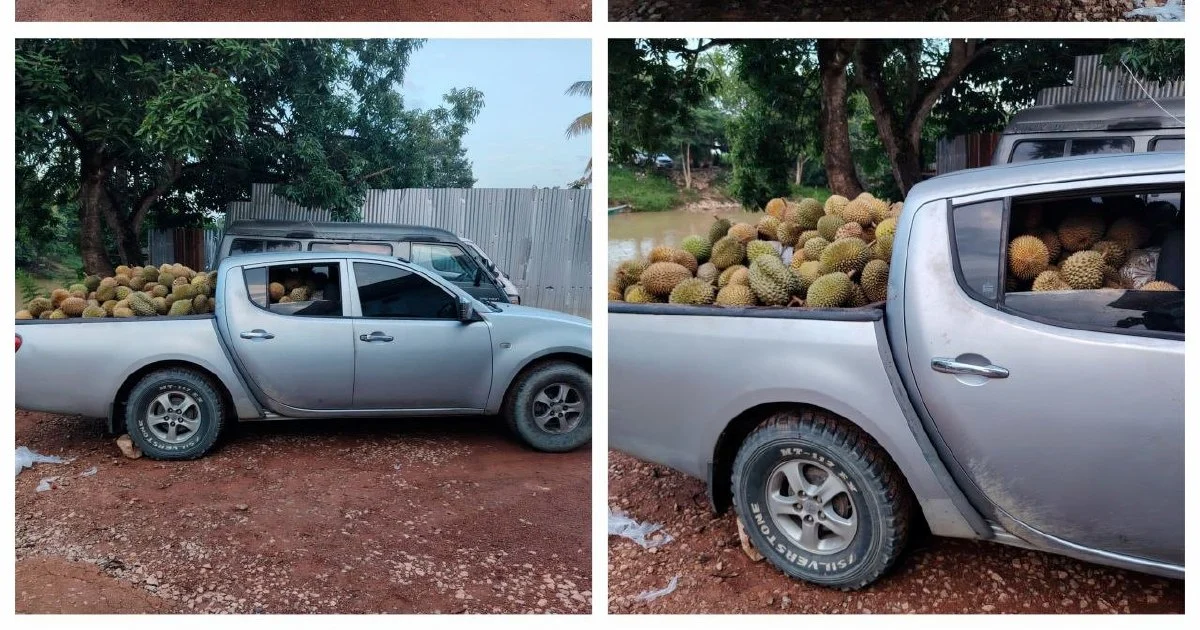
A 22-year-old driver working part-time has been apprehended in Rantau Panjang after enforcement officers discovered he was ferrying approximately 700 kilograms of durians believed to have been smuggled across borders. The arrest took place late yesterday evening and marked another chapter in ongoing efforts to combat the illegal trade in premium fruits that has become increasingly problematic along Malaysia's northern frontier regions.
The young driver's involvement in the operation appears to have been relatively low-level, with authorities indicating he was recruited for what he believed would be straightforward work offering daily compensation between RM60 and RM70. This modest remuneration—barely above minimum wage for temporary employment—suggests he may have been among the most expendable members of a larger smuggling network. Such recruitment patterns are characteristic of cross-border trafficking syndicates that deliberately employ young or economically vulnerable individuals as drivers and couriers, knowing they are more likely to accept minimal pay and carry the physical risk of enforcement operations.
The seizure of 700 kilograms represents a substantial volume for a single interdiction, underscoring the scale at which illegal durian movements have escalated in recent years. Durians, Malaysia's signature agricultural export and a cash crop of significant economic importance, have become increasingly attractive to smugglers seeking to circumvent official export channels and avoid tariffs. The fruit's high market value in neighbouring countries, particularly Thailand and Singapore, creates powerful economic incentives for cross-border trafficking.
Rantau Panjang, strategically located in Kelantan near the Thailand border, has emerged as a critical chokepoint for such contraband operations. The border region's geography, featuring numerous informal crossing points and secondary roads, provides smugglers with multiple routes to move goods without detection. Authorities have intensified checkpoint operations and intelligence activities in such locations, yet the persistence of large-scale seizures indicates that criminal networks continue to adapt their methods and timing.
The mechanics of this particular smuggling operation reflect broader patterns seen throughout Southeast Asian agricultural trafficking. Typically, durians harvested from Malaysian plantations—often still-maturing fruit picked prematurely to facilitate transport—are consolidated at collection points before being loaded into vehicles for quick transit toward border areas. The use of part-time or casual drivers serves to insulate higher-level organisers from direct liability while maintaining operational flexibility.
From a broader Malaysian perspective, such illegal exports represent lost revenue and undermined control over premium produce that supports rural livelihoods and national export statistics. The government's efforts to maintain market access and pricing for domestically-grown durians depend partly on controlling supply and preventing unofficial channels from undercutting licensed exporters. When large volumes exit through smuggling networks, they disrupt official trade relationships and economic planning.
Thailand, the destination market for much of this contraband, has its own enforcement challenges and official import regulations that make the informal durian trade attractive to merchants seeking to avoid compliance costs. The dynamics of this illicit commerce create pressure on Malaysian authorities to secure borders while simultaneously encouraging bilateral cooperation with Thai counterparts on detection and prevention measures.
The case also highlights the vulnerability of young workers who lack awareness of or leverage to refuse participation in illegal schemes. Educational initiatives targeting casual workers about employment rights and the consequences of smuggling-related crimes remain important components of prevention strategy alongside traditional enforcement.
Investigations into the driver's arrest will likely extend upstream to identify his recruiters and handlers within the smuggling hierarchy. Authorities typically attempt to use lower-level participants to build cases against organisers and determine whether the operation was part of an established ring or an opportunistic venture. Such intelligence gathering helps refine targeting of enforcement resources.
The incident reinforces that despite sustained efforts, Malaysia's border security agencies continue facing substantial challenges in preventing agricultural contraband movements. The profit margins involved and the relative ease of moving perishable goods across informal routes ensure that smuggling remains an attractive enterprise for criminal networks. Sustainable solutions will require not only enhanced interdiction capacity but also stronger domestic governance of the agricultural export sector and regional cooperation on coordinated border management strategies.
For consumers and legitimate producers, smuggling operations distort market prices and quality standards while eroding the reputation of Malaysian durians in international markets. Each major seizure represents both an enforcement success and a reminder of ongoing vulnerabilities in protecting this valuable commodity.

