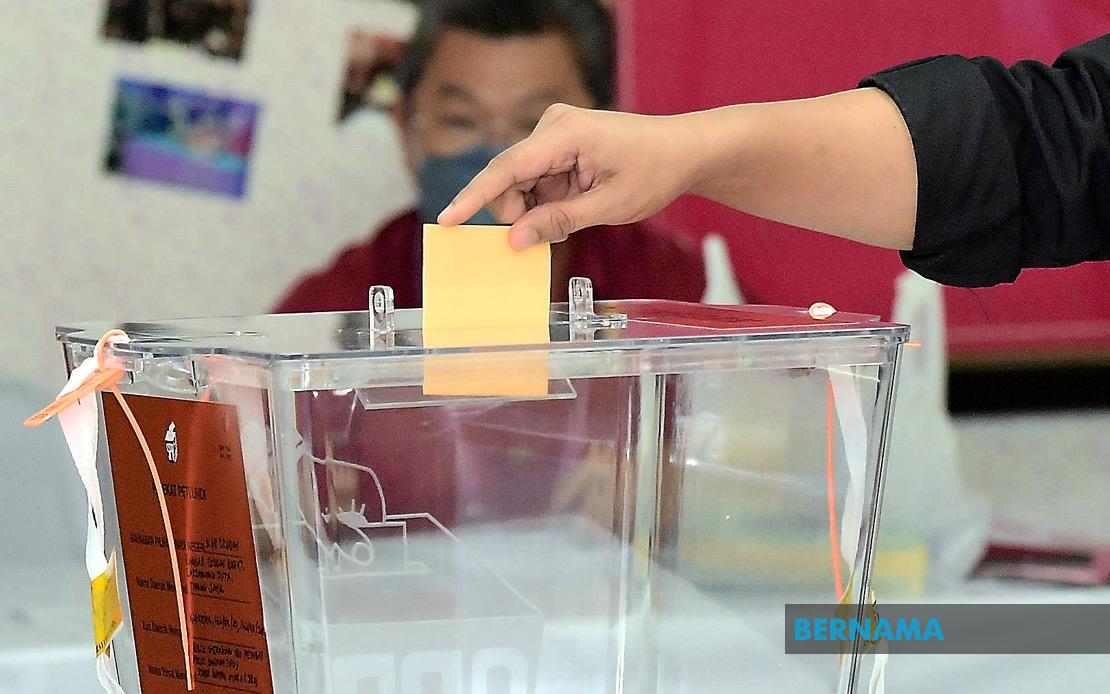
The Johor state election on July 11 delivered a commanding mandate to Barisan Nasional, which captured 29 of the 56 available seats and established sufficient numbers to govern the state comfortably under the leadership of Menteri Besar Datuk Onn Hafiz Ghazi. The results mark a decisive outcome for the long-established coalition, which has historically dominated Johor politics despite challenges to its supremacy in recent national contests.
PAS, the Islamist party that contested as part of the Perikatan Nasional alliance, responded graciously to the electoral outcome by affirming its respect for the people's democratic choice. Johor PAS commissioner Datuk Dr Mahfodz Mohamed articulated the party's acceptance of the results while maintaining that the coalition would continue advancing its political agenda. His statement emphasized that despite the particular outcome in Johor, PAS remains committed to its core mission of championing religious and communal interests alongside broader welfare concerns affecting the electorate.
The statement from PAS carries significance within the broader context of Malaysian coalition politics. As the dominant partner in Perikatan Nasional, PAS's gracious acceptance of defeat in a major state like Johor signals internal stability within the opposition alliance and suggests the party leadership is focused on long-term positioning rather than short-term recriminations over the electoral loss. This measured response contrasts with the sometimes fractious nature of opposition politics in Malaysia and demonstrates organizational discipline among PN's components.
PAS made explicit reference to the upcoming 16th General Election in its statement, framing the Johor contest as part of a broader political journey toward that national showdown. This forward-looking posture indicates that the party views state elections primarily as rehearsals and testing grounds for federal contests, a calculation that shapes how it responds to intermediate setbacks. By emphasizing continued struggle alongside preparation for the general election, PAS has signaled to its supporters and coalition partners that Johor represents an interim episode rather than a final verdict on its political standing.
Bersatu, a coalition partner of Perikatan Nasional, adopted a more introspective stance by announcing plans for comprehensive analysis of its Johor performance. Secretary-general Datuk Seri Mohamed Azmin Ali indicated that the party would conduct detailed examination of the election dynamics to formulate stronger strategies moving forward. This commitment to systematic review reflects the party's recognition that understanding electoral mechanics and voter sentiment requires methodical analysis rather than reactive posturing. For Bersatu, which has experienced considerable political turbulence and factional tensions in recent years, such analytical work may prove essential to rebuilding its organizational coherence.
The most challenging position fell to Parti Bersama Malaysia, the nascent political vehicle led by Datuk Seri Rafizi Ramli. Bersama's decision to contest the Johor election represented a significant gamble for a party barely eight weeks old at the time of voting. The outcome proved devastating for the new outfit, with all 15 of its candidates failing to secure even the minimum threshold of votes necessary to retain their election deposits. This complete shutout underscores the enormous obstacles facing newly established political movements attempting to establish credibility and support in an electorate accustomed to established parties.
Yet Rafizi's response to Bersama's electoral debacle struck a notably philosophical tone. Through a Facebook post, he acknowledged the bitter result while framing the experience as valuable learning that would inform the party's future approach. This perspective reflects either considerable political resilience or a realistic understanding that brand-new parties rarely achieve immediate electoral success in Malaysian politics. His statement that the party would study voter support patterns methodically suggests Bersama intends to persist beyond this disappointing first major electoral outing, undertaking the gradual work of building grassroots presence and organizational capacity.
The broader electoral landscape revealed in the Johor results reflects the continuing fragmentation of Malaysian opposition politics. Pakatan Harapan managed to secure just two seats despite significant resources and established organizational networks across the state. This poor showing by PH raises questions about its capacity to mount effective challenges to BN dominance in traditionally less urbanized or ethnically mixed constituencies. Meanwhile, smaller parties and independent candidates failed entirely to breach the Johor assembly, suggesting the electoral system continues to favor established coalitions with significant organizational infrastructure.
For Malaysian politics more broadly, the Johor election underscores BN's residual strength in peninsular states where it retains deep administrative roots and traditional support networks. Despite years of challenges to its hegemony, the coalition demonstrated capacity to mobilize voters effectively and translate that support into state-level control. This capacity becomes particularly significant as the nation prepares for the 16th General Election, which will determine whether BN can restore federal dominance or whether opposition coalitions can consolidate their earlier breakthrough in the 15th General Election held in 2022.
The measured responses from PAS, Bersatu, and Bersama to their collective underperformance in Johor suggest that opposition coalitions are attempting to avoid the destructive blame-gaming that has historically weakened their unity. Rather than engaging in accusations of tactical incompetence or strategic betrayal, party leaders have pivoted toward constructive self-examination and forward-looking planning. Such discipline will be essential if Perikatan Nasional hopes to present a coherent alternative to BN at the federal level.
The Johor contest also illuminates emerging electoral dynamics that will shape future Malaysian politics. Voters in the state affirmed their preference for established governance structures represented by BN, suggesting that economic stability and administrative competence remain potent electoral appeals. For opposition parties, the challenge lies in convincing voters that change offers sufficient benefit to overcome the perceived risks associated with untested alternatives. As Malaysian politics approaches another significant electoral juncture, the Johor results provide crucial data about the terrain opposition coalitions must navigate to achieve breakthrough results.

