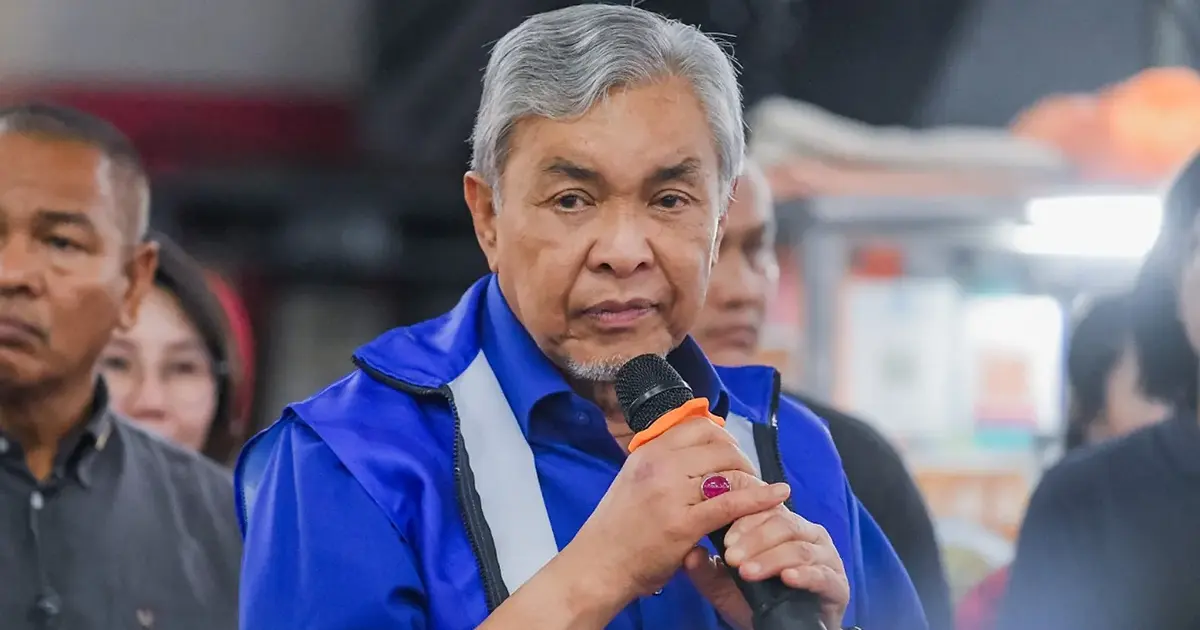
BN chairman Zahid Hamidi has moved to temper expectations about the political implications of PAS's endorsement of Barisan Nasional candidates in the Johor state election, making clear that the Islamist party's tactical support carries no guarantee of a deeper working relationship between Umno and PAS in the foreseeable future.
The clarification underscores the delicate dance of Malaysian coalition politics, where electoral cooperation at the state level can mask fundamental ideological and strategic differences among parties. Zahid's statement reflects Umno's determination to maintain flexibility in its political positioning and avoid being locked into commitments with PAS that could complicate relationships with its longstanding partners in BN, particularly MCA and MIC, who hold concerns about an Umno-PAS nexus.
PAS's decision to support BN candidates rather than field its own slate in the Johor contest represents a pragmatic calculation by the pan-Malaysian Islamic party. The move avoids a three-way split that might hand seats to opposition parties while simultaneously positioning PAS as a kingmaker capable of influencing electoral outcomes. This tactical flexibility has become characteristic of PAS strategy since the 2022 general election redrew Malaysia's political landscape, enabling the party to maintain influence without the burden of governing large territories in some states.
For Umno, accepting PAS support in Johor offers immediate electoral advantages without requiring ideological compromise. The arrangement allows BN to consolidate the Malay-Muslim vote more effectively while preserving the coalition's character as a multiethnic front. However, Zahid's explicit caveat suggests Umno leadership fears that accepting such cooperation could be misinterpreted as signalling a broader shift toward an Umno-PAS merger or even a breakup of BN itself—scenarios that would fundamentally alter Malaysia's power structure.
The broader context involves the competing visions held by Malaysia's major Malay-Muslim parties. Umno has historically positioned itself as a pragmatist party comfortable with multiethnic coalition governance, while PAS has pushed an Islamist agenda that often sits uneasily with the secular constitutional framework and multiethnic character that MCA and MIC defend within BN. These inherent tensions mean that while electoral cooperation may be mutually beneficial in specific contests, deeper integration would require either significant ideological shifts or the abandonment of BN's traditional model.
For Malaysian observers, Zahid's intervention also reflects internal Umno dynamics. The party has faced persistent tensions between those favouring closer ties with PAS and those preferring to maintain the BN framework. By insisting that Johor cooperation carries no implications for future arrangements, Zahid is effectively reassuring BN's non-Malay coalition partners while simultaneously signalling to PAS that Umno remains focused on maximizing its own electoral performance rather than merging interests.
The Johor election itself holds significant weight in Malaysian politics beyond state-level contests. Johor remains one of Malaysia's largest and most economically important states, and its electoral outcome will influence calculations ahead of the next federal election. A strong BN performance in Johor, whether achieved through its own machine or aided by PAS support, would strengthen perceptions of Umno's revival and potentially reshape national political dynamics.
Regionally, the Malaysian coalition patterns also demonstrate how Southeast Asian electoral politics often function outside binary democracy frameworks. Multi-party systems across the region frequently require complex power-sharing arrangements where cooperation shifts between elections and even between electoral rounds. Thailand, Singapore, and Indonesia all exhibit similar fluidity, though Malaysia's Westminster-influenced institutions create particular constraints and opportunities for coalition management.
PAS's strategic flexibility reflects evolving Islamic party politics across Southeast Asia. Unlike ideological rigidity that might characterise some movements, PAS has demonstrated capacity to recalibrate its positioning based on electoral mathematics. This pragmatism has enabled the party to remain relevant even when excluded from federal governance, as occurred between 2018 and 2022, by maintaining influence over state governments and positioning itself as essential for either major coalition.
The telecommunications of Zahid's statement—emphasizing both the tangible cooperation and its limited scope—represents sophisticated political messaging. BN gains electoral utility from PAS support, while Zahid simultaneously signals to Chinese and Indian voters that BN remains committed to multiethnic governance principles. This balancing act becomes increasingly important as federal elections approach and BN must rebuild support among non-Malay constituencies who have become more volatile in their allegiances over recent election cycles.
Ultimately, Zahid's clarification reveals that while electoral pragmatism will continue driving tactical cooperation across party lines in Malaysia, the deeper question of whether Umno ultimately seeks to transform BN into a Malay-Muslim dominated bloc remains unresolved. The Johor election will provide the first major test of how successfully these contradictory impulses—toward both cooperation and strategic independence—can be managed within Malaysian coalition politics.

