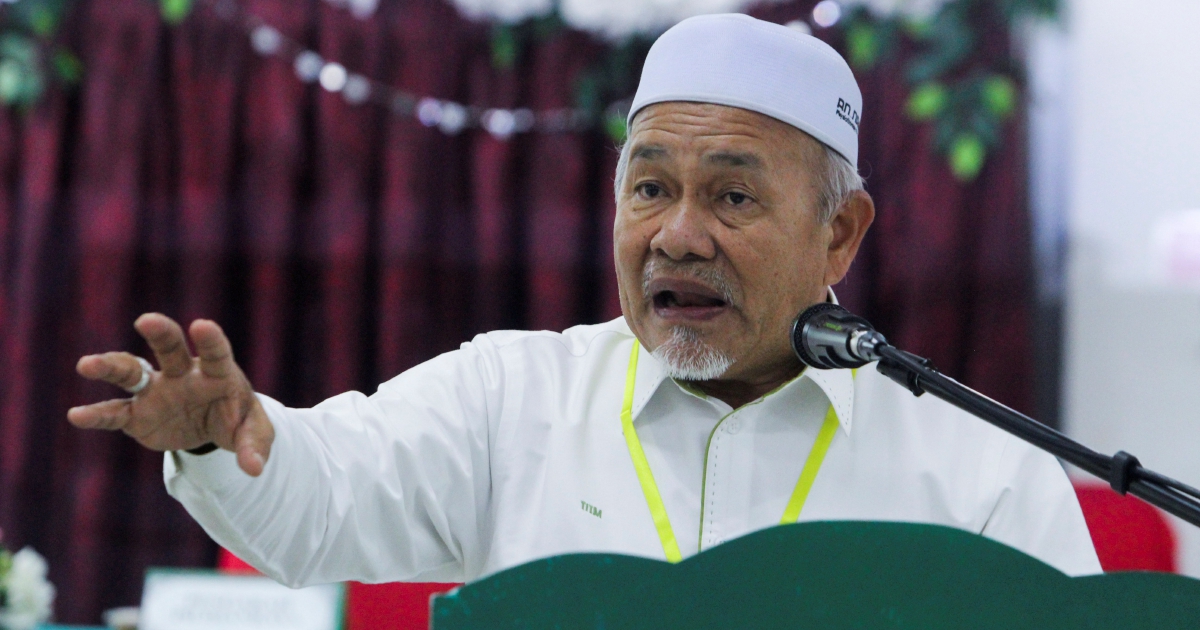
Datuk Seri Tuan Ibrahim Tuan Man, the deputy president of PAS, has announced that he is delegating all aspects of his defence in a defamation lawsuit initiated by Prime Minister Datuk Seri Anwar Ibrahim to his legal representation. The decision, made public during remarks in Kota Baru, signals a shift toward allowing judicial and legal professionals to handle the contentious matter rather than engaging in direct public commentary or participation.
The defamation suit represents one of several high-profile legal disputes involving Malaysian political figures in recent years, underscoring the increasingly litigious nature of national politics. For the PAS deputy president, a leading figure within an influential Islamist political party, the choice to remain publicly silent on the case while lawyers take control reflects a strategic approach to managing reputational risks and minimizing further inflammatory statements that could complicate his legal position.
Tuan Ibrahim's retreat from public discussion of the case carries broader implications for PAS, which has navigated complex political coalitions and partnerships in the post-2022 political landscape. As a senior member of the party, his legal entanglement with the sitting Prime Minister touches on party-government relations and may influence internal party dynamics. The dispute sits within a context of evolving relationships between Malaysia's Islamic-based opposition movement and the ruling administration, particularly given PAS's shifting alliances over recent political cycles.
The decision to fully outsource case management to legal counsel is not uncommon for high-profile defendants facing significant reputational stakes. By distancing himself from day-to-day involvement, Tuan Ibrahim effectively removes himself as a potential source of statements that could be construed as further defamation, repeated insults, or contempt of court. This approach minimizes his personal exposure and concentrates defensive strategy within professional legal channels where arguments can be carefully calibrated and presented within formal courtroom frameworks.
Defamation suits in Malaysia operate under established frameworks that consider both print and digital publication, with varying standards of proof depending on whether claims are proven true, made with public interest justification, or protected by parliamentary privilege. The suit's trajectory will depend substantially on how Malaysian courts interpret the contested statements, the evidence presented by both sides, and applicable legal precedents. Prime Minister Anwar Ibrahim's decision to pursue defamation action represents an aggressive legal stance that contrasts with approaches taken by previous administrations.
For Southeast Asian observers, the case exemplifies broader regional trends wherein political opponents increasingly resort to legal mechanisms to settle disputes rather than confining conflicts to electoral or parliamentary arenas. Malaysia's experience parallels patterns seen in neighbouring jurisdictions where defamation litigation has become an instrument of political contestation, though with varying degrees of judicial independence shaping outcomes.
Tuan Ibrahim's statement effectively freezes him out of public discourse surrounding the case, a position that may offer strategic advantages during litigation while potentially limiting his ability to shape public perception of the dispute. In the information environment surrounding Malaysian politics, where narratives are contested through multiple media channels and social platforms, silence from a prominent political figure can paradoxically speak volumes while simultaneously preventing additional statements from being weaponized in court.
The broader political environment in which this suit unfolds remains volatile. Malaysia's recent history shows competing coalitions, realigned partnerships, and shifting governmental compositions that create complex contexts for understanding inter-party disputes. PAS's own evolution from fringe opposition to coalition participant, and its subsequent repositioning within Malaysian politics, adds layers of complexity to how this legal matter is perceived by various constituencies.
Legal observers will watch closely how Malaysian courts handle the case, as outcomes may set precedents affecting future defamation claims involving political figures. The judiciary's approach to balancing free speech considerations against protection from reputational harm remains a developing area within Malaysian jurisprudence, with implications extending beyond this particular dispute.
For Tuan Ibrahim personally, the delegation of case management to lawyers represents a pragmatic acknowledgment that political disputes resolved through legal channels require specialized expertise and professional distance. Whether this approach yields favourable outcomes remains uncertain, but the strategy reflects contemporary understanding that high-stakes legal matters demand disciplined restraint from principals involved.

