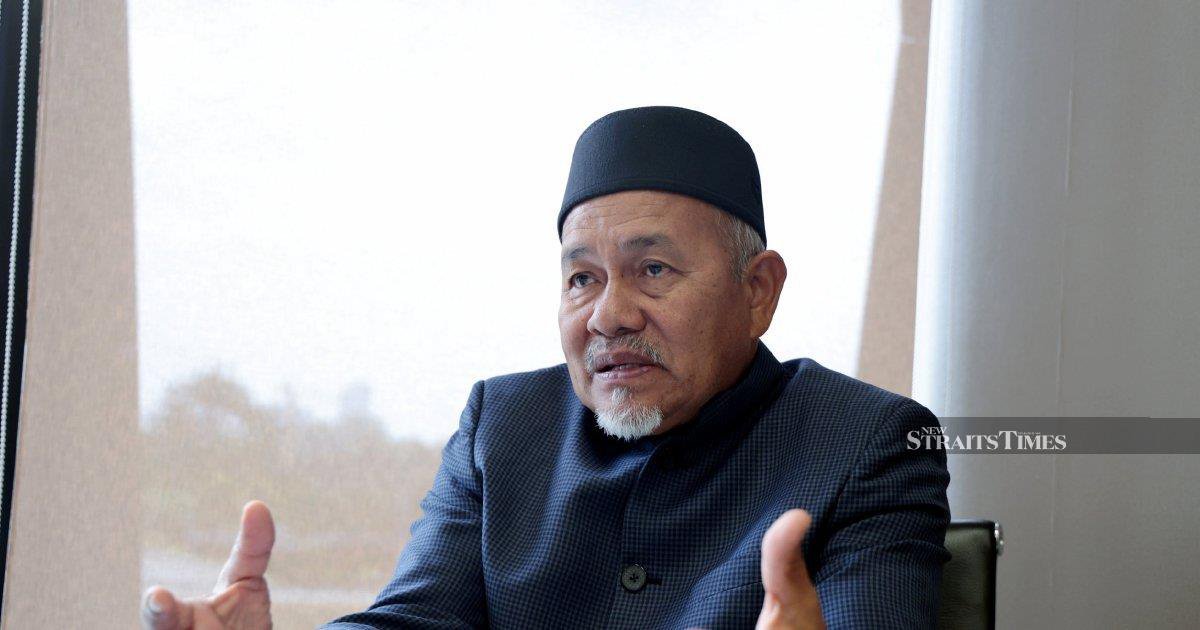
The Perikatan Nasional's Islamist linchpin has signalled constructive intent regarding a broader political realignment, suggesting that discussions on scaling up cooperation with the Barisan Nasional coalition framework could proceed at the highest governmental levels. PAS representatives have made clear the party's appetite for exploring how collaborative models tested in recent state elections might find application in more consequential political battlegrounds, including the Melaka state assembly and ultimately the machinery of federal administration.
The strategic calculus underlying this opening reveals the incremental nature of Malaysia's coalition-building politics. Rather than pursue a wholesale merger of political interests, PAS appears to favour a pragmatic incrementalism whereby governing arrangements are tested first in lower-stakes electoral contests before potential deployment in higher-profile scenarios. The Negri Sembilan model, which successfully harmonised PN and BN candidate selection and campaign messaging, has evidently acquired sufficient credibility within PAS circles to warrant serious consideration for replication elsewhere.
For Malaysian observers, this development signals that the post-2022 political architecture remains in active reconfiguration. The original PN-BN cooperation agreement, forged in 2022 after the Ismail Sabri administration took office, represented a pragmatic compact between ideological rivals necessitated by parliamentary arithmetic. That arrangement preserved both coalitions' formal identities while enabling coordinated parliamentary support, preventing snap elections that could have further fragmented the political landscape during periods of macroeconomic uncertainty.
Melaka represents the immediate test case for any expanded cooperation framework. The Perikatan Nasional currently holds considerable influence in the southern state, having emerged as a significant force in recent contests. A formal PN-BN arrangement at state level could reshape the political dynamics fundamentally, potentially consolidating anti-opposition forces while satisfying internal appetite within both coalitions for practical power-sharing arrangements rather than competitive standoffs that invite electoral uncertainty.
The federal dimension of these discussions carries substantially greater consequence. Malaysia's parliamentary system concentrates executive authority in the office of the Prime Minister, making national-level cooperation agreements far more consequential than state-level variants. Any formalised expansion of PN-BN coordination would require careful navigation of competing interests within both coalitions—BN encompasses UMNO, MCA and MIC with distinct organisational bases, while PN comprises PAS, BERSATU and smaller parties like WARISAN in certain states. Such heterogeneous combinations have proven volatile historically.
PAS's willingness to entertain these discussions reflects the party's recalibration following its performance in recent electoral cycles. The Islamic party has benefited substantially from PN's 2022 emergence as an alternative to UMNO-dominated BN, capturing significant parliamentary representation. However, electoral dynamics in multiracial constituencies remain challenging for PAS despite its parliamentary gains, suggesting that formal arrangements with the more electorally-established BN might enhance seat prospects in constituencies where PAS faces secular-minded or non-Malay demographic majorities.
Malaysian political observers note that coalition arrangements of this nature typically provide mutual insurance against electoral reversal. For BN, deepening ties with PN offers insurance against further fragmentation to the right, particularly in rural and Malay-majority constituencies where PAS competitive pressure remains acute. For PAS, formal cooperation frameworks grant access to governing structures and resource allocation that pure opposition status cannot replicate. Both factors explain why such discussions, initially appearing counterintuitive to non-specialists, emerge organically from rational political calculation.
The Negri Sembilan precedent provides instructive guidance regarding how such cooperation functions mechanically. By coordinating candidate nominations and avoiding wasteful three-way contests between PN, BN and opposition forces, the state successfully deployed its combined vote share more efficiently than fragmented coalition competition would allow. This model, if successfully extended to Melaka, could demonstrate viability for similar arrangements elsewhere. Melaka's size and electorate composition make it a manageable proving ground for federal-level ambitions without the complexities attending Selangor or Terengganu arrangements.
However, significant obstacles persist in translating state-level experimentation into federal architecture. The Prime Minister's appointment mechanism, which requires parliamentary confidence and therefore accommodation among competing coalition partners, complicates any comprehensive PN-BN merger. Coalition mathematics remain delicate; any exclusive arrangement favouring one combination might trigger defections among component parties feeling marginalised. UMNO's internal dynamics compound these difficulties, as the party navigates between those favouring closer PN ties and pragmatists prioritising BN's institutional preservation.
For Southeast Asia's largest opposition coalition, the Democratic Action Party and Pakatan Harapan more broadly, these PN-BN discussions represent concerning developments. Each formal cooperation agreement narrows political space for alternative governing coalitions by consolidating right-wing and Islamist parties under increasingly unified command structures. These arrangements, though cloaked in language of pragmatic governance, function as mechanisms preventing wider political pluralism and competition that might otherwise characterise mature democratic systems.
The timing of these discussions also reflects Malaysia's approaching fiscal cycle. Coalition stability proves economically critical during budget negotiations and infrastructure allocation seasons, when internal conflicts over resource distribution threaten governmental collapse. By establishing clearer cooperation frameworks now, PN and BN potentially insulate themselves against mid-term crises that previously necessitated emergency realignments and destabilising political transitions.
Moving forward, the PAS opening suggests that Malaysian political geometry continues its fluid recalibration. Whether discussions progress to formal Melaka agreements or federal arrangements depends largely on short-term electoral calculations and internal coalition management. Nevertheless, the signal that PAS regards expansion of PN-BN cooperation as negotiable, rather than categorical, signals that Malaysia's ruling complex remains actively reshaping itself—a pattern likely to persist until clearer electoral mandates provide greater stability to governing arrangements that currently rest on organisational pragmatism rather than voter-mandated coalitions.

