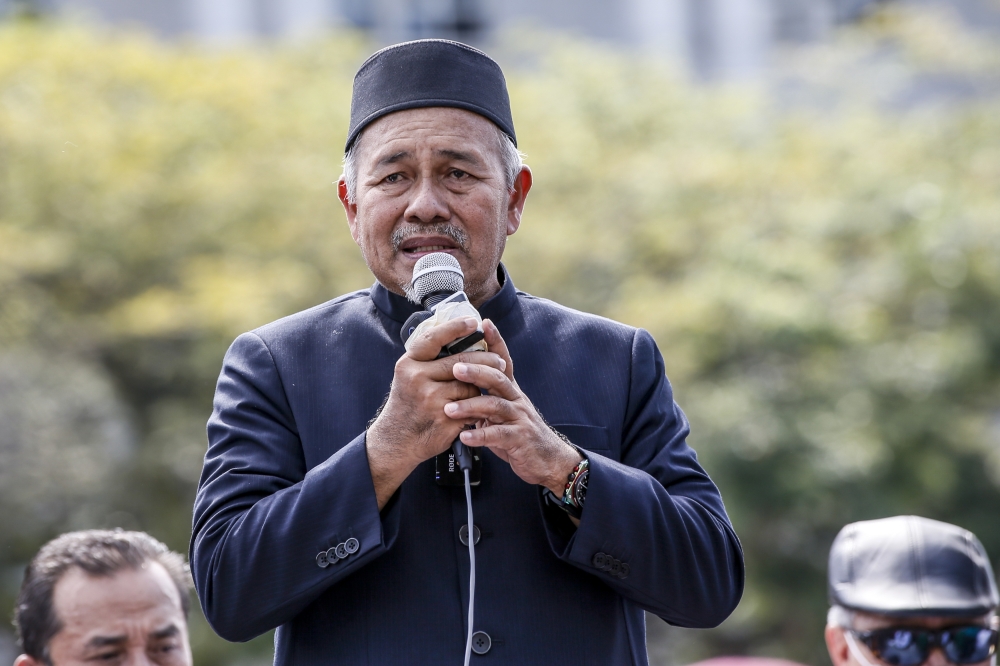
Malaysia's political landscape faces another potential reconfiguration as PAS signals preparedness to explore expanded cooperation between the long-established Barisan Nasional coalition and the newer Perikatan Nasional alliance. The development underscores the fluid nature of Malaysian politics, where pragmatic considerations often override historical party affiliations and ideological positions. PAS leadership has publicly stated the party's willingness to engage in substantive discussions about extending collaborative frameworks that currently operate at limited levels into broader political arrangements affecting Malaysia's states and federal government.
The prospect of deepening BN-PN coordination carries significant implications for Malaysia's governing structures and electoral mathematics. Currently, the two coalitions maintain separate operational spheres, with PN controlling several states while BN holds others through various component parties. By extending their cooperation framework, the coalitions could theoretically consolidate their political position and simplify governance arrangements that have grown increasingly complex under the current multi-coalition system. However, such consolidation would require navigating internal party dynamics within both alliances, as member organisations hold divergent interests and historical rivalries that cannot easily be overcome.
Melaka specifically emerges as a testing ground for expanded cooperation between the coalitions. The state has experienced considerable political turbulence in recent years, with control shifting between different political forces following multiple electoral cycles and defections. Establishing joint governance arrangements in Melaka could demonstrate whether BN and PN can effectively collaborate at the state administrative level—a prerequisite for any serious contemplation of federal-level integration. Success would require both coalitions to harmonise their state-level policies, revenue-sharing mechanisms, and appointment protocols, presenting practical challenges that extend beyond mere political agreement.
The federal-level implications of potential BN-PN cooperation warrant careful examination. Malaysia's federal government currently represents a complex arrangement of multiple coalitions holding parliamentary seats, creating governance challenges around legislative priorities and executive decision-making. By formalising broader cooperation between BN and PN, the coalitions could potentially streamline policy implementation and reduce parliamentary deadlock. Conversely, such consolidation might reduce political checks and balances that currently exist when different coalitions compete for influence within government structures.
PAS occupies a particularly strategic position within this emerging configuration. The party represents one of PN's strongest components while simultaneously possessing influence within religious and traditional constituency networks throughout Malaysia. Its stated readiness to discuss expanded cooperation signals internal party confidence in negotiating advantageous terms for further integration, whether at state or federal levels. For PAS, broader cooperation with BN could potentially enhance its national political profile while securing concrete benefits for party members and supporters in regions where the party maintains significant grassroots presence.
Within BN, such developments generate mixed responses reflecting the coalition's internal heterogeneity. While some component parties view expanded cooperation pragmatically as a path toward strengthened governance, others harbour reservations about potentially subordinating their interests within a larger political framework. UMNO, as BN's dominant force, would likely shape the coalition's negotiating position, bringing its particular institutional interests and historical perspectives on PN—an alliance partly formed in reaction to UMNO-led governance structures. These internal dynamics could either facilitate or obstruct discussions about extended cooperation.
The timing of PAS's openness to expanded discussions reflects broader Malaysian political developments and the approaching electoral cycles that will determine representation at both state and federal levels. Political parties typically signal flexibility regarding cooperation when electoral calculations suggest collaborative arrangements might yield better outcomes than independent competition. For PAS, demonstrating willingness to explore broader cooperation could appeal to electoral constituencies viewing stable governance as preferable to fragmented coalition competition.
Regional considerations also merit attention when evaluating potential BN-PN expansion. Several Malaysian states would be affected by any significant shift in coalition arrangements, and state-level political dynamics often proceed independently from federal-level political developments. States where BN and PN maintain separate power structures would face particular complexity in implementing expanded cooperation frameworks, potentially requiring institutional restructuring and resource reallocation. PAS's presence in multiple state governments makes the party particularly cognisant of these implementation challenges.
For Malaysian voters and observers tracking political developments, expanded BN-PN cooperation represents another evolution within Malaysia's continually shifting political architecture. The country has experienced multiple major coalition realignments over the past decade, each producing unexpected governing arrangements and policy consequences. Whether current discussions about extended cooperation materialise into formal agreements remains uncertain, dependent upon intricate negotiations occurring simultaneously across state and federal arenas with competing partisan interests and institutional constraints.
PAS's stated readiness to engage in comprehensive discussions about expanded cooperation indicates serious political momentum behind these initiatives. However, the considerable practical and procedural obstacles to formalising such arrangements should not be underestimated. Both BN and PN contain parties with fundamentally different political cultures, policy priorities, and organisational interests that have historically competed rather than cooperated. Successfully bridging these divisions would require unprecedented levels of political compromise and creative institutional design, making any expanded cooperation framework a genuinely novel development within Malaysian politics rather than merely an incremental adjustment to existing arrangements.

