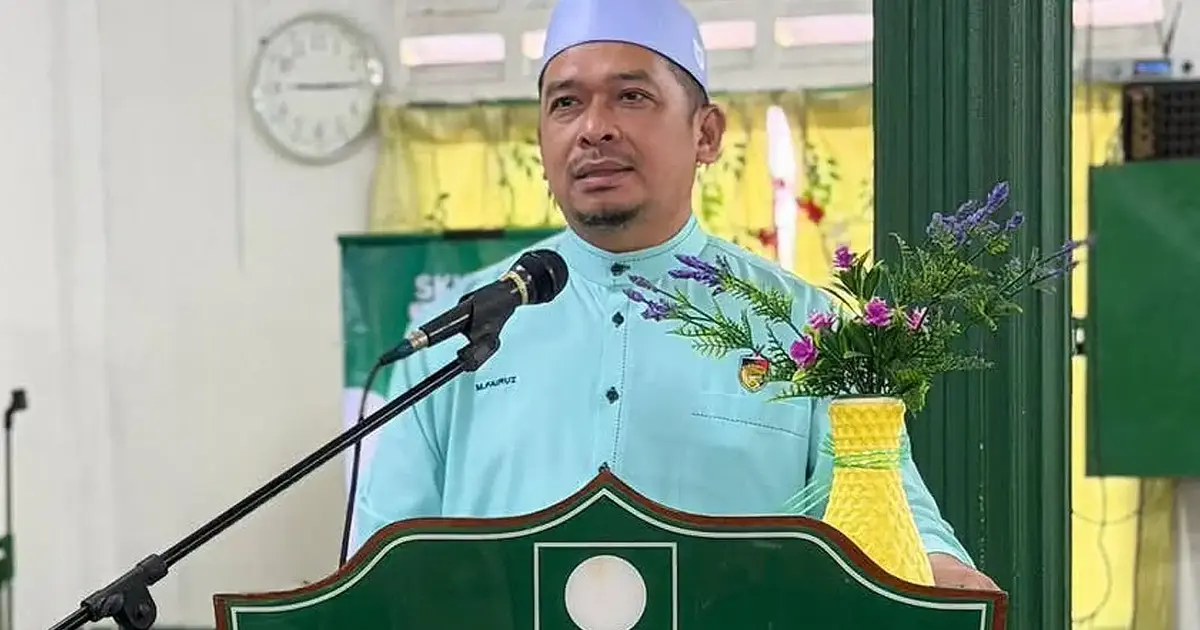
PAS is preparing a focused political offensive in Negeri Sembilan, with the party leadership openly declaring plans to contest constituencies presently controlled by the Democratic Action Party. According to Fairuz Isa, the state chief of PAS, the party's campaign strategy will concentrate on seats where Malay voters constitute approximately 40% of the electoral base, suggesting a calculated demographic approach to seat selection ahead of the state election.
This strategic pivot reflects broader political dynamics in Negeri Sembilan, where DAP has maintained traditional strongholds particularly in urban and semi-urban constituencies. PAS's focus on constituencies with significant Malay populations indicates the party believes it can mobilise this voter segment more effectively than DAP, historically perceived as a primarily Chinese-majority party. The 40% threshold mentioned by Fairuz Isa appears to represent the party's assessment of the minimum Malay voter concentration needed to make a competitive challenge viable in these seats.
The move underscores intensifying competition within the opposition coalition landscape in Malaysia. With PAS increasingly operating as an independent political force in certain states rather than purely as part of an alliance framework, the party's willingness to directly challenge DAP reflects confidence in its ability to appeal across demographic lines. This aggressive positioning also suggests PAS sees opportunity in consolidating Malay-majority voting blocs that may feel inadequately represented by DAP's political messaging and priorities.
Negeri Sembilan has historically been a mixed electoral battleground, with constituencies varying significantly in demographic composition. While DAP has built pockets of substantial support in several constituencies, the state remains politically contested. PAS's targeting of DAP seats rather than focusing on state government-held constituencies raises questions about the party's broader electoral mathematics and whether such a strategy might fragment opposition votes in certain areas, potentially benefiting the ruling coalition.
The timing of this announcement carries significance as state-level political positioning becomes increasingly important in Malaysian electoral cycles. Unlike federal elections, state contests allow parties to test localised strategies and voter messaging. For PAS, demonstrating electoral viability in Negeri Sembilan could strengthen its hand in future coalition negotiations and party leadership discussions about the direction of Malaysia's Islamist-conservative politics.
DAP's position in these targeted constituencies has traditionally rested on appeals to urban voters concerned with governance efficiency, anti-corruption messaging, and secular-progressive policies. PAS, by contrast, emphasises Islamic principles and Malay communal interests. The ideological gap between the two parties is substantial, and constituencies where PAS believes it can effectively campaign suggest areas where traditional DAP messaging may have limited resonance or where demographic shifts have altered voter preferences.
For Malaysian political observers, this development illustrates the complex realignment occurring beyond formal coalition structures. PAS has previously demonstrated capacity to compete effectively in constituencies with mixed demographics when messaging and ground organisation align effectively. The party's success in certain constituencies during recent elections showed it can appeal to voters beyond its traditional Islamic constituency base when campaigns address bread-and-butter issues alongside religious and cultural concerns.
The implications for Negeri Sembilan's political future are considerable. A three-way contest in certain constituencies between PAS, DAP, and the ruling coalition could significantly alter seat distributions and overall state government outcomes. If PAS effectively mobilises the Malay voter segments it targets, DAP could face unexpected losses in seats it has held comfortably. Conversely, if PAS's strategy fragments opposition votes without gaining proportional seat increases, the overall beneficiary might be the government coalition.
This strategic announcement also reflects broader trends in Malaysian politics where religious and ethnic appeals continue to shape electoral competition. PAS's explicit focus on Malay voter demographics demonstrates the party remains oriented toward communal mobilisation rather than pursuing explicitly multiethnic political platforms. Such approaches have proven electorally effective in Malaysia's polarised political environment, particularly in constituencies where voters prioritise identity-based representation.
For DAP and other non-Islamist opposition parties, PAS's moves represent a persistent challenge. Building truly multiethnic coalitions remains difficult when component parties pursue demographic-specific strategies. The party faces strategic dilemmas about whether to compete directly for Malay votes or maintain current voter bases while seeking growth elsewhere. These internal opposition dynamics often prove as consequential as contests against the ruling coalition.
Looking forward, Negeri Sembilan represents a testing ground for evolving political strategies across Malaysia's competitive landscape. Whether PAS successfully translates demographic analysis into electoral gains will influence how other parties approach future campaigns. The state election, whenever called, will demonstrate whether the 40% Malay voter threshold represents a realistic boundary for effective political competition or whether demographic explanations mask broader weaknesses or strengths in party organisation and messaging.
The coming months will clarify whether this PAS initiative reflects calculated tactical adjustment or represents more significant realignment within Malaysia's opposition politics. Either interpretation carries implications extending well beyond Negeri Sembilan's borders, affecting how regional and national parties structure coalitions and campaign strategies in an increasingly segmented political environment.