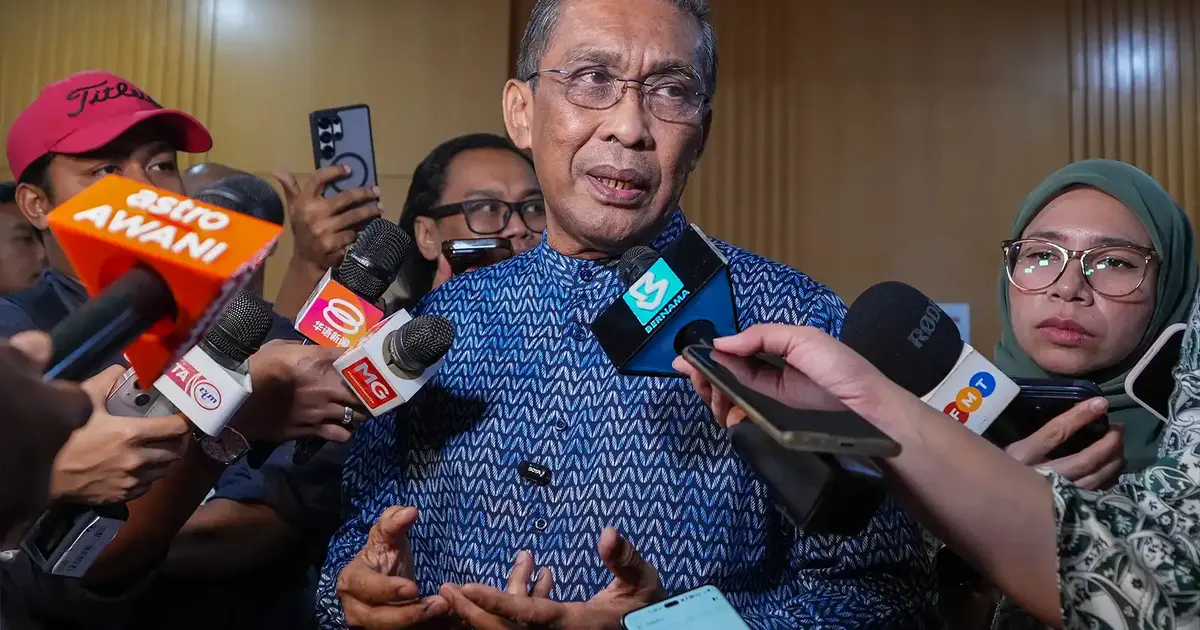
The PAS leadership is set to bring the question of sustained cooperation with Umno before its rank-and-file membership at the forthcoming muktamar, signalling a significant moment for internal party dialogue on one of Malaysia's most consequential political partnerships. PAS secretary-general Takiyuddin Hassan announced that delegates gathering for the annual assembly will consider a formal motion addressing the trajectory and future direction of the party's alliance with Umno, the dominant Malay-Muslim political force that has governed Malaysia for most of the nation's independent history.
The decision to table such a motion reflects the importance PAS leadership places on consolidating grassroots support for the current political direction. Rather than proceeding with cooperation agreements unilaterally, the party is channelling the matter through its democratic structures, allowing ordinary members and divisional representatives to voice their positions on this strategic partnership. This approach underscores how critically significant Umno collaboration remains within PAS organisational culture, particularly given the historical tensions and competition between the two parties for dominance within Malay-Muslim political space.
Beyond the specific question of PAS-Umno ties, the muktamar agenda encompasses broader thematic discussions centred on Muslim unity across Malaysia. This framing reflects PAS's self-perception as the guardian of Islamic principles within Malaysian politics, a positioning that has evolved considerably since the party's transformation from a grassroots Islamic revivalist movement into a mainstream coalition participant. The inclusion of Muslim unity discussions alongside operational partnership matters suggests the party intends to contextualise its Umno alliance within a larger philosophical framework.
For Malaysian observers, the muktamar presents a crucial test of internal party consensus. The PAS membership base encompasses diverse viewpoints, ranging from traditionalist religious scholars who view Umno with historical suspicion, to pragmatic politicians who see the partnership as essential for accessing federal power and implementing religious policies. How delegates respond to the cooperation motion will reveal the depth of that consensus and whether grassroots enthusiasm matches leadership commitments to the alliance.
The timing of this motion carries additional weight given Malaysia's evolving political landscape. Since the collapse of the Pakatan Harapan government in 2020, Umno and PAS have incrementally deepened their coordination, culminating in formal coalition arrangements that have reshaped federal and state governance structures. Some within PAS have questioned whether this alignment adequately protects party interests or whether excessive reliance on Umno marginalises PAS in policy-making. The muktamar motion effectively provides a platform for these underlying tensions to surface in controlled conditions.
Muslim unity discussions at the assembly will likely emphasise PAS's vision for Islamic governance and communal solidarity across sectarian and organisational boundaries. This messaging appeals to the party's core supporters who view electoral politics through the lens of religious responsibility. By linking the Umno cooperation motion to broader Muslim unity themes, PAS leadership frames the partnership not as mere pragmatic advantage-seeking, but as a contribution to larger communal objectives. Such framing helps legitimise the alliance to party members who might otherwise harbour reservations.
For Umno and the broader Malay-Muslim political establishment, the PAS muktamar assumes considerable importance. The outcome will indicate whether PAS grassroots confidence in the partnership remains solid or whether the party faces internal dissent that could destabilise coalition operations. Umno has invested significantly in bringing PAS into formal alliance structures, and any substantial motion rejections or heated debates would signal instability in these arrangements. Conversely, strong delegate endorsement would provide Takiyuddin and the PAS executive with renewed confidence to deepen integration with Umno at various governance levels.
The motion itself will likely address specific dimensions of cooperation including electoral coordination, policy alignment on Islamic matters, and power-sharing arrangements in federal and state governments. Delegates may debate whether current protocols adequately protect PAS's distinct identity and programmatic autonomy, or whether the party risks subsumption within an Umno-dominated framework. These negotiations between grassroots members and leadership, conducted through formal parliamentary procedure, represent the party's attempt to navigate between institutional partnership requirements and organisational distinctiveness.
Regionally, this development carries implications for how Malay-Muslim political coalitions function and respond to internal pressures. Southeast Asia's Muslim-majority nations often grapple with tensions between electoral pragmatism and ideological consistency, and PAS's approach to the cooperation question offers insight into how such tensions are managed. The muktamar will demonstrate whether Malaysian Islamic political movements can maintain internal democratic processes while engaging in large-scale power-sharing arrangements that necessarily constrain individual party autonomy.
Takiyuddin's announcement also reflects PAS's mature approach to coalition governance. Rather than treating cooperation agreements as top-down impositions, the party validates them through democratic consultation with membership. This legitimation strategy, if successful, strengthens both the cooperative arrangement itself and the party's internal cohesion. Whether such validation fully materialises will become apparent once delegates gather for the muktamar and engage substantively with these consequential matters affecting PAS's political future.

