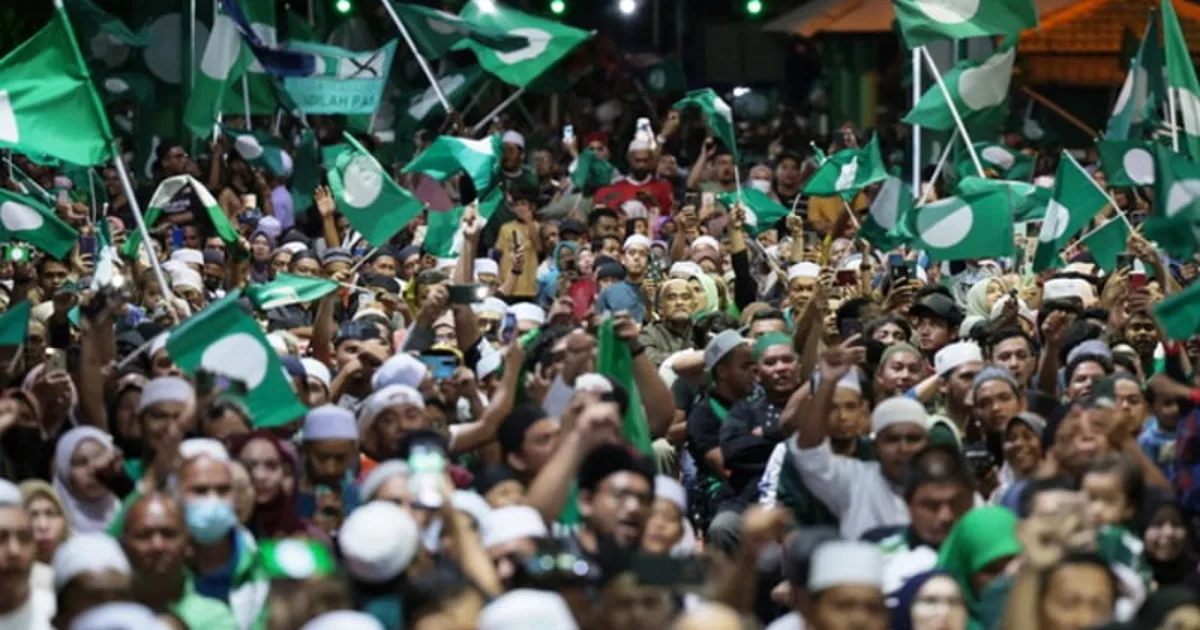
The Malaysian Islamic Party (PAS) has made a strategic decision to withdraw its election machinery from parliamentary and state constituencies where its Perikatan Nasional (PN) coalition partner Bersatu is fielding candidates, instead concentrating its organisational resources on the seats where the Islamic party intends to contest directly.
This reallocation of electoral assets reflects the internal dynamics within Malaysia's PN coalition, which also includes other smaller component parties. By consolidating its campaigning effort and ground operations into constituencies aligned with PAS's own slate of candidates, the party aims to maximise its organisational effectiveness and voter turnout in areas where it has historical strength or seeks to expand influence.
The move signals a pragmatic approach to coalition governance in Malaysia's evolving political landscape. Rather than spreading resources thinly across the entire PN electoral slate, PAS has opted to concentrate its considerable grassroots infrastructure—built over decades of community organising and religious outreach—on races where it bears direct responsibility for securing seats. This permits the party to deploy its membership networks, volunteer coordinators, and local leadership more intensively in targeted areas.
Bersatu, the People's Mutually-Agreed Transformation party founded by former Prime Minister Mahathir Mohamad, will therefore receive reduced direct support from PAS machinery in the constituencies where it is contesting. However, the broader PN coalition framework remains intact, with PAS assistance still directed toward other component parties within the alliance. This arrangement acknowledges that while coalition partners support one another's overall standing, each party must cultivate its own electoral base independently.
For Malaysian voters and political observers, this restructuring underscores the complex negotiation that occurs within any multi-party coalition. Coalition arrangements in Malaysia traditionally involve difficult compromises over candidate selection, resource allocation, and campaign priorities. PAS's decision to focus its machinery selectively demonstrates the party's confidence in its own organisational capacity while reflecting realistic assessments about which constituencies each partner can effectively contest.
The implications for PN's overall electoral prospects depend partly on whether Bersatu possesses sufficient independent campaign capacity to compensate for reduced PAS support in its target seats. Bersatu remains a relatively newer entrant to electoral politics compared to the established party structures of PAS, which boasts substantial institutional depth and membership commitment. The party's ability to operate effectively without relying on PAS's ground machinery will test Bersatu's maturity as a political organisation.
This development also reflects broader trends in Malaysian coalition politics, where parties increasingly emphasise their individual brands and electoral performance rather than subordinating identity to broader alliance interests. PAS has built considerable political capital over recent election cycles and appears determined to translate that momentum into expanded parliamentary representation and state assembly influence. By concentrating resources where PAS candidates are running, the party signals to voters its serious intent to compete vigorously in those constituencies.
The strategic decision carries implications for upcoming state-level elections as well as the next federal general election. Many Malaysian states feature complex coalition arrangements at state assembly level, and PAS's machinery reallocation approach may influence how campaigns are conducted across different electoral tiers. Other coalition partners in different state governments may face similar decisions about resource prioritisation.
For Bersatu, the arrangement requires the party to strengthen its own campaign infrastructure and volunteer networks independent of PAS support. This could accelerate institutional development within Bersatu but also creates vulnerability in constituencies where the party lacks deep community connections. In tightly contested races, the absence of PAS's established ground machinery could prove consequential, particularly in areas where the Islamic party traditionally commanded strong voter mobilisation.
The reallocation also reflects PAS leadership's confidence in the party's electoral prospects and its growing assertiveness within PN. The Islamic party has increasingly positioned itself as PN's dominant component, and this machinery decision reinforces that status. By concentrating resources on PAS-contested seats, the party's leadership is essentially prioritising PAS growth over collective PN performance—a stance that suggests confidence about the party's capacity to win the constituencies where it is committed.
Conversely, this arrangement could complicate PN's overall coalition messaging. Voters might interpret the machinery reallocation as a sign of internal weakness or diverging interests among coalition members. Sophisticated political observers have long noted that successful coalitions require genuine commitment to mutual support, and visibly unequal resource allocation could fuel perceptions that PN remains an alliance of convenience rather than an integrated political force.
The machinery shift also raises questions about which other PN component parties will receive PAS support. Smaller parties within the coalition may benefit from enhanced PAS assistance in their contested seats, potentially strengthening those partners while creating uneven development within PN's organisational capacity across different regions. This could reshape the coalition's internal balance over time, with PAS and better-resourced partners gaining prominence.

