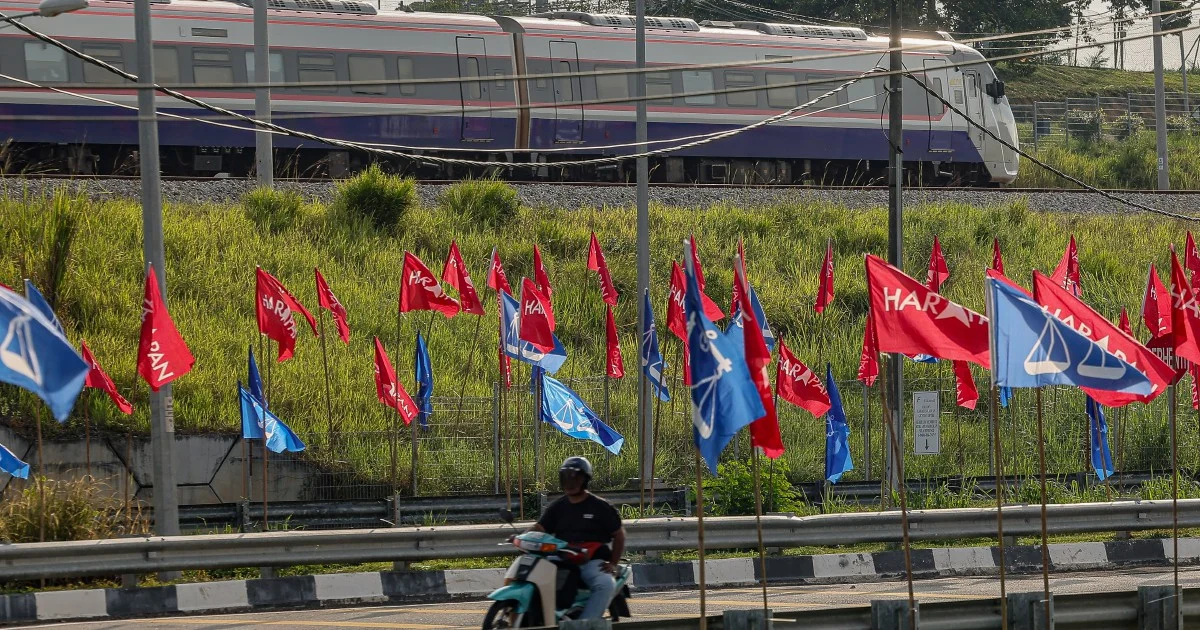
In a clarification issued from Johor Baru, PAS Youth has outlined the reasoning behind the party's willingness to support Barisan Nasional candidates in specific constituencies where Perikatan Nasional is absent from the ballot. The youth wing framed this tactical approach as fundamentally defensive, targeting what it perceives as the expansion ambitions of Pakatan Harapan rather than representing a shift in core party allegiances.
This strategic positioning reflects the complex landscape of Malaysian politics, where the traditional three-cornered alliances have given way to more fluid electoral arrangements. PAS, which departed from its longstanding partnership with Pakatan Harapan to join Perikatan Nasional, now faces the practical challenge of maximising its parliamentary representation whilst simultaneously preventing its former allies from consolidating power in constituencies deemed vulnerable.
The move carries significant implications for seat-sharing negotiations across Malaysia's states and federal territories. By signalling openness to supporting BN candidates in select constituencies, PAS Youth suggests the party is willing to prioritise preventing PH victories over advancing its own electoral gains in every available contest. This approach requires a sophisticated calculus of which seats present genuine three-way competition and where withdrawing PN candidacies might strategically benefit BN without sacrificing critical PN strongholds.
For Barisan Nasional, this development potentially strengthens its hand in negotiations with other coalition partners and independent candidates. The implicit backing of PAS, even in limited form, provides BN candidates with tacit endorsements that could prove decisive in marginal constituencies where traditional UMNO and MCA support bases have fragmented. The arrangement also signals a degree of coordination between PN-aligned parties and the BN machinery that extends beyond formal electoral alliances.
The Pakatan Harapan coalition, meanwhile, faces renewed pressure in constituencies where it might have expected only two-way contests. The prospect of PAS Youth activists supporting BN candidates, even without explicit PN candidacies competing, introduces an additional complicating factor for PH campaign strategies. This is particularly consequential in states like Johor, where Johor Baru itself falls, where multiple parties maintain significant voter support bases.
From a Malaysian political economy perspective, this development underscores the transition from ideology-based political alignment to interest-driven electoral coalitions. PAS's journey from Pakatan Harapan partnership to Perikatan Nasional membership to conditional BN support demonstrates how parties increasingly prioritise parliamentary survival and policy influence over doctrinal consistency. The youth wing's framing of this as specifically anti-PH rather than pro-BN reveals the psychological anchoring effect that opposition dynamics continue to exert on party strategy.
The tactical opening also raises questions about the stability of Perikatan Nasional itself. If PAS is prepared to effectively cede certain constituencies to BN in order to block PH, it suggests the coalition between PN parties may be less durable than presented publicly. The conditions under which PN participates or withdraws from specific constituencies may itself become a subject of internal tension, particularly if BERSATU or other PN components view such withdrawals as diminishing their own national profile.
For voters, this strategic manoeuvring introduces an additional layer of complexity to electoral decision-making. Constituents must now assess not merely which party they prefer, but which party arrangement serves their interests best, including the possibility that their local candidate's affiliation may be coordinated with distant ballot dynamics to prevent outcomes in other constituencies. This scattered alignment pattern may contribute to declining predictability in electoral outcomes and shifting turnout patterns.
The declaration from Johor Baru also carries implications for Malaysia's broader democratic discourse. The transparency with which PAS Youth articulates its counter-PH strategy normalises conditional political support based on preventing rival factions rather than advancing positive alternatives. Whilst tactical voting arrangements are not new to Malaysian politics, the explicit framing of support as primarily obstructive rather than constructive marks a shift in how parties communicate their strategic rationales to the public.
Regionally, this development reflects broader Southeast Asian patterns where established political coalitions have fractured and reformed repeatedly across recent election cycles. Thailand, the Philippines, and Indonesia have similarly experienced volatile coalition reconfiguration, though Malaysia's parliamentary system provides different constraints on such fluidity compared to presidential systems. Understanding how PAS navigates its current position offers insights into how Islamic parties across the region balance sectarian interests with broader coalition politics.
Looking ahead, the durability of this arrangement depends substantially on electoral performance and policy outcomes in the next parliamentary term. Should BN candidates supported implicitly or explicitly by PAS Youth secure significant victories, the relationship may deepen. Conversely, if such arrangements produce disappointing results or internal friction within PN, parties may recalibrate their approach to future contests. The June 2024 announcement thus represents not a settled political configuration but rather an experiment in tactical flexibility.

