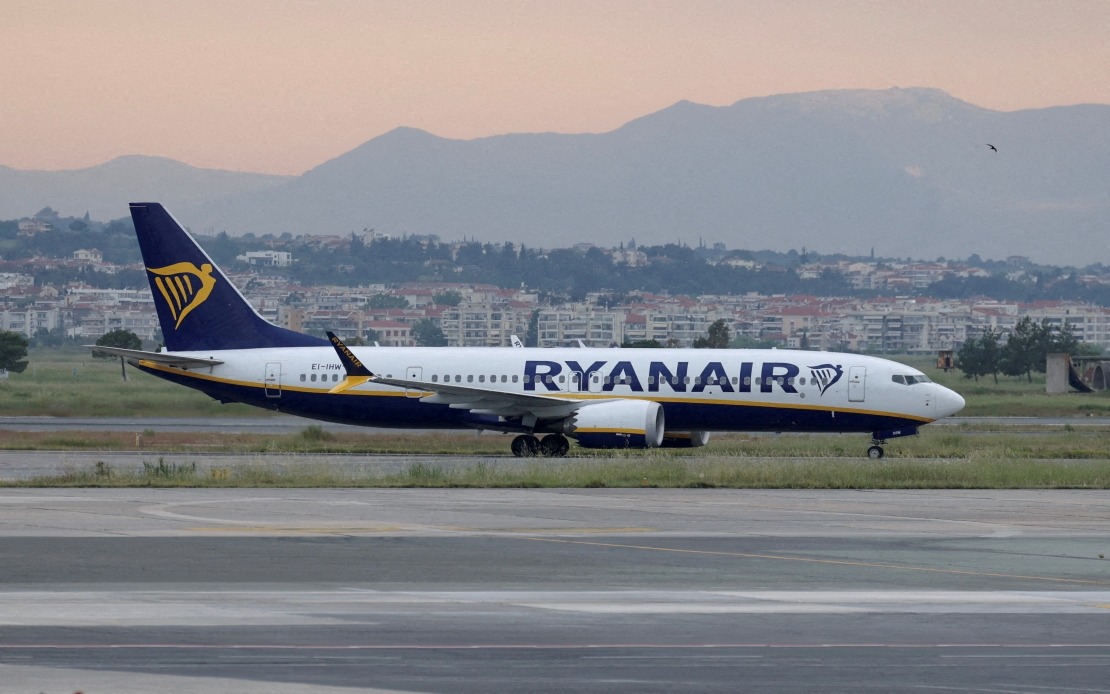
Chaos erupted aboard a Ryanair aircraft travelling from Greece's northern city of Thessaloniki to Memmingen in southern Germany when a window pane abruptly shattered during flight on Friday, forcing the pilot to execute an immediate turnaround. The dramatic incident, which saw oxygen masks automatically deploy throughout the cabin, highlighted the potential dangers of structural failures at altitude, even on brief regional routes across Europe. The incident also underscores the challenges that budget carriers face in maintaining aging fleets and responding to safety emergencies with the composure expected of modern aviation operators.
Accounts from passengers aboard the flight paint a vivid picture of the terrifying moments following the sudden loud bang that accompanied the window failure. According to a traveller who spoke with German news agency dpa, the initial sound was unmistakable—a sharp crack that reverberated through the cabin before the pane gave way entirely. The passenger seated closest to the damaged window sustained injuries in the immediate aftermath, with one eyewitness describing to Greek broadcaster ERT how "his head and shoulders were sticking out of the broken window" as the aircraft remained airborne. The rapid decompression and structural breach created an extraordinarily dangerous situation in which a human body was partially exposed to the pressurised external environment.
What prevented what could have been a catastrophic loss of life was the swift intervention of fellow passengers seated nearby. Rather than freeze in panic, other travellers managed to grasp the injured man and pull him back into the cabin away from the gaping aperture. The coordinated action of civilian passengers demonstrated remarkable presence of mind in an extraordinary circumstance. Videos subsequently posted across various social media platforms captured the scene of cascading oxygen masks deploying automatically from ceiling panels throughout the aircraft, a standard safety mechanism designed to provide supplemental oxygen in situations of cabin depressurisation. Accompanying these images were audio recordings of screaming passengers attempting to process the magnitude of the emergency unfolding around them.
The flight crew responded by immediately initiating descent procedures and charting a course back to Thessaloniki Airport, from which the aircraft had departed mere minutes earlier. The return flight consumed approximately twenty minutes, during which time the cabin remained in a state of distress and uncertainty. The pilot's decision to abort the journey to Memmingen and reverse course represented a textbook emergency response prioritising the safety and security of all persons aboard. The rapid decision-making likely prevented further deterioration of the situation and demonstrated the value of pilot training and standard operating procedures in crisis scenarios.
Upon landing at Thessaloniki Airport, emergency response teams were standing by to provide immediate assistance. The injured Serbian passenger was transferred directly to a hospital in Thessaloniki for medical evaluation and treatment of wounds sustained during the window incident. The severity and extent of injuries remained unclear from initial reports, though the fact that he had been partially exposed to extreme altitude conditions suggested potentially serious trauma requiring urgent specialist care. Greek broadcaster ERT provided coverage of the emergency response phases, documenting the coordination between airport authorities and medical personnel.
Neither Ryanair nor the competent aviation authorities had issued formal public statements regarding the incident at the time of reporting. This silence is not unusual in the immediate aftermath of serious aviation events, as investigators must secure the aircraft, preserve evidence, and establish preliminary timelines before releasing information to media outlets. However, the absence of rapid communication from the airline itself often creates an information vacuum that can fuel speculation and anxiety among the travelling public. For passengers booked on subsequent Ryanair services, the silence may have raised questions about fleet safety standards and maintenance protocols.
Greek aviation authorities confirmed that a formal investigation into the incident had been initiated, consistent with international protocols governing serious aircraft accidents and incidents. This investigation will likely examine multiple factors including the structural integrity of the window assembly, whether maintenance records indicated any prior concerns, the age and service history of the specific aircraft, and whether manufacturing defects or installation errors played a role. The investigation will also assess whether proper pre-flight inspection procedures identified any vulnerabilities before the aircraft was cleared for passenger operations.
From a broader regional perspective, this incident adds to ongoing scrutiny of budget airline operations across Europe and Southeast Asia. While Ryanair maintains one of the largest fleets in Europe and operates thousands of flights daily, structural failures—though statistically rare—remain among passengers' deepest fears when selecting airlines. The incident serves as a reminder that cost-cutting operational models, while economically efficient, must never compromise on fundamental safety systems and maintenance standards. For Malaysian and regional passengers considering low-cost carriers for European travel, such incidents warrant careful consideration of airline safety records and fleet age statistics.
The broader context of modern aviation safety suggests that window failures are exceptionally uncommon, particularly on contemporary commercial aircraft equipped with redundant window pane designs specifically engineered to prevent complete cabin breach. Modern commercial windows typically feature multiple panes—an outer pane, a middle pane, and an inner pane—such that failure of one element does not compromise the integrity of the entire structure. The fact that a window shattered completely enough to create the described hazard raises questions about whether this aircraft may have operated beyond optimal maintenance intervals or whether manufacturing defects in this particular window assembly went undetected during routine inspections.

